Mystical Energy from God: “Be Attentive”
The Eastern Church understands the mystical life as something already present—surrounding us, sustaining us, inviting our participation. During the Divine Liturgy, clergy and faithful alike repeat a simple command: “Be attentive.” This is not merely a call to listen, but an invitation to awaken to God’s living presence, culminating in the Eucharist.
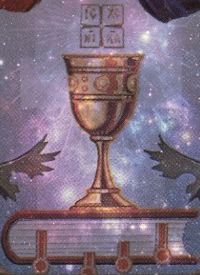
The eastern rite Eucharist host is shown above the chalice. The host is square compared to a round host in the Latin Roman Catholic rite.

The IC XC NIKA is stamped into every prosphoron (loaf of altar bread). The IC XC abbreviation (in both Greek and Slavonic) is the name, “Jesus Christ”.
NIKA is a Greek verb that means “conquers”, or more closely related to “is victorious”.
In receiving this victorious Christ, the Church understands something astonishing is taking place—not symbolically, but mystically. This is the beginning of what the Eastern tradition calls theosis.
Do you not believe that you too are a conqueror? St Paul takes us even further: “We are more than conquerors through Him who loved us” (Romans 8:37). – Abbot Joseph, Mt. Tabor Monastery
The victory that we celebrate is that of Jesus Christ over the world, the flesh, and the devil, over sin and death. For Him to conquer evil was essential to his mission, so much so that St John could even say: “The reason the Son of God appeared was to destroy the works of the devil” (1John 3:8). – Abbot Joseph, Mt. Tabor Monastery
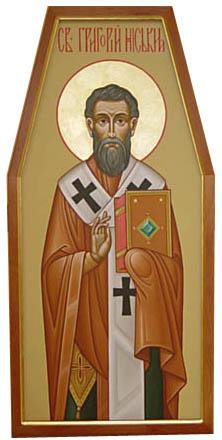
St. Gregory of Nyssa is one of the great contributors to the mystical tradition in Christian spirituality and monasticism. The word became incarnate “so that by becoming as we are, he might make us as he is”, said Gregory of Nyssa.
John Chrysostom prayer, “Receive me today, Son of God, as a partaker of your mystical Supper.”
“It is Gods body that deifies and nourishes me; it deifies the spirit & nourishes the mind mystically.” – St. John Chrysostom
Dorothy Day and Thomas Merton were among the Roman Catholics who loved the Eastern Byzantine liturgy.
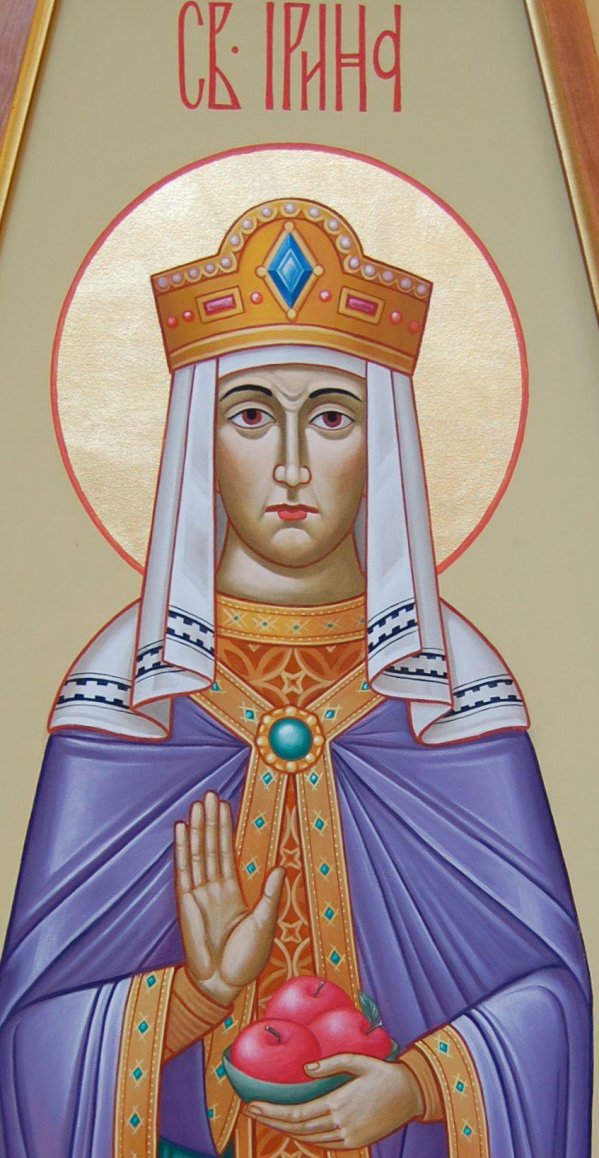
St. Irene Chrysovalantou, granted the gift of clairvoyance. She knew thoughts of all she saw. Holy Trinity Chapel.
When Byzantine theologians describe the reality of the love of God, they always turn to expressions of admiration, amazement, awe and wonder. To define this love is to limit it. It must remain unlimited, boundless, indefinable, unexplainable. The explainable has only limited value and transient interest. The true is always wondrous.
Prayer is the elevation of the intelligence to God, not in order to learn about God but to discover God; not to know about Him but to know Him, to experience God in one’s own life.
– From Introduction to the Byzantine Rite by Archbishop Joseph Raya.
What the Church asks us to be attentive to is nothing less than our transformation.
Theosis: Becoming Like God
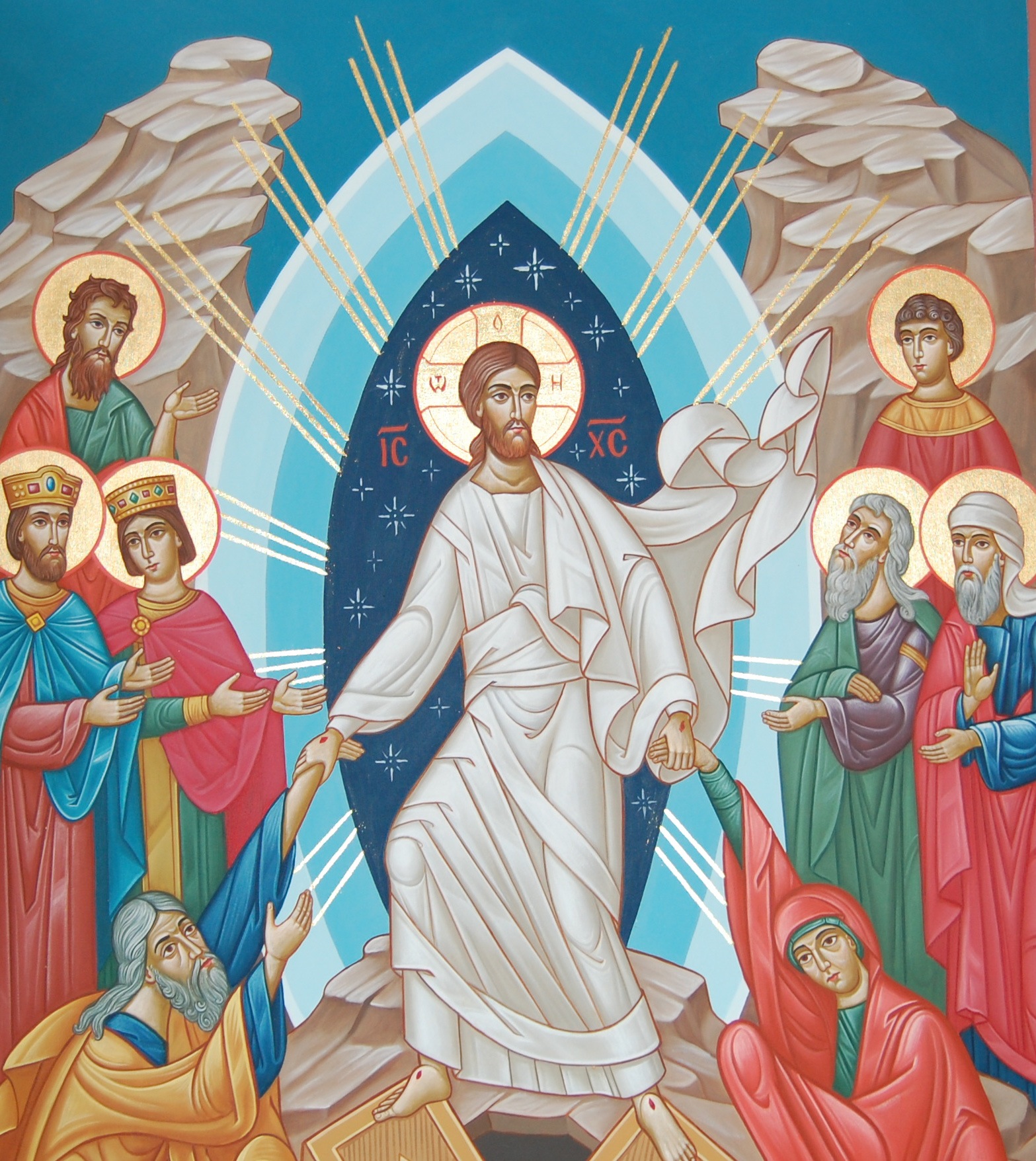
We glorify You and fall down before You, for You arose from the tomb, our only God. I will recount Your wonders.
The teaching of deification or theosis in Eastern Orthodoxy and much of Eastern Catholicism refers to the attainment of likeness of God, union with God or reconciliation with God. Theosis is a goal of Eastern Orthodox Christians, as according to the Bible, we are ‘made in the image and likeness of God.’ It is possible for man to become like God, to become deified, to become god by grace. – Millet and Reynolds
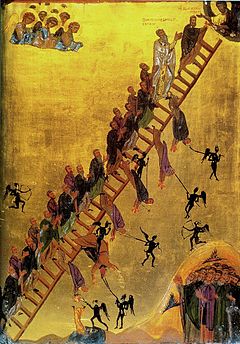
Ladder of Divine Ascent icon St. Catherine’s Monastery Egypt, 12th century. Monks ascending the ladder to Jesus, led by S. John Climacus. Theosis is the mystery where He makes divinity our own.
St Irenaeus, in his famous phrase, “if the Word has been made man, it is so that men may be made gods.”
“As it [the Holy Spirit] regenerates you, it changes you from corruptible to incorruptible, from mortal to immortal, from sons of men into sons of God and gods by adoption and grace.” – Symeon the New Theologian (10th century)
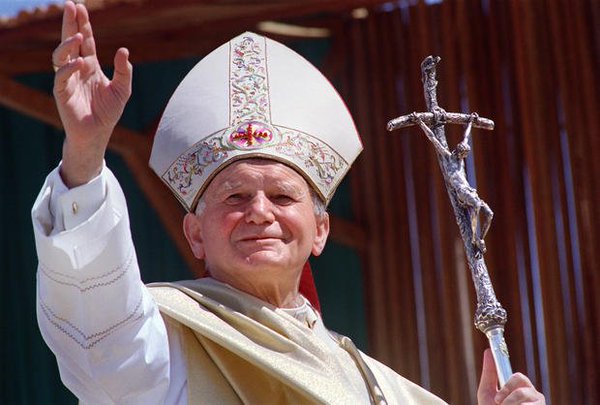
St. John Paul II said Catholics should be familiar with “the venerable and ancient tradition of the Eastern Churches”.

St. John Paul II said,
“…the teaching of the Cappadocian Fathers on divinization (which) passed into the tradition of all the Eastern Churches and is part of their common heritage.
This can be summarized in the thought already expressed by Saint Irenaeus at the end of the second century: God passed into man so that man might pass over to God.
This theology of divinization remains one of the achievements particularly dear to Eastern Christian thought.” – St. John Paul II
The fundamental vocation and goal of each and every person is to share in the life of God. We have been created by God to live in fellowship with Him. The descent of God in the Person of Jesus Christ has made possible the human ascent to the Father through the work of the Holy Spirit. Orthodoxy believes that each Christian is involved in a movement toward God which is known as theosis or deification. – Source: Greek Orthodox Archdiocese of America, Rev. Thomas Fitzgerald
Theosis describes the spiritual pilgrimage in which each person becomes ever more perfect, ever more holy, ever more united with God. It is not a static relationship, nor does it take place only after death. On the contrary, theosis is a movement of love toward God which begins for each Christian with the rites of Baptism and which continues throughout this life, as well as the life which is to come.
Salvation means liberation from sin, death, and evil. Redemption means our repossession by God. In Orthodoxy, both salvation and redemption are within the context of theosis. This rich vision of Christian life was expressed well by Saint Peter when he wrote in the early pages of his second Epistle that we are called “to become partakers of the Divine nature.” It was also affirmed by Saint Basil the Great when he described man as the creature who has received the order to become a god. -Source: Greek Orthodox Archdiocese of America, Rev. Thomas Fitzgerald
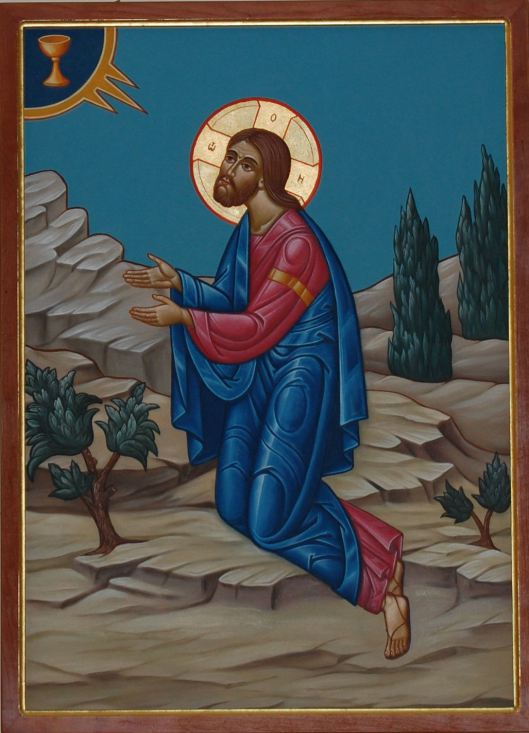
Jesus frequently went to Gethsemane with His disciples to pray (John 18:2). Holy Trinity Chapel.
The Orthodox Church understands theosis as a union with the energies of God and not with the essence of God which always remains hidden and unknown. However, the experience of the Church testifies that this is a true union with God. It is also one which is not pantheistic, because in this union the divine and the human retain their unique characteristics. In this sense, Orthodoxy believes that human life reaches its fulfillment only when it becomes divine. – The Orthodox Church: An Introduction by Rev. Thomas Fitzgerald
 Shrine Tower