• Shrines of Philadelphia
    • St. Katharine Drexel
    • Miraculous Medal
    • St. John Neumann
    • St. Rita of Cascia
    • Our Lady of Czestochowa
    • St. Gianna Molla
  • Sacred Places
  • Art, Film, Poetry
  • Saints
  • Music
  • Services

Shrine Tower

~ Saints, Shrines and Sacred Places

Shrine Tower

Tag Archives: Eastern Catholic

Theosis: Becoming Like God — “Be Attentive” to Divine Energy

10 Tuesday Feb 2026

Posted by Brian in Saints

≈ Leave a comment

Tags

Be Attentive, Eastern Catholic, Eastern Christianity, Pope Francis, Theosis

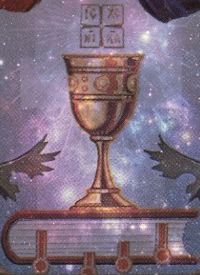
eucharisticon_2

Mystical Energy from God: “Be Attentive”

The Eastern Church understands the mystical life as something already present—surrounding us, sustaining us, inviting our participation. During the Divine Liturgy, clergy and faithful alike repeat a simple command: “Be attentive.” This is not merely a call to listen, but an invitation to awaken to God’s living presence, culminating in the Eucharist.

The eastern rite Eucharist host is shown above the chalice. The host is square compared to a round host in the Latin Roman Catholic rite.

IC XC NIKA Original

The IC XC NIKA is stamped into every prosphoron (loaf of altar bread). The IC XC abbreviation (in both Greek and Slavonic) is the name, “Jesus Christ”.

NIKA is a Greek verb that means “conquers”, or more closely related to “is victorious”.

In receiving this victorious Christ, the Church understands something astonishing is taking place—not symbolically, but mystically. This is the beginning of what the Eastern tradition calls theosis.

Do you not believe that you too are a conqueror? St Paul takes us even further: “We are more than conquerors through Him who loved us” (Romans 8:37). – Abbot Joseph, Mt. Tabor Monastery

The victory that we celebrate is that of Jesus Christ over the world, the flesh, and the devil, over sin and death. For Him to conquer evil was essential to his mission, so much so that St John could even say: “The reason the Son of God appeared was to destroy the works of the devil” (1John 3:8). – Abbot Joseph, Mt. Tabor Monastery
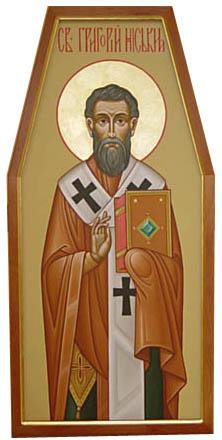
gregory of nyssa HTC

St. Gregory of Nyssa is one of the great contributors to the mystical tradition in Christian spirituality and monasticism. The word became incarnate “so that by becoming as we are, he might make us as he is”, said Gregory of Nyssa.

John Chrysostom prayer, “Receive me today, Son of God, as a partaker of your mystical Supper.”

“It is Gods body that deifies and nourishes me; it deifies the spirit & nourishes the mind mystically.” – St. John Chrysostom

Dorothy Day and Thomas Merton were among the Roman Catholics who loved the Eastern Byzantine liturgy.
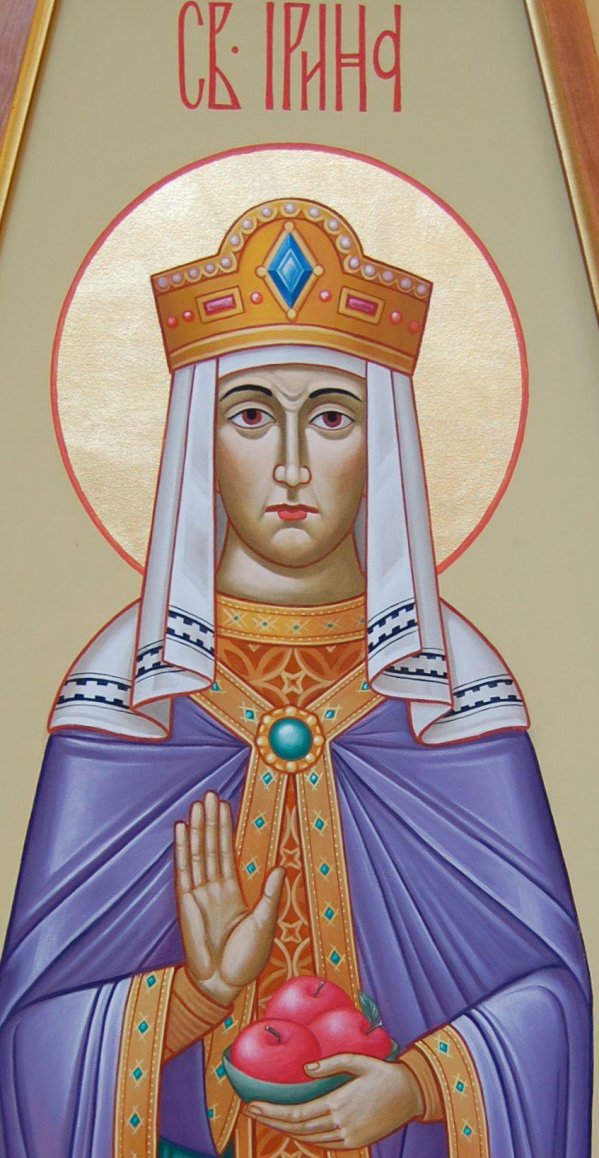
Irene Chrysovalantou

St. Irene Chrysovalantou, granted the gift of clairvoyance. She knew thoughts of all she saw. Holy Trinity Chapel.

When Byzantine theologians describe the reality of the love of God, they always turn to expressions of admiration, amazement, awe and wonder. To define this love is to limit it. It must remain unlimited, boundless, indefinable, unexplainable. The explainable has only limited value and transient interest. The true is always wondrous.

Prayer is the elevation of the intelligence to God, not in order to learn about God but to discover God; not to know about Him but to know Him, to experience God in one’s own life.

– From Introduction to the Byzantine Rite by Archbishop Joseph Raya.

What the Church asks us to be attentive to is nothing less than our transformation.

Theosis: Becoming Like God
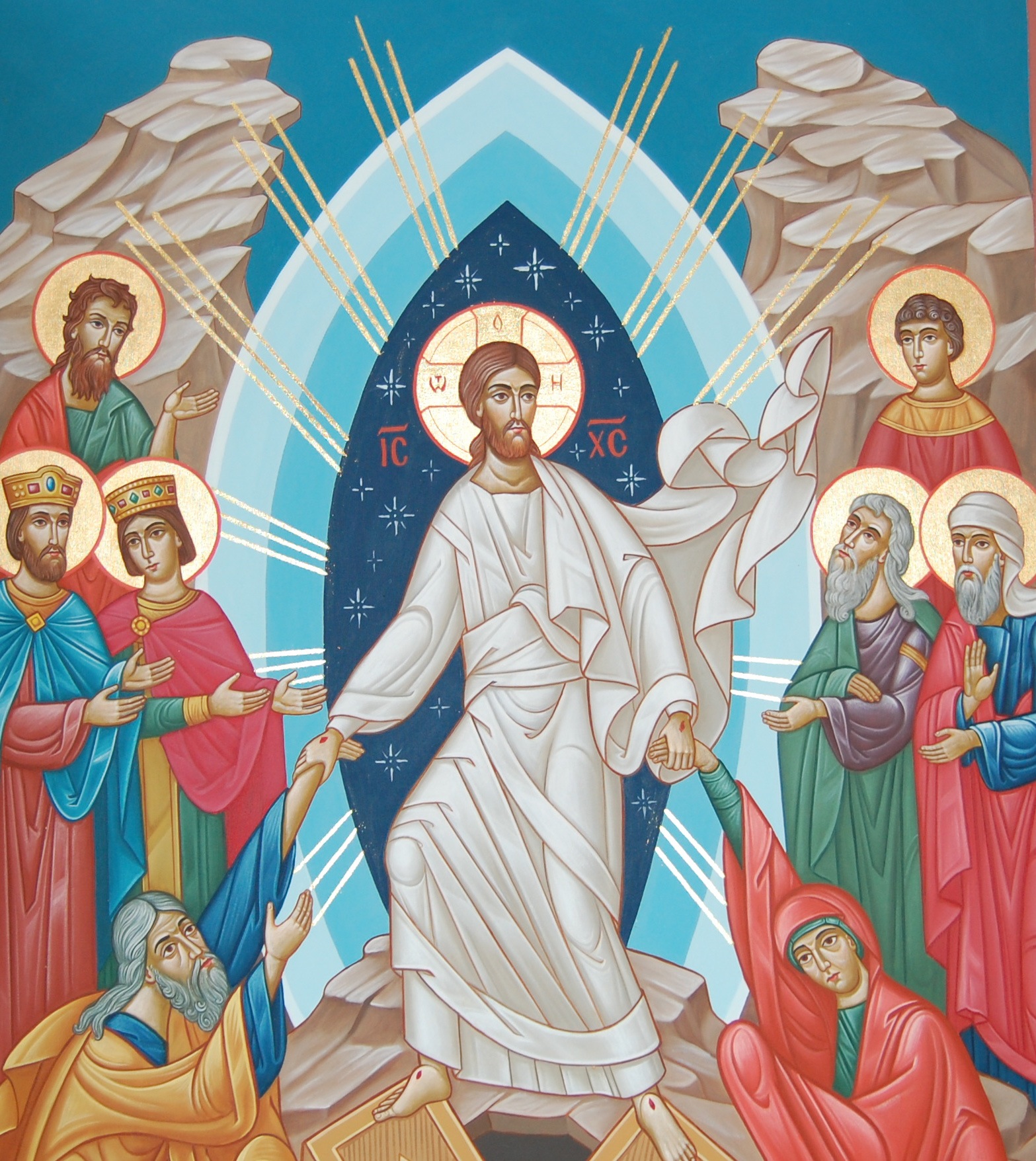
resurrection

We glorify You and fall down before You, for You arose from the tomb, our only God. I will recount Your wonders.

The teaching of deification or theosis in Eastern Orthodoxy and much of Eastern Catholicism refers to the attainment of likeness of God, union with God or reconciliation with God. Theosis is a goal of Eastern Orthodox Christians, as according to the Bible, we are ‘made in the image and likeness of God.’ It is possible for man to become like God, to become deified, to become god by grace. – Millet and Reynolds
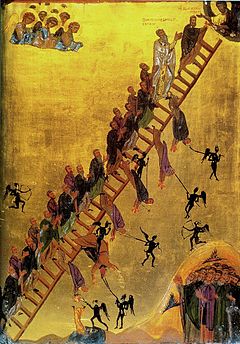
Ladder_of_Divine_Ascent_Monastery_of_St_Catherine_Sinai_12th_century

Ladder of Divine Ascent icon St. Catherine’s Monastery Egypt, 12th century. Monks ascending the ladder to Jesus, led by S. John Climacus. Theosis is the mystery where He makes divinity our own.

St Irenaeus, in his famous phrase, “if the Word has been made man, it is so that men may be made gods.”

“As it [the Holy Spirit] regenerates you, it changes you from corruptible to incorruptible, from mortal to immortal, from sons of men into sons of God and gods by adoption and grace.” – Symeon the New Theologian (10th century)
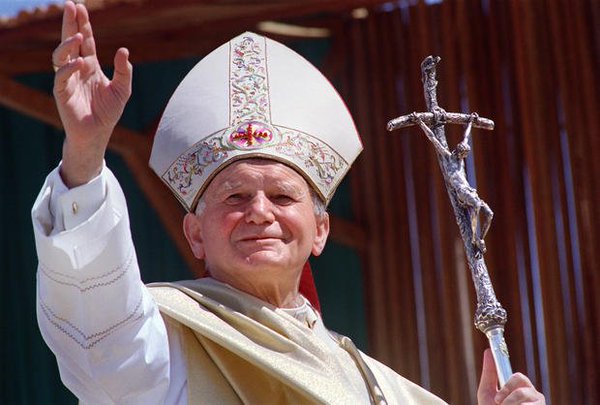
John Paul II B

St. John Paul II said Catholics should be familiar with “the venerable and ancient tradition of the Eastern Churches”.

Irenaeus

St. John Paul II said,

“…the teaching of the Cappadocian Fathers on divinization (which) passed into the tradition of all the Eastern Churches and is part of their common heritage.

This can be summarized in the thought already expressed by Saint Irenaeus at the end of the second century: God passed into man so that man might pass over to God.

This theology of divinization remains one of the achievements particularly dear to Eastern Christian thought.” – St. John Paul II

The fundamental vocation and goal of each and every person is to share in the life of God. We have been created by God to live in fellowship with Him. The descent of God in the Person of Jesus Christ has made possible the human ascent to the Father through the work of the Holy Spirit. Orthodoxy believes that each Christian is involved in a movement toward God which is known as theosis or deification. – Source: Greek Orthodox Archdiocese of America, Rev. Thomas Fitzgerald

Theosis describes the spiritual pilgrimage in which each person becomes ever more perfect, ever more holy, ever more united with God. It is not a static relationship, nor does it take place only after death. On the contrary, theosis is a movement of love toward God which begins for each Christian with the rites of Baptism and which continues throughout this life, as well as the life which is to come.

Salvation means liberation from sin, death, and evil. Redemption means our repossession by God. In Orthodoxy, both salvation and redemption are within the context of theosis. This rich vision of Christian life was expressed well by Saint Peter when he wrote in the early pages of his second Epistle that we are called “to become partakers of the Divine nature.” It was also affirmed by Saint Basil the Great when he described man as the creature who has received the order to become a god. -Source: Greek Orthodox Archdiocese of America, Rev. Thomas Fitzgerald
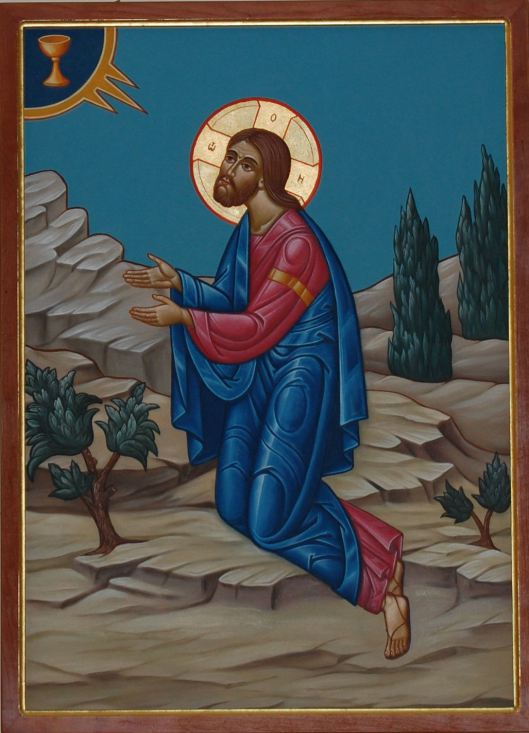
Jesus at the Garden of Gethsemane

Jesus frequently went to Gethsemane with His disciples to pray (John 18:2). Holy Trinity Chapel.

The Orthodox Church understands theosis as a union with the energies of God and not with the essence of God which always remains hidden and unknown. However, the experience of the Church testifies that this is a true union with God. It is also one which is not pantheistic, because in this union the divine and the human retain their unique characteristics. In this sense, Orthodoxy believes that human life reaches its fulfillment only when it becomes divine.  –  The Orthodox Church: An Introduction by Rev. Thomas Fitzgerald

St. Basil the Great, the Jesus Prayer, and the Wisdom of the Three Holy Hierarchs

02 Friday Jan 2026

Posted by Brian in Saints

≈ Leave a comment

Tags

Eastern Catholic, Eastern Christianity, Gregory of Nyssa, Gregorythe Theologian, iconography, icons, Jesus Prayer, Pantocrator, Pascha, Pope Francis, St. Basil, St. John Chrysostom, Theosis, Three Holy Hierarchs

Enter The Jesus Prayer:

way of the pilgrim

Repeating with reverence The Jesus Prayer is a longstanding Eastern Christian tradition.  I first encountered the Jesus Prayer through the spiritual classic, The Way of the Pilgrim. Its author who has never been identified, but I am sure he is a saint. The pilgrim begins his long journey through Siberia reciting the Jesus Prayer:

Lord Jesus Christ, Son of God, have mercy on me a sinner.

The author repeats this prayer thousands of times a day as he travels to small towns with little clothing or food. He carries only one book, the Philokalia, a collection of writings of saints from the 4th to 15th centuries. Saint Paul’s instruction to “pray without ceasing” is practiced literally in The Way of a Pilgrim:

“Everything drew me to love and thank God: people, trees, plants, and animals. I saw them all as my kinfolk; I found in all of them the magic of the name of Jesus”.

An adapted Jesus Prayer: “Lord Jesus Christ, have mercy on my soul.”

Even St. Basil the Great had a Jesus Prayer variation:
 “Accept Immortal King, my repentance, that of a sinner, and turn towards me and hear my words.”

More on the Jesus Prayer 

The Way of a Pilgrim is a classic of Russian Orthodox spirituality, believed to have been written in the 19th century by an anonymous author. Composed in the first person, it presents itself as the real-life testimony of a wandering pilgrim, though most scholars regard it as a work of devotional fiction or, at most, semi-autobiographical.

The narrative follows an unnamed Russian pilgrim as he journeys through European Russia and Siberia, seeking to practice “unceasing prayer” — through the continual repetition of the Jesus Prayer. Poor and largely uneducated, he carries little more than bread, a Bible and a copy of the Philokalia — a collection of texts written between the 4th and 15th centuries by Eastern Orthodox spiritual masters. The Philokalia, central to the hesychast tradition, emphasizes inner stillness and the ceaseless invocation of God’s name.

As he travels, the pilgrim seeks to embody St. Paul’s exhortation:

“Pray without ceasing” (1 Thessalonians 5:17).

His account records not only his efforts to internalize the Jesus Prayer, but also his struggles, doubts, and encounters with spiritual guides who instruct him along the way.
Despite its modest length, The Way of a Pilgrim has had a lasting influence on Christian spirituality, both within and beyond the Orthodox Church. Revered for its simplicity, humility, and depth, it continues to inspire readers as a timeless portrait of a soul wholly devoted to God through the practice of constant prayer.

The Three Holy Hierarchs

3HolyHierarchs

The Three Holy Hierarchs; St. Basil the Great,  St. John Chrysostom, St. Gregory the Theologian, are giants in Eastern Christianity. Saint Gregory the Theologian is known for purity and profundity of his language, St. Basil for his understanding of the Holy Spirit and Saint Chrysostom for his elegant homilies. They all lived in the east, near Cappadocia (Turkey) at the same time in the 4th century.

Folklore has it that each of the three holy Hierarchs appeared in a vision to Saint John Mauropus, the Metropolitan of Euchaïta. “As you see, the three of us are with God and no discord or rivalry divides us…If they (people) honor us thus as being with and in God, we give them our word that we will intercede for their salvation in our common prayer.”

All three Eastern Church Fathers have their feast day in January. In the Roman Catholic west, they are Doctors of the Church.

January 2, 2026 is the feast of St Basil the Great in the west.

St. Basil the Great

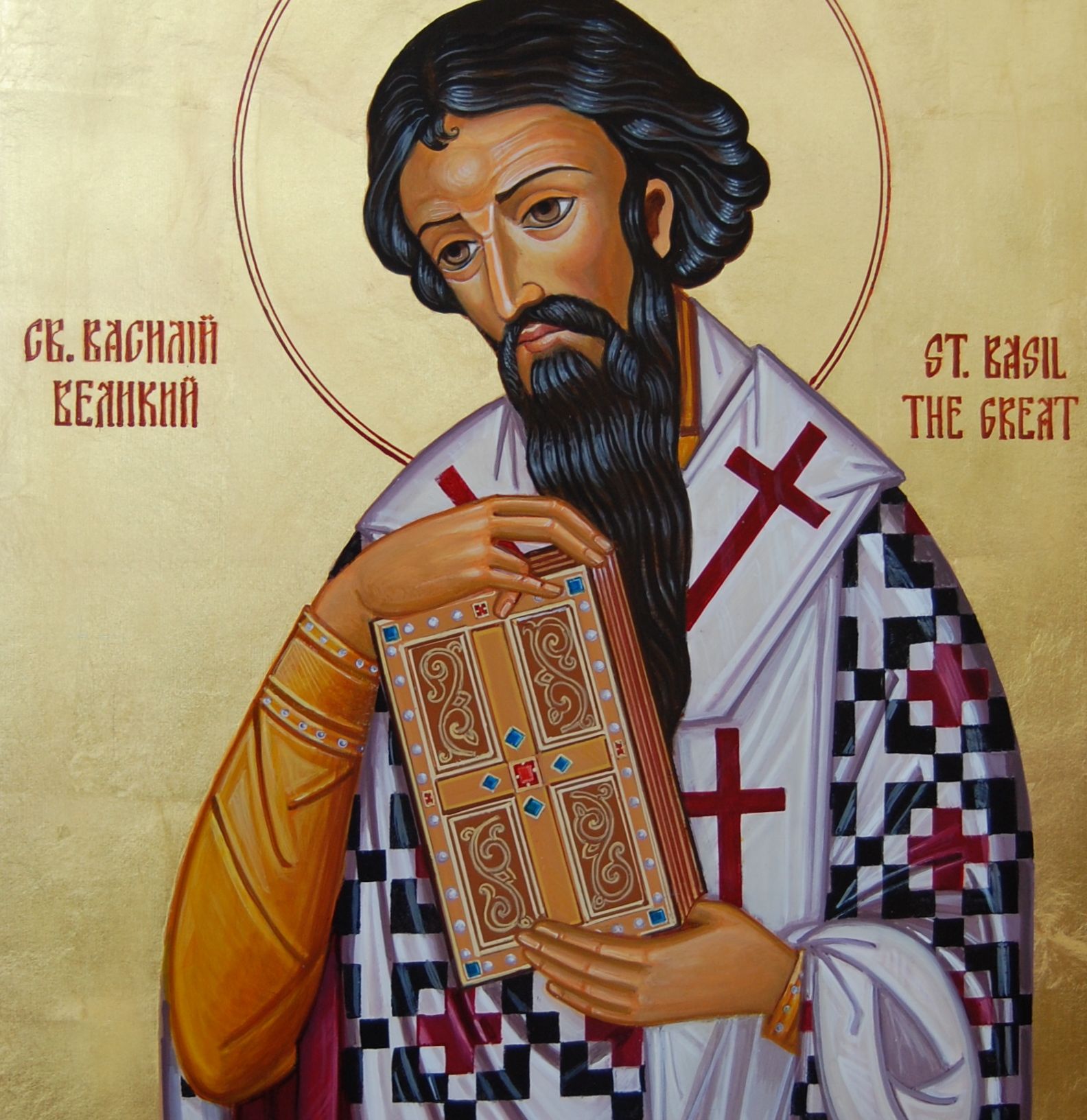
basil the great HTC

St. Basil the Great is a powerhouse figure in Eastern Christianity. From a family of ten siblings, five became saints as well as his grandmother, St. Macrina and his mother, St. Emmellia.

“Examine the actions of each day, advance in virtue, that you may become a companion of the angels.”
– St. Basil the Great (adapted)

Basil traveled to Egypt, where he learned the monastic way of life from ascetic hermits living in caves. Returning to his homeland of Cappadocia, he founded small monastic communities, dividing his time between prayer, meditation on Scripture, and manual labor. Basil believed that when one is living with others in a monastery, the grace bestowed on each individual becomes the common possession of the group.

One of Basil’s teachings on monastic life—equally applicable to religious and secular life—was this:

Prayers are recited early in morning so your first movements are for God. “I remembered God and was delighted.” (Psalm 77)

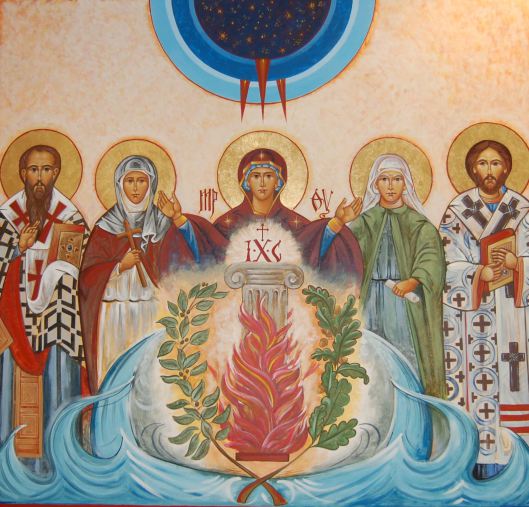
Basil Family basil-mary-macrina-mother-gregory1
The Basilian Family is often depicted together in iconography:
(left to right) Basil; Macrina the Younger; Mother of God; Macrina the Elder; Gregory of Nyssa.

This tradition is reflected in the spirituality of the Sisters of the Order of St. Basil the Great, whose work emphasizes faith, wisdom, and love of knowledge. Basilian Spirituality Center.

An academic priest from Temple University once shared with our congregation that St. Basil authored the “Glory Be to The Father” prayer, one of the most widely said prayers in Christian history. Many people are unaware that Basil created this prayer.

Pope Francis (RIP) has frequently identified with Basil’s teachings and quoted him in the Laudato Si encyclical

“If the world has a beginning … we must inquire who gave it this beginning, who was its Creator”.

basil #LaudatoSi- If the world has a beginning..we must inquire who gave it this beginning, who was its Creator."“Silence is the beginning of purifying the soul.”
– St. Basil the Great
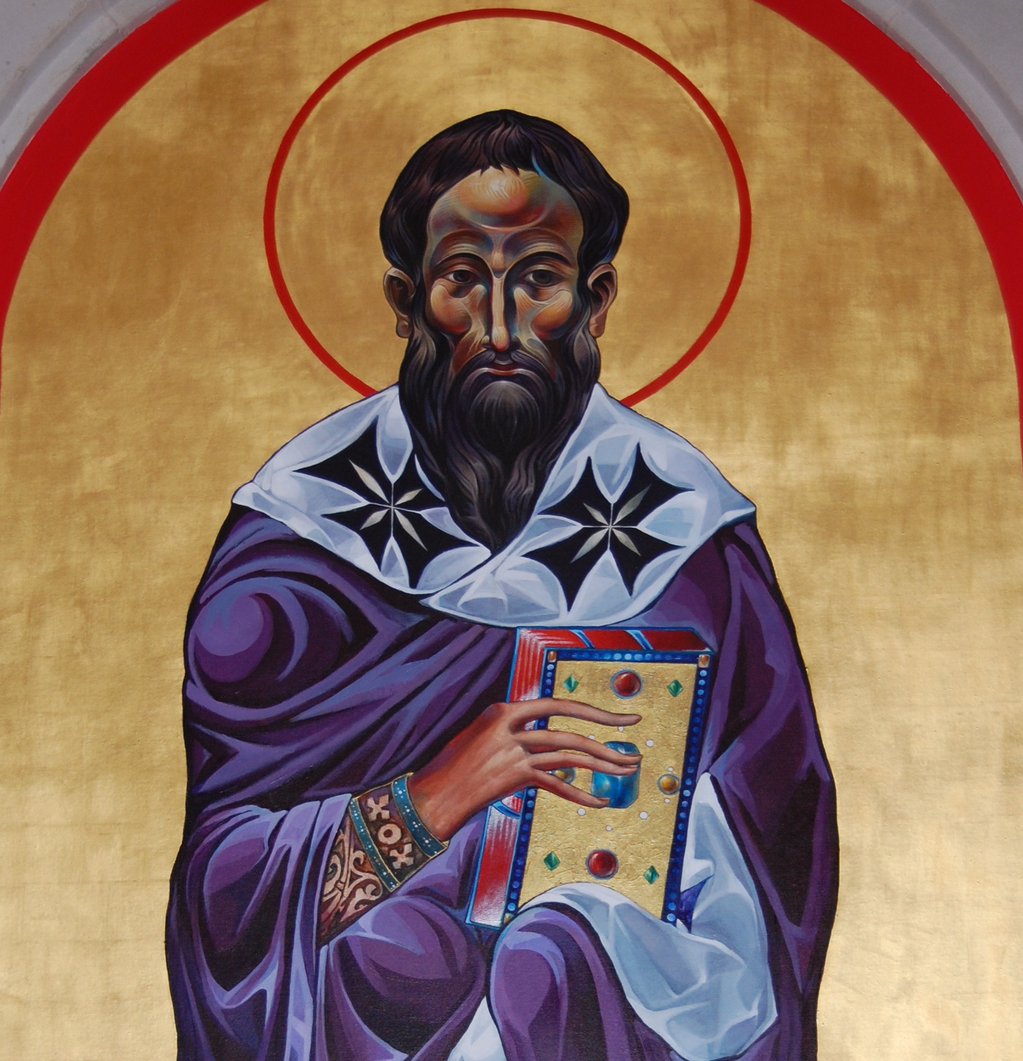
This icon above of St. Basil the Great is an original, written by the famous Georgian iconographer Niko Chocheli from the former Soviet Union, displayed at St. Basil the Great Church, Kimberton PA.

Basil’s theological masterpiece On The Holy Spirit, defining the Holy Trinity as One God in Three Persons, a complex theology topic even today.

“It is impossible to recognize Christ, image of the invisible God, unless the Spirit enlightens you.” – St. Basil

Well after his death, the Council of Chalcedon described Basil as “the great Basil, minister of grace who has expounded the truth to the whole earth”, thereby giving him the name Basil the Great!

ephram the poet

Witness of St. Ephraim the Syrian

St. Ephraim the Syrian was a clairvoyant who actually met St. Basil. In a vision he saw a pillar of flame to heaven and a voice proclaiming:
“Such is the Great Basil!”

Ephraim is also remembered as “the greatest poet of the patristic age and perhaps the only theologian/poet to rank beside Dante.”

“Do nothing at all unless you begin with prayer.”

Here is what St. Basil had to say:

“To you will I pray, O Lord: In the morning you will hear my voice, I will stand before you and will see.”

“Intimacy with the Lord is achieved by cheerful readiness to do the will of God.”

“With the words of Scripture we feed our faith, we lift up our hope, we confirm our confidence.”

St. John Chrysostom

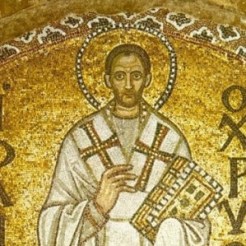
St. John Chrysostom, from Hagia Sophia Turkey
Hagia Sophia

Inside Hagia Sophia | Mosaics & Artifacts
St. John Chrysostom, from inside the Hagia Sophia, pictured at the top.
Hagia Sophia is located in Istanbul, Turkey. It overlooks the Sea of Marmara.
Inside Hagia Sophia showing mosaics and icons.

St. John Chrysostom prayers are used extensively in the Eastern Byzantine Catholic and Orthodox churches liturgy, showing the respect he garners. While the Divine Liturgy of St. Basil the Great is celebrated about ten times each year, most of the liturgical year follows the Liturgy of St. John Chrysostom.

“I am not worthy Lord, for you to come under my roof, yet you wish to dwell in me”
– St. John Chrysostom

St. John took Matthew 8:8 “But the centurion replied to Him, “Lord, I am not worthy to have You come under my roof, but only say the word, and my servant will be healed”.  St. John expanded this humility into one of the Church’s most moving prayers:

“Lord my God, I know that I am not worthy, nor sufficient, that you should come under the roof of the house of my soul, for it is entirely desolate and in ruins, and you do not have a worthy place in me to lay your head. But as you humbled yourself from on high for our sake, do likewise also for my unworthiness.”

In addition to one of the Three Holy Hierarchs in the East, St. John Chrysostom is honored in the West as one of the 33 Doctors of the Church, and remembered especially for his extensive and profound teachings on the subject of the Holy Eucharist. Alongside St. Joseph, he was named co-patron of the Second Vatican Council by Pope Saint John XXIII, underscoring his lasting influence on the universal Church.

“Prayer is a place of refuge for every worry, a foundation for cheerfulness, a source of happiness.”
— St. John Chrysostom

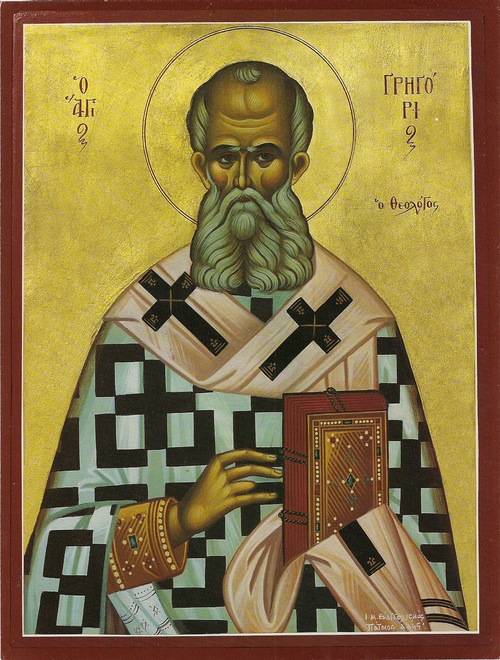
St. Gregory the Theologian

St. Gregory the Theologian

“Let us become like Christ, since Christ became like us.
He assumed the worse that He might give us the better;
He became poor that we might be rich”
– St. Gregory the Theologian

St. Gregory of Nazianzus, who is also called the Theologian, was born in Nazianzus in Cappodocia in 325 A.D. He was the Archbishop of Constantinople.

Becoming or imitating Christ is the basis for theosis, an Eastern Christian theology concept.  St. Peter wrote in the bible that we are called “to become partakers of the Divine nature.” St. Basil the Great likewise described humanity as the creature who has received the command to become godlike through grace.

After his baptism at age 30, St. Gregory the Theologian joined his friend Basil in a newly founded monastery. Together, they opposed Arianism, which denied the divine nature of Jesus Christ, and they helped define the doctrine of the Holy Trinity through their great sermons.

The Three Holy Hierarchs remain powerful intercessors for us in Heaven.

“Let us become as Christ is, since Christ became as we are;
let us become gods for his sake, since he became man for our sake.”
– St. Gregory the Theologian

Closing Prayer
— A prayer inspired by the Three Holy Hierarchs

Holy Hierarchs—St. Basil the Great, St. John Chrysostom, and St. Gregory the Theologian —
faithful servants of Christ and teachers of the Church,
intercede for us before the throne of God.
Teach us to pray without ceasing,
to love the truth with humility,
and to seek unity without rivalry.

May we grow in wisdom, charity, and holiness,
that our lives may give glory to the Father,
the Son, and the Holy Spirit,
now and forever. Amen.

Resources
(for the entire post)

Ukrainian Catholic Archeparchy of Philadelphia

The Sisters of the Order of St. Basil the Great

Byzantine Catholic Eparchy of Passaic (NJ)

Society of St. John Chrysostom Western Region

Greek Orthodox Church of America

Sheptytsky Institute St. Paul University, Ottawa

St. Basil the Great Parish Kimberton PA

Follow @shrinetower

Enter your email address to follow this blog and receive notifications of new posts by email.

Most Recent Posts

  • Theosis: Becoming Like God — “Be Attentive” to Divine Energy
  • St. Basil the Great, the Jesus Prayer, and the Wisdom of the Three Holy Hierarchs
  • From Elijah to Today: The Legacy of Mount Carmel
  • Celebrating St. Basil: Paths to Divine Union and the Essence of Eastern Christianity
  • J.S. Bach – Christmas Oratorio BWV 248
  • Merry Christmas to all!

Previous Posts

Tags

Eastern Christianity Gregory of Nyssa music Pope Francis Saint saints Shrine St. Basil St. Ignatius of Loyola St. Vincent de Paul

The Cover Art

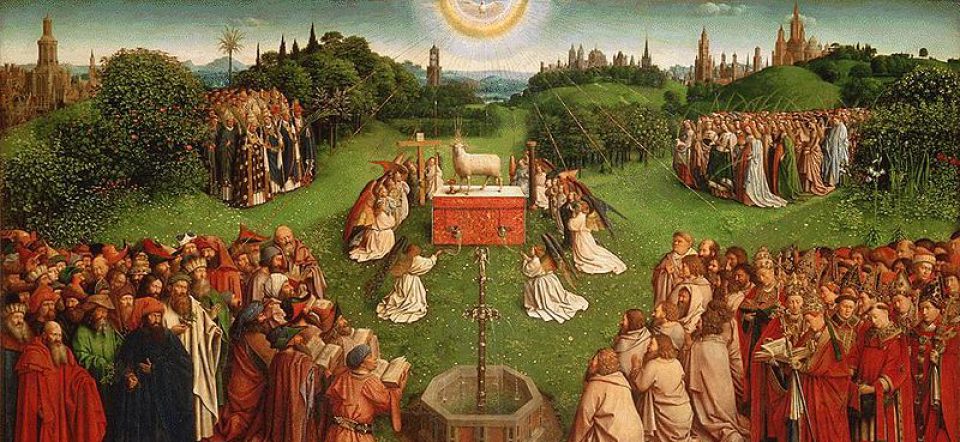
Jan Van Eyck, “The Adoration of the Lamb” 1432 from the Ghent Alterpiece. Detail: The red altar where the lamb stands reads, “Behold the Lamb of God, which taketh away the sins of the world” and “Jesus the way, the truth, and the life”, both quotes from Gospel of John. In this image and in the book of Revelation the Lamb is Jesus. Directly around the Lamb on the altar are angels who are carrying the instruments in the Passion scenes, like the cross and crown of thorns.

gichontree

Unknown's avatarThere's beauty in sacred spaces; from the stories they tell in architecture, stained glass windows and icons; to the rituals and liturgy that arises our soul. Inside a shrine, the angels and saints praise God with us. I hope to relay the message for the kingdom, power and glory of God, now and forever.

Blog at WordPress.com.

Privacy & Cookies: This site uses cookies. By continuing to use this website, you agree to their use.
To find out more, including how to control cookies, see here: Cookie Policy
  • Subscribe Subscribed
    • Shrine Tower
    • Join 76 other subscribers
    • Already have a WordPress.com account? Log in now.
    • Shrine Tower
    • Subscribe Subscribed
    • Sign up
    • Log in
    • Report this content
    • View site in Reader
    • Manage subscriptions
    • Collapse this bar
 

Loading Comments...