Tags
Eastern Catholic, Eastern Christianity, Gregory of Nyssa, Gregorythe Theologian, iconography, icons, Jesus Prayer, Pantocrator, Pascha, Pope Francis, St. Basil, St. John Chrysostom, Theosis, Three Holy Hierarchs
Enter The Jesus Prayer:

Repeating with reverence The Jesus Prayer is a longstanding Eastern Christian tradition. I first encountered the Jesus Prayer through the spiritual classic, The Way of the Pilgrim. Its author who has never been identified, but I am sure he is a saint. The pilgrim begins his long journey through Siberia reciting the Jesus Prayer:
Lord Jesus Christ, Son of God, have mercy on me a sinner.
The author repeats this prayer thousands of times a day as he travels to small towns with little clothing or food. He carries only one book, the Philokalia, a collection of writings of saints from the 4th to 15th centuries. Saint Paul’s instruction to “pray without ceasing” is practiced literally in The Way of a Pilgrim:
“Everything drew me to love and thank God: people, trees, plants, and animals. I saw them all as my kinfolk; I found in all of them the magic of the name of Jesus”.
An adapted Jesus Prayer: “Lord Jesus Christ, have mercy on my soul.”
Even St. Basil the Great had a Jesus Prayer variation:
“Accept Immortal King, my repentance, that of a sinner, and turn towards me and hear my words.”
More on the Jesus Prayer
The Way of a Pilgrim is a classic of Russian Orthodox spirituality, believed to have been written in the 19th century by an anonymous author. Composed in the first person, it presents itself as the real-life testimony of a wandering pilgrim, though most scholars regard it as a work of devotional fiction or, at most, semi-autobiographical.
The narrative follows an unnamed Russian pilgrim as he journeys through European Russia and Siberia, seeking to practice “unceasing prayer” — through the continual repetition of the Jesus Prayer. Poor and largely uneducated, he carries little more than bread, a Bible and a copy of the Philokalia — a collection of texts written between the 4th and 15th centuries by Eastern Orthodox spiritual masters. The Philokalia, central to the hesychast tradition, emphasizes inner stillness and the ceaseless invocation of God’s name.
As he travels, the pilgrim seeks to embody St. Paul’s exhortation:
“Pray without ceasing” (1 Thessalonians 5:17).
His account records not only his efforts to internalize the Jesus Prayer, but also his struggles, doubts, and encounters with spiritual guides who instruct him along the way.
Despite its modest length, The Way of a Pilgrim has had a lasting influence on Christian spirituality, both within and beyond the Orthodox Church. Revered for its simplicity, humility, and depth, it continues to inspire readers as a timeless portrait of a soul wholly devoted to God through the practice of constant prayer.
The Three Holy Hierarchs

The Three Holy Hierarchs; St. Basil the Great, St. John Chrysostom, St. Gregory the Theologian, are giants in Eastern Christianity. Saint Gregory the Theologian is known for purity and profundity of his language, St. Basil for his understanding of the Holy Spirit and Saint Chrysostom for his elegant homilies. They all lived in the east, near Cappadocia (Turkey) at the same time in the 4th century.
Folklore has it that each of the three holy Hierarchs appeared in a vision to Saint John Mauropus, the Metropolitan of Euchaïta. “As you see, the three of us are with God and no discord or rivalry divides us…If they (people) honor us thus as being with and in God, we give them our word that we will intercede for their salvation in our common prayer.”
All three Eastern Church Fathers have their feast day in January. In the Roman Catholic west, they are Doctors of the Church.
January 2, 2026 is the feast of St Basil the Great in the west.
St. Basil the Great
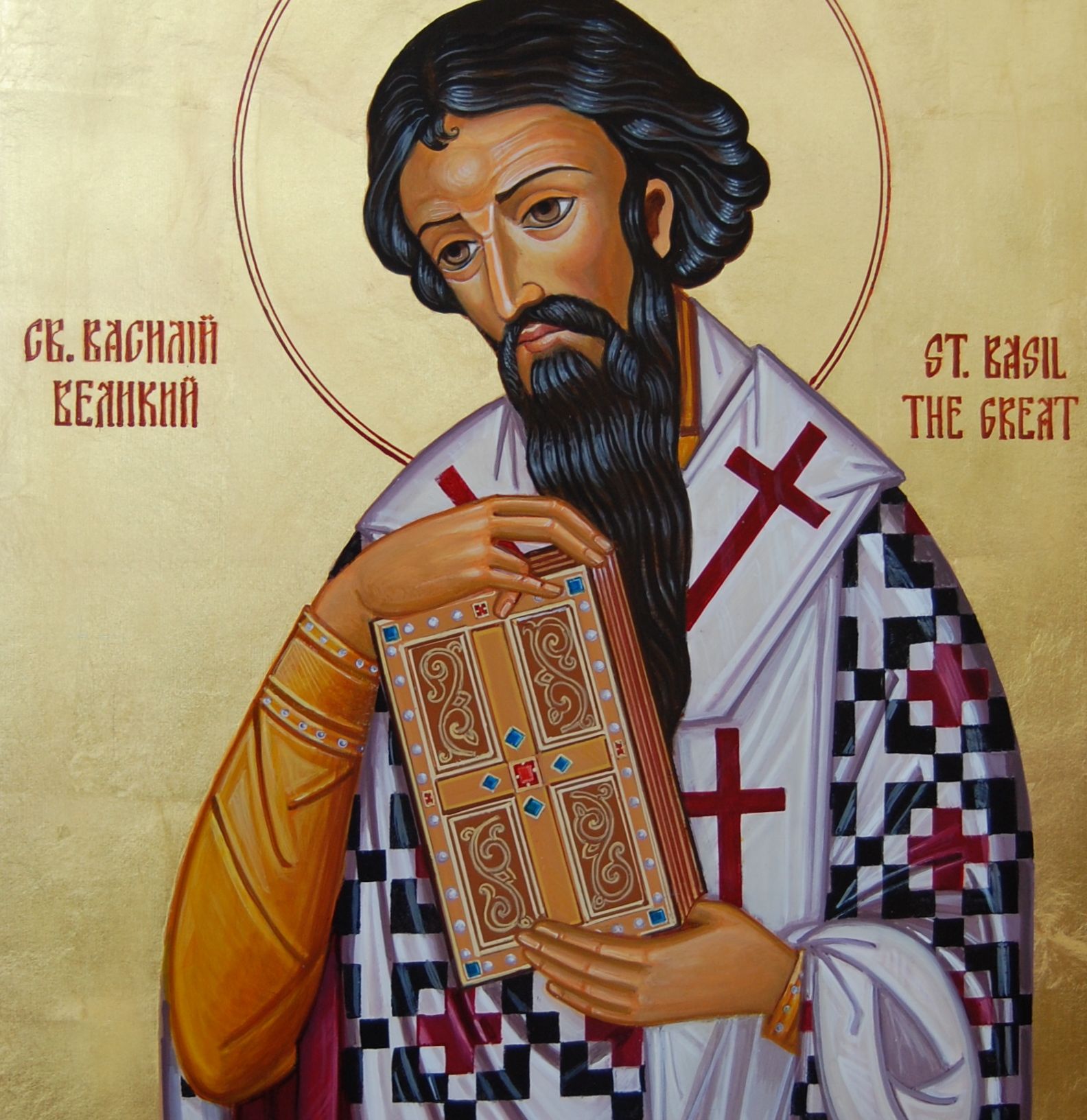
St. Basil the Great is a powerhouse figure in Eastern Christianity. From a family of ten siblings, five became saints as well as his grandmother, St. Macrina and his mother, St. Emmellia.
“Examine the actions of each day, advance in virtue, that you may become a companion of the angels.”
– St. Basil the Great (adapted)
Basil traveled to Egypt, where he learned the monastic way of life from ascetic hermits living in caves. Returning to his homeland of Cappadocia, he founded small monastic communities, dividing his time between prayer, meditation on Scripture, and manual labor. Basil believed that when one is living with others in a monastery, the grace bestowed on each individual becomes the common possession of the group.
One of Basil’s teachings on monastic life—equally applicable to religious and secular life—was this:
Prayers are recited early in morning so your first movements are for God. “I remembered God and was delighted.” (Psalm 77)
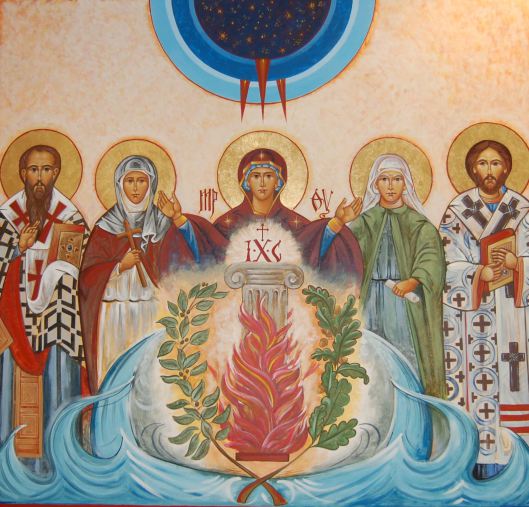
The Basilian Family is often depicted together in iconography:
(left to right) Basil; Macrina the Younger; Mother of God; Macrina the Elder; Gregory of Nyssa.
This tradition is reflected in the spirituality of the Sisters of the Order of St. Basil the Great, whose work emphasizes faith, wisdom, and love of knowledge. Basilian Spirituality Center.
An academic priest from Temple University once shared with our congregation that St. Basil authored the “Glory Be to The Father” prayer, one of the most widely said prayers in Christian history. Many people are unaware that Basil created this prayer.
Pope Francis (RIP) has frequently identified with Basil’s teachings and quoted him in the Laudato Si encyclical
“If the world has a beginning … we must inquire who gave it this beginning, who was its Creator”.
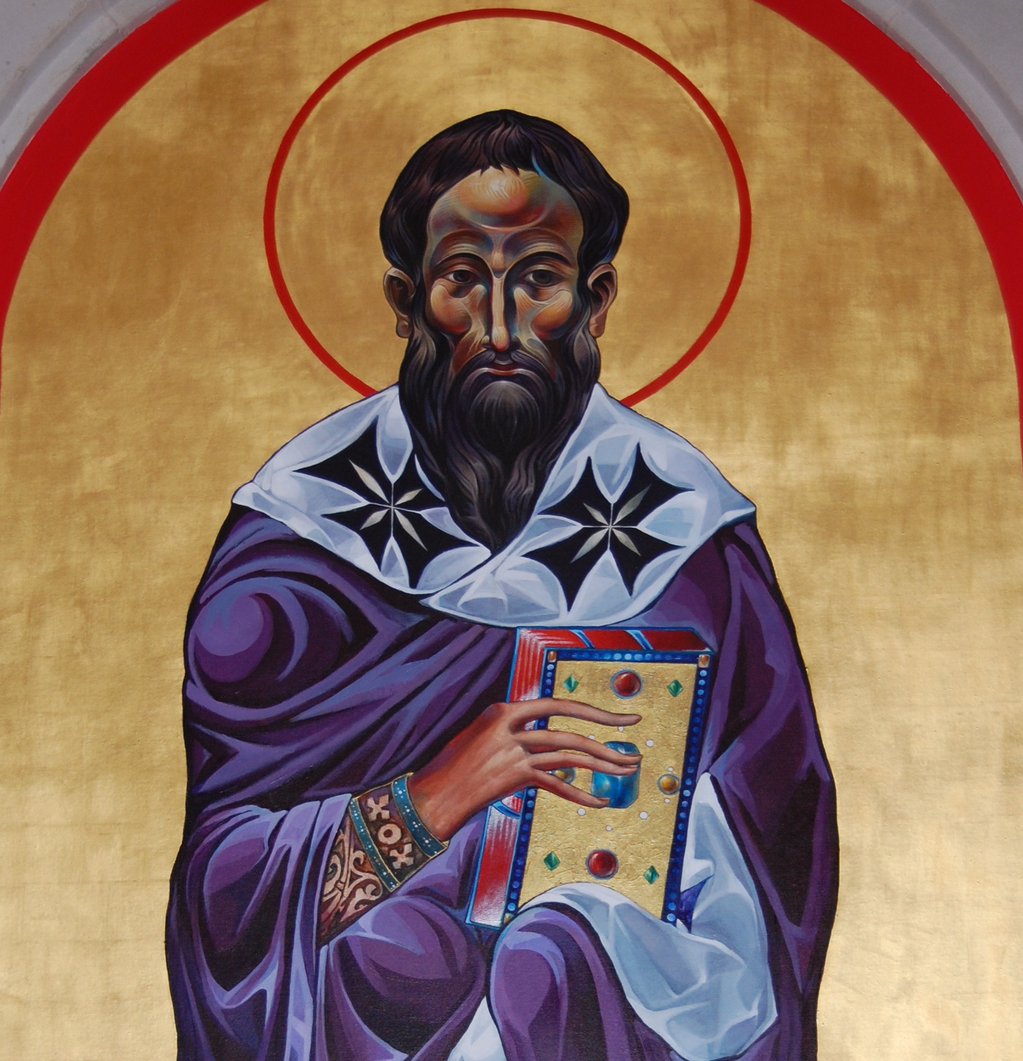 “Silence is the beginning of purifying the soul.”
– St. Basil the Great
This icon above of St. Basil the Great is an original, written by the famous Georgian iconographer Niko Chocheli from the former Soviet Union, displayed at St. Basil the Great Church, Kimberton PA.
Basil’s theological masterpiece On The Holy Spirit, defining the Holy Trinity as One God in Three Persons, a complex theology topic even today.
“It is impossible to recognize Christ, image of the invisible God, unless the Spirit enlightens you.” – St. Basil
Well after his death, the Council of Chalcedon described Basil as “the great Basil, minister of grace who has expounded the truth to the whole earth”, thereby giving him the name Basil the Great!

Witness of St. Ephraim the Syrian
St. Ephraim the Syrian was a clairvoyant who actually met St. Basil. In a vision he saw a pillar of flame to heaven and a voice proclaiming:
“Such is the Great Basil!”
Ephraim is also remembered as “the greatest poet of the patristic age and perhaps the only theologian/poet to rank beside Dante.”
“Do nothing at all unless you begin with prayer.”
Here is what St. Basil had to say:
“To you will I pray, O Lord: In the morning you will hear my voice, I will stand before you and will see.”
“Intimacy with the Lord is achieved by cheerful readiness to do the will of God.”
“With the words of Scripture we feed our faith, we lift up our hope, we confirm our confidence.”
St. John Chrysostom
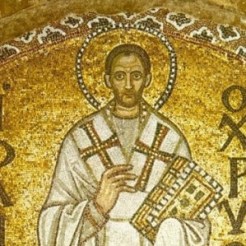


St. John Chrysostom, from inside the Hagia Sophia, pictured at the top.
Hagia Sophia is located in Istanbul, Turkey. It overlooks the Sea of Marmara.
Inside Hagia Sophia showing mosaics and icons.
St. John Chrysostom prayers are used extensively in the Eastern Byzantine Catholic and Orthodox churches liturgy, showing the respect he garners. While the Divine Liturgy of St. Basil the Great is celebrated about ten times each year, most of the liturgical year follows the Liturgy of St. John Chrysostom.
“I am not worthy Lord, for you to come under my roof, yet you wish to dwell in me”
– St. John ChrysostomSt. John took Matthew 8:8 “But the centurion replied to Him, “Lord, I am not worthy to have You come under my roof, but only say the word, and my servant will be healed”. St. John expanded this humility into one of the Church’s most moving prayers:
“Lord my God, I know that I am not worthy, nor sufficient, that you should come under the roof of the house of my soul, for it is entirely desolate and in ruins, and you do not have a worthy place in me to lay your head. But as you humbled yourself from on high for our sake, do likewise also for my unworthiness.”
In addition to one of the Three Holy Hierarchs in the East, St. John Chrysostom is honored in the West as one of the 33 Doctors of the Church, and remembered especially for his extensive and profound teachings on the subject of the Holy Eucharist. Alongside St. Joseph, he was named co-patron of the Second Vatican Council by Pope Saint John XXIII, underscoring his lasting influence on the universal Church.
“Prayer is a place of refuge for every worry, a foundation for cheerfulness, a source of happiness.”
— St. John Chrysostom
St. Gregory the Theologian
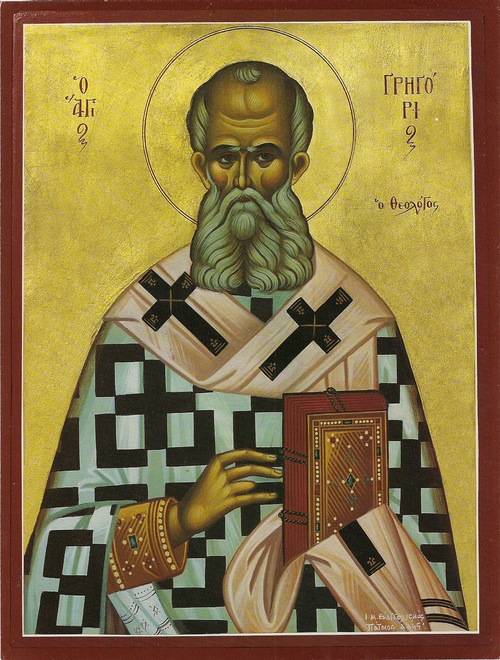
“Let us become like Christ, since Christ became like us.
He assumed the worse that He might give us the better;
He became poor that we might be rich”
– St. Gregory the Theologian
St. Gregory of Nazianzus, who is also called the Theologian, was born in Nazianzus in Cappodocia in 325 A.D. He was the Archbishop of Constantinople.
Becoming or imitating Christ is the basis for theosis, an Eastern Christian theology concept. St. Peter wrote in the bible that we are called “to become partakers of the Divine nature.” St. Basil the Great likewise described humanity as the creature who has received the command to become godlike through grace.
After his baptism at age 30, St. Gregory the Theologian joined his friend Basil in a newly founded monastery. Together, they opposed Arianism, which denied the divine nature of Jesus Christ, and they helped define the doctrine of the Holy Trinity through their great sermons.
The Three Holy Hierarchs remain powerful intercessors for us in Heaven.
“Let us become as Christ is, since Christ became as we are;
let us become gods for his sake, since he became man for our sake.”
– St. Gregory the Theologian
Closing Prayer
— A prayer inspired by the Three Holy Hierarchs
Holy Hierarchs—St. Basil the Great, St. John Chrysostom, and St. Gregory the Theologian —
faithful servants of Christ and teachers of the Church,
intercede for us before the throne of God.
Teach us to pray without ceasing,
to love the truth with humility,
and to seek unity without rivalry.
May we grow in wisdom, charity, and holiness,
that our lives may give glory to the Father,
the Son, and the Holy Spirit,
now and forever. Amen.
Resources
(for the entire post)
Ukrainian Catholic Archeparchy of Philadelphia
The Sisters of the Order of St. Basil the Great
Byzantine Catholic Eparchy of Passaic (NJ)
Society of St. John Chrysostom Western Region
Greek Orthodox Church of America
Sheptytsky Institute St. Paul University, Ottawa
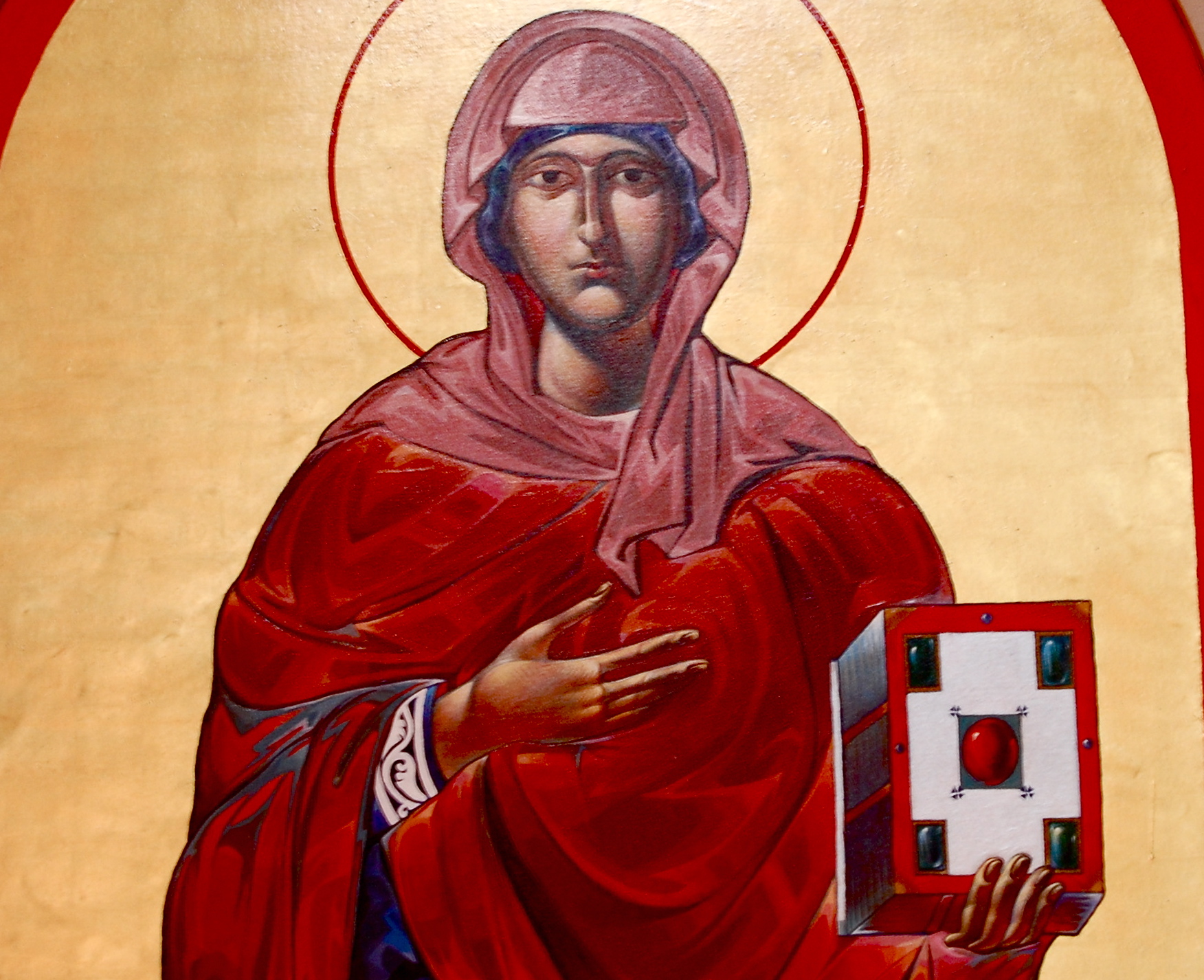
 The St. Macrina mural by famous Georgian iconographer and painter, Niko Chocheli from the former Soviet Union. St. Basil the Great RC Church, Pennsylvania circa 2005


 Shrine Tower