In preparation of St. Basil the Great’s Feast Day on January 2nd, some thoughts.
Saints are those who most fully achieved union with God. Paths to union with God are:
- Apostles: They spread the teachings of Jesus Christ, establishing the foundations of the Church.
- Prophets: They received divine messages and foretold the coming of Christ, guiding souls towards God.
- Martyrs: Their ultimate sacrifice bears witness to their faith, achieving union through their love for God even unto death.
- Fathers of the Church: Through their theological writings and teachings, they helped define Christian doctrine, deepening the Church’s understanding of God.
- Monastics: By withdrawing from the world, they seek God in solitude, prayer, and contemplation, aiming for spiritual perfection.
- Normal lives devoted to God: Ordinary individuals can also achieve union by living out their faith through everyday acts of love, charity, and devotion.
The Special Veneration to Mary: Mary holds a unique place in Christian devotion as the Mother of God, her life a perfect example of human response to divine will.
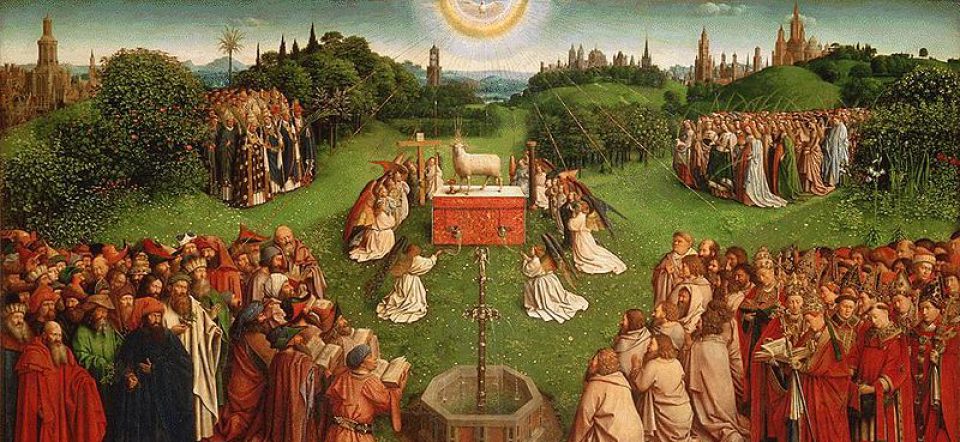
Icons: They are not mere art; they are windows to the divine, inviting us into a deeper communion with God. Through veneration of icons, we are reminded of the saints’ lives, like St Basil’s, inspiring us towards our own spiritual journey.
Trinity: The mystery of the Trinity—Father, Son, and Holy Spirit—offers a model for human relationships and the ultimate union with the divine.
Tradition: Tradition keeps the living faith of the Church vibrant, connecting current believers with the teachings and practices of the past.
Scripture: The Word of God in Scripture provides direct guidance and revelation, serving as a path to knowing and loving God.
The Fathers: The writings of the Church Fathers offer interpretations and insights into Scripture and tradition, fostering a deeper theological understanding.
Divine Liturgy: The Divine Liturgy is the Church’s central act of worship, where heaven and earth unite, offering believers a taste of eternal life with God.
Ecumenical Councils: These councils shaped the Church’s doctrine, ensuring orthodoxy and unity, guiding believers towards truth.
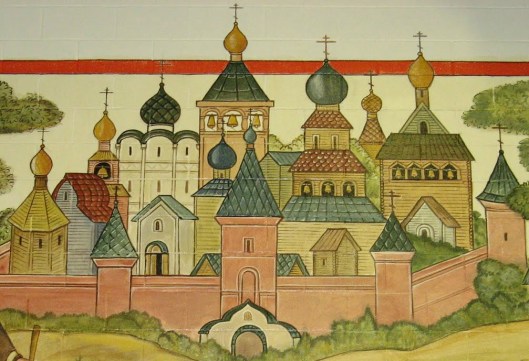
Church Architecture: Church architecture, with its sacred space and design, is meant to elevate the soul, symbolizing the journey from the material to the divine.

Icon from The Holy Trinity Chapel, Sisters of the Order of Saint Basil the Great located at 710 Fox Chase Road, Philadelphia PA.
Hail, Mother of God; as today you saw the One you bore flying up from earth, with Angels you magnified him.
“How lovely your dwelling, O Lord of Hosts!” Psalm 84:1

“The Holy Trinity” by Russian iconographer Andrei Rublev (b1360) Holy Spirit on right, Son in middle, Father on left.
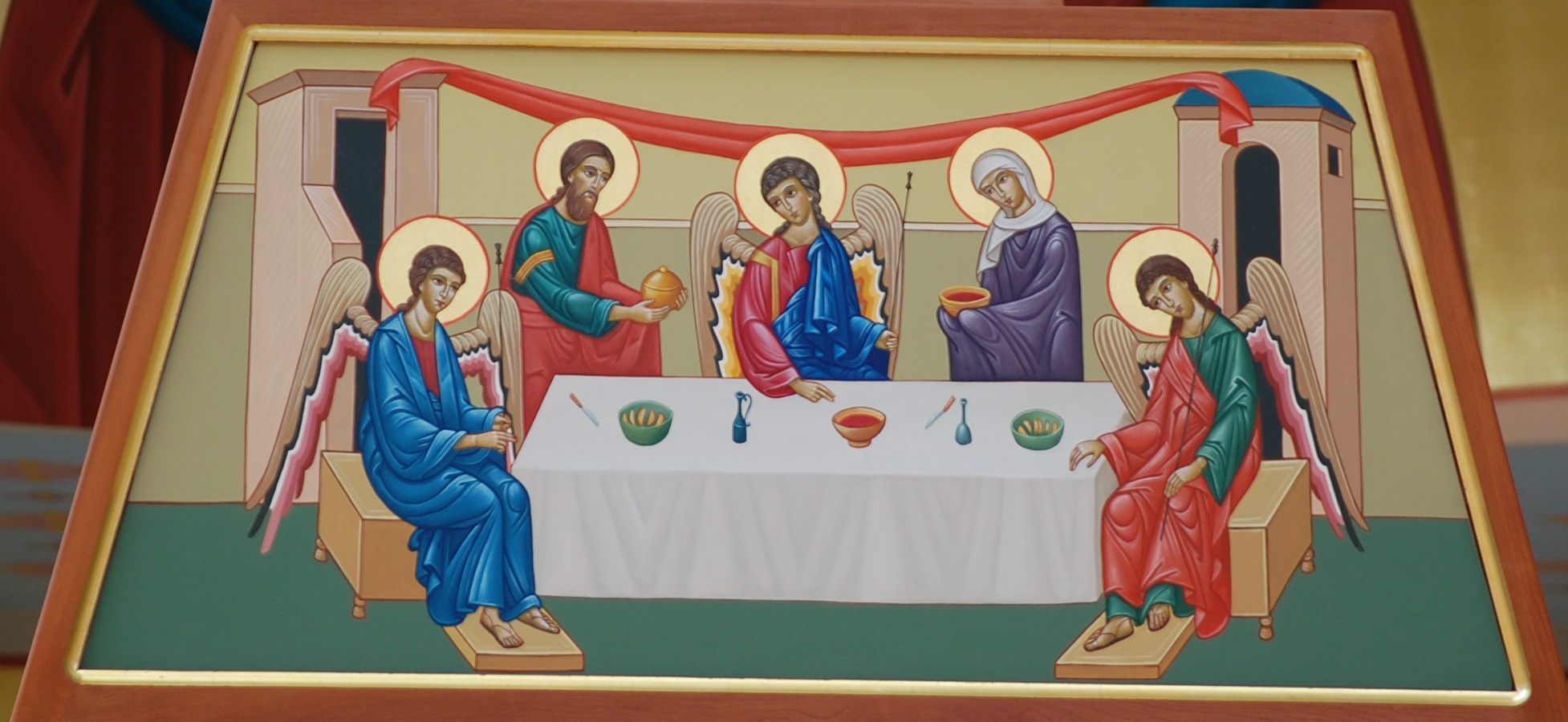
“Old Testament Trinity” Three angels with Abraham and Sarah.

“Old Testament Trinity” Immaculate Conception
During a sermon, His Beatitude Sviatoslav (who is the current Major Archbishop of Kyiv-Galicia and the Primate of the Ukrainian Greek Catholic Church) said that God created us in His own image and likeness, “He who is Light, created people in the image of His own light. He wanted us to be not just like Him and His everlasting light, but become the light ourselves”.
“We cannot hide the lamp that is lit, under a bushel. It must be put on the table to shine through all those who are in the house. So, that is why, the holy ascetics, called Reverend Fathers, are seen as those who shine with the light of God. Moreover, those, who themselves are this way to the Light”, explained the Major Archbishop.

Major Archbishop Sviatoslav Shevchuk, Father and Head of the Ukrainian Greek Catholic Church
The sanctuary is to be separated from the nave by an iconostasis, outside of which is located the so-called solea. Two large candles, lit during all religious services are to be placed on the solea before the stationary icons.
In the early church a very serious controversy broke out over the use of icons, with the opponents claiming that the use of icons in liturgy was idolatrous and against the First Commandment: “You shall have no other gods before me”. The dispute was finally settled by the Second Council of Nicaea held in 787 at which the Christian Church defined the doctrine concerning the lawfulness of the veneration of icons. On the occasion of the 1200th anniversary of this council Pope John Paul II issued an apostolic letter in which he gives his support both for this council and the use of icons in liturgical worship.
He makes specific reference to the role of icons in the Greek and Slav Churches:
“In particular, the Greek and Slav Churches, basing themselves on the works of the iconodulous theologians Saints Nicephorous of Constantinople and Theodore Studite, considered the veneration of icons as an integral part of the liturgy, like the celebration of the Word. Just as the reading of material books allows the hearing of the living word of the Lord, so also the showing of the painted icon allows those who contemplate it to accede to the mystery of salvation by the sense of sight. What on the one hand is represented by ink and paper is represented on the other hand in the icon, thanks to the various colors and other materials.”
 Shrine Tower