Tags
Basilica Shrine of Our Lady of the Miraculous Medal, hymns, Miraculous Medal Shrine, music, St. Vincent de Paul
Basilica Shrine of Our Lady of the Miraculous Medal
Wednesday, November 18, 2026
The Hymns
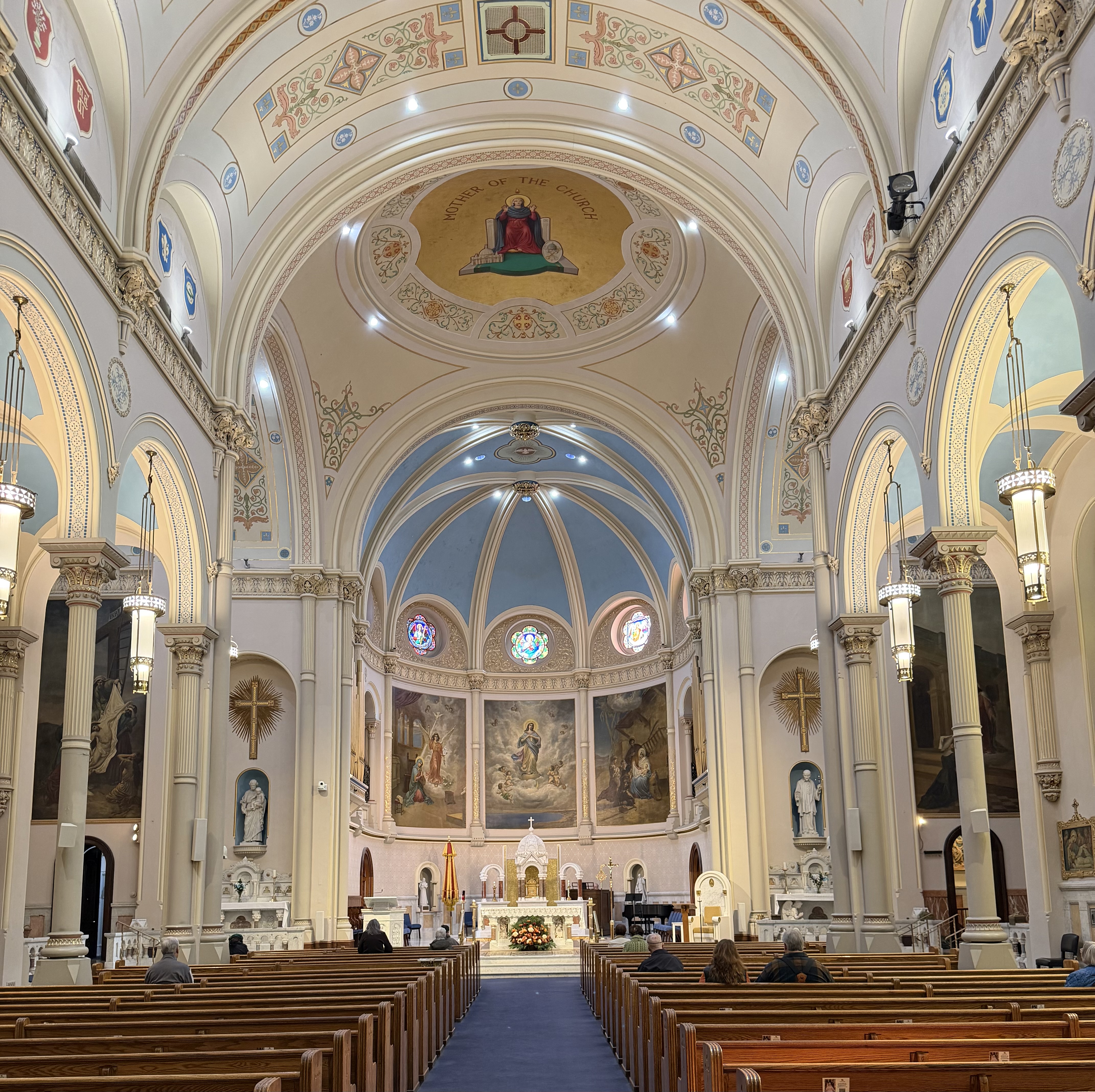
The hymns on Day 3 of the Solemn Novena were Immaculate Mary, whose familiar refrain, “Ave, ave, ave Maria,” echoes the angel Gabriel’s greeting to Mary at the Annunciation; Festival Canticle: Worthy Is Christ, a hymn of praise based on Revelation 5:12–14. The canticle draws upon St. John’s vision of heavenly worship, where Christ is acclaimed as the Lamb who was slain. Its joyful refrain celebrates Christ’s victory over sin and death.
Holy, Holy, Holy is a hymn of praise to the Holy Trinity, drawing upon the biblical visions of heavenly worship in Isaiah and Revelation. Its verses describe the angels and saints adoring God and conclude by proclaiming the Father, Son and Holy Spirit as one God.
The final hymn sung on Day 3 was Hail, Holy Queen, an English hymn based on the ancient Marian prayer Salve Regina(“Hail, Holy Queen”), with music attributed to Melchior Ludwig Herold (1753–1810).
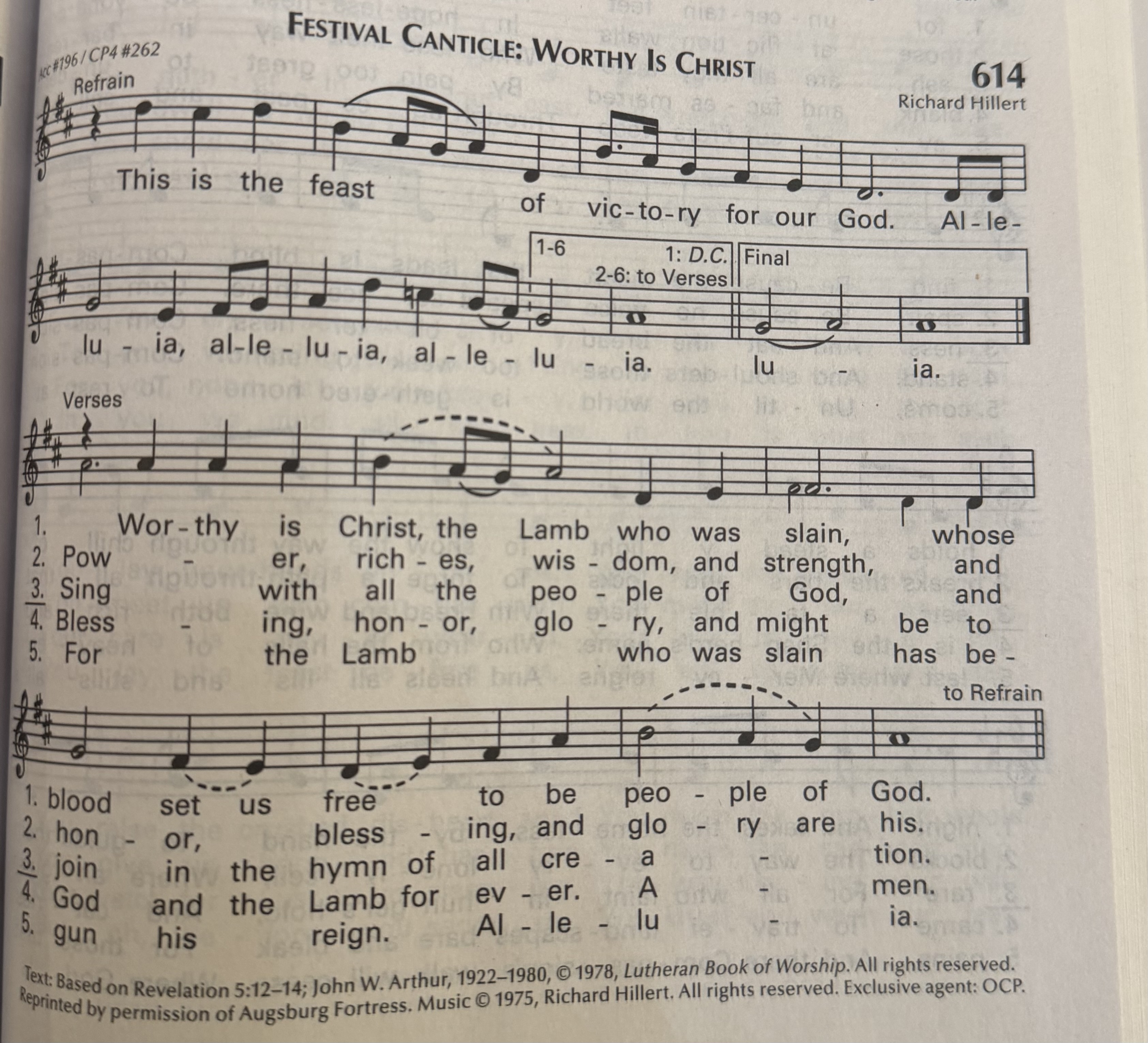
Festival Canticle: Worthy Is Christ is a joyful hymn of praise inspired by Revelation 5:12–14. The lyrics are heartfelt, particularly the invitation to join all creation in praising God, bringing together the voices of heaven and earth. The repeated alleluias give the canticle a triumphant character, expressing the joy of Christ’s resurrection and the promise of eternal life. Sung during Day 3 of the Solemn Novena, the hymn reminds us that our earthly worship is joined with the eternal praise of heaven.
The Apparitions of Our Lady and the Creation of the Miraculous Medal
The story of the Miraculous Medal began in Paris in 1830, when the Blessed Virgin Mary appeared to Catherine Labouré, a 24-year-old novice with the Daughters of Charity of St. Vincent de Paul. The apparitions took place in the community’s chapel at 140 Rue du Bac, a place that remains an important Marian pilgrimage destination today.
The First Apparition — July 18–19, 1830
Late on the evening of July 18, Catherine was awakened by a mysterious child who led her to the convent chapel. There, according to Catherine’s account, she encountered the Blessed Virgin seated in a chair near the altar. Catherine knelt beside Mary and rested her hands on her knees, later describing the encounter as one of the greatest joys of her life.
During their conversation, Mary spoke of difficult times ahead for France and the Church. She also assured Catherine of God’s protection and told her that she would be entrusted with a special mission.
The Second Apparition — November 27, 1830
Four months later, while Catherine was praying in the chapel, Mary appeared again. This time, Catherine saw her standing upon a globe, holding a smaller golden globe in her hands as though offering it to God. Mary explained that the globe represented the world and every person within it.
As the vision changed, rays of light streamed from jeweled rings on Mary’s fingers. These represented the graces obtained through her intercession for those who ask with confidence. Catherine also learned that some rays remained unlit, representing graces that people had neglected to request.
Mary then appeared with her arms extended downward, standing upon the earth with a serpent beneath her feet. An oval frame formed around her, bearing the invocation:
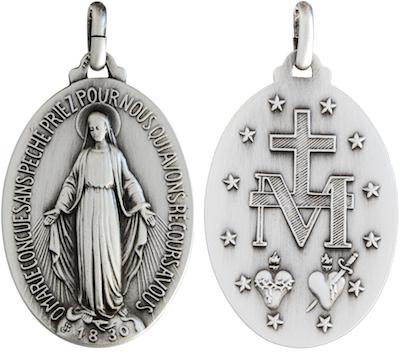
“O Mary, conceived without sin, pray for us who have recourse to thee.”
Catherine then saw the reverse of the design. It displayed a large letter M surmounted by a cross, with the Sacred Heart of Jesus encircled by thorns and the Immaculate Heart of Mary pierced by a sword. Twelve stars surrounded the image.
Mary instructed Catherine to have a medal made according to the design she had seen, promising abundant graces to those who wore it with faith and confidence.
The Meaning of the Medal
On the front, Mary stands upon the world, crushing the serpent beneath her feet, recalling the struggle between good and evil described in Genesis 3:15. The rays from her hands symbolize God’s graces flowing through her intercession.
On the reverse, the cross and the letter M express Mary’s close relationship with the saving work of her Son. The two hearts recall the love and suffering of Jesus and Mary, while the twelve stars evoke St. John’s vision in Revelation 12:1 of a woman crowned with twelve stars.
The invocation surrounding Mary also has particular historical significance. It proclaims her Immaculate Conception, a doctrine formally defined by Pope Pius IX on December 8, 1854, twenty-four years after the apparitions.
The First Miraculous Medals — 1832
Catherine shared her experiences with her spiritual director, Fr. Jean-Marie Aladel, C.M., a Vincentian priest who initially approached her accounts with caution. After further consideration and ecclesiastical approval, the first medals were struck in Paris in 1832.
That same year, Paris suffered a devastating cholera epidemic. The Daughters of Charity distributed the medals among the sick and those in need. Reports of healings, conversions and other extraordinary favors soon followed.
Originally known as the Medal of the Immaculate Conception, it gradually became known as the Miraculous Medalbecause of the many graces and miracles attributed to Mary’s intercession.
Catherine herself remained largely unknown to the public, continuing her quiet work caring for the elderly and infirm. She died on December 31, 1876, having lived most of her religious life without revealing publicly that she was the recipient of the apparitions.
Today, nearly two centuries later, the Miraculous Medal continues to be worn by Catholics throughout the world. It is not regarded as a magical object or good-luck charm, but as a sacramental — a visible reminder of faith, prayer and trust in Mary’s maternal intercession, always leading the faithful closer to her Son, Jesus Christ.
Day 3 Novena and Mass Livestream
“Come to the foot of the altar. There graces will be shed, great or little, upon all who ask for them.”
— Words spoken by the Blessed Virgin Mary to St. Catherine Labouré during her apparition in Paris on July 18–19, 1830.

