• Shrines of Philadelphia
    • St. Katharine Drexel
    • Miraculous Medal
    • St. John Neumann
    • St. Rita of Cascia
    • Our Lady of Czestochowa
    • St. Gianna Molla
  • Sacred Places
  • Art, Film, Poetry
  • Saints
  • Music
  • Services

ShrineTower

~ Saints, Shrines and Sacred Places

ShrineTower

Tag Archives: Miraculous Medal Shrine

Come to the Foot of the Altar — Solemn Novena, Day 4

23 Monday Nov 2026

Posted by Brian in Miraculous Medal, Saints, Shrines of Philadelphia

≈ Leave a comment

Tags

Basilica Shrine of Our Lady of the Miraculous Medal, hymns, Miraculous Medal Shrine, music, St. Vincent de Paul

Basilica Shrine of Our Lady of the Miraculous Medal
Thursday, November 19, 2026
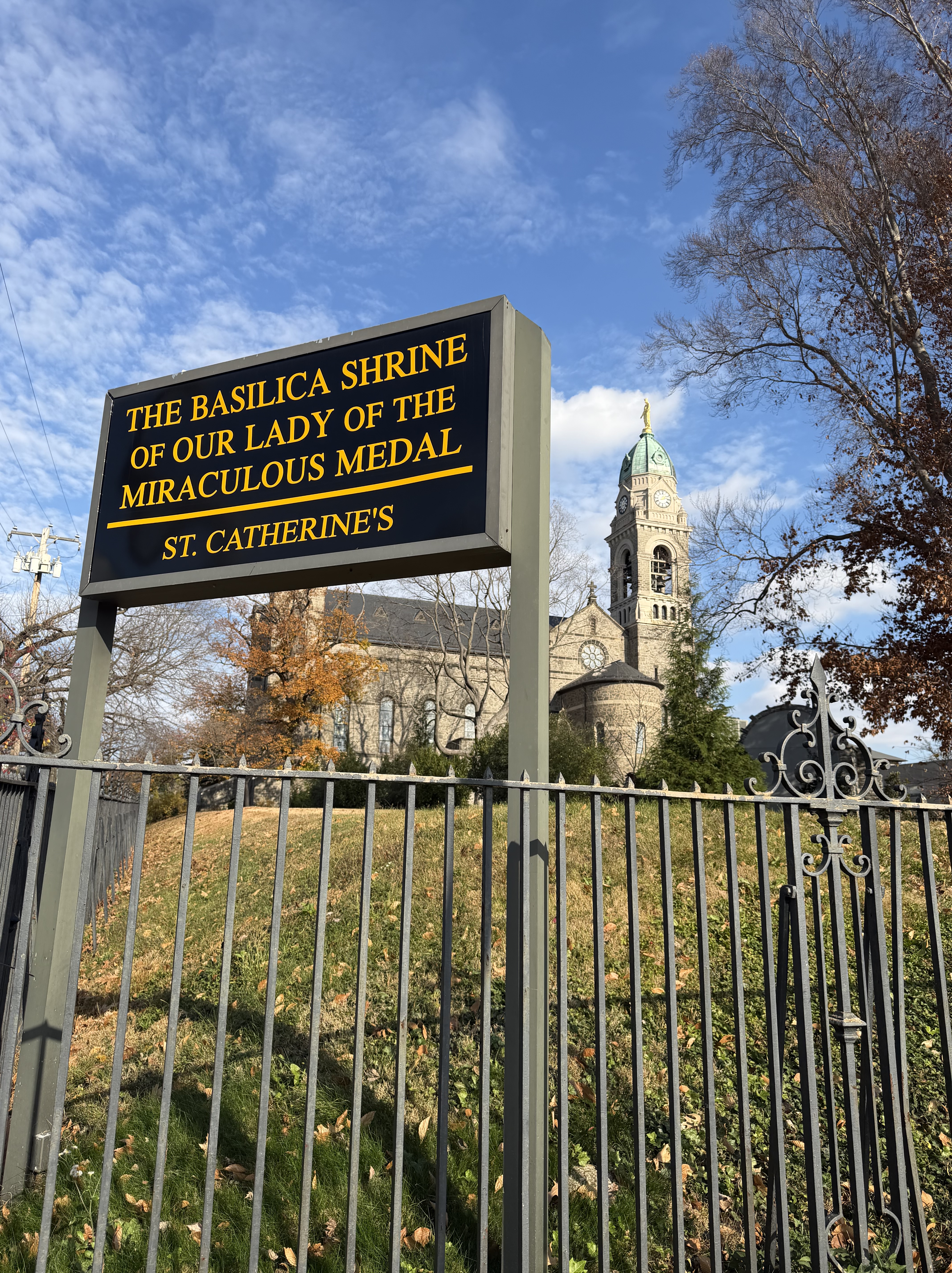
A November view of the Basilica Shrine of Our Lady of the Miraculous Medal and its bell tower in Germantown, Philadelphia. The entrance sign also identifies St. Catherine’s Infirmary, which shares the Vincentian grounds and serves elderly and infirm Vincentian priests and brothers.

Mary: Bearer of the Beams of God’s Love

Today marks the fourth day of the nine-day Solemn Novena at the Basilica Shrine of Our Lady of the Miraculous Medal. The homilist was Fr. Astor Rodriguez, CM, whose theme was “Mary: Bearer of the Beams of God’s Love.”

The theme brings to mind the image of Our Lady on the Miraculous Medal, with rays of light streaming from her outstretched hands. During her apparition to St. Catherine Labouré in 1830, Mary revealed that these rays represent the graces she obtains for those who ask for them.
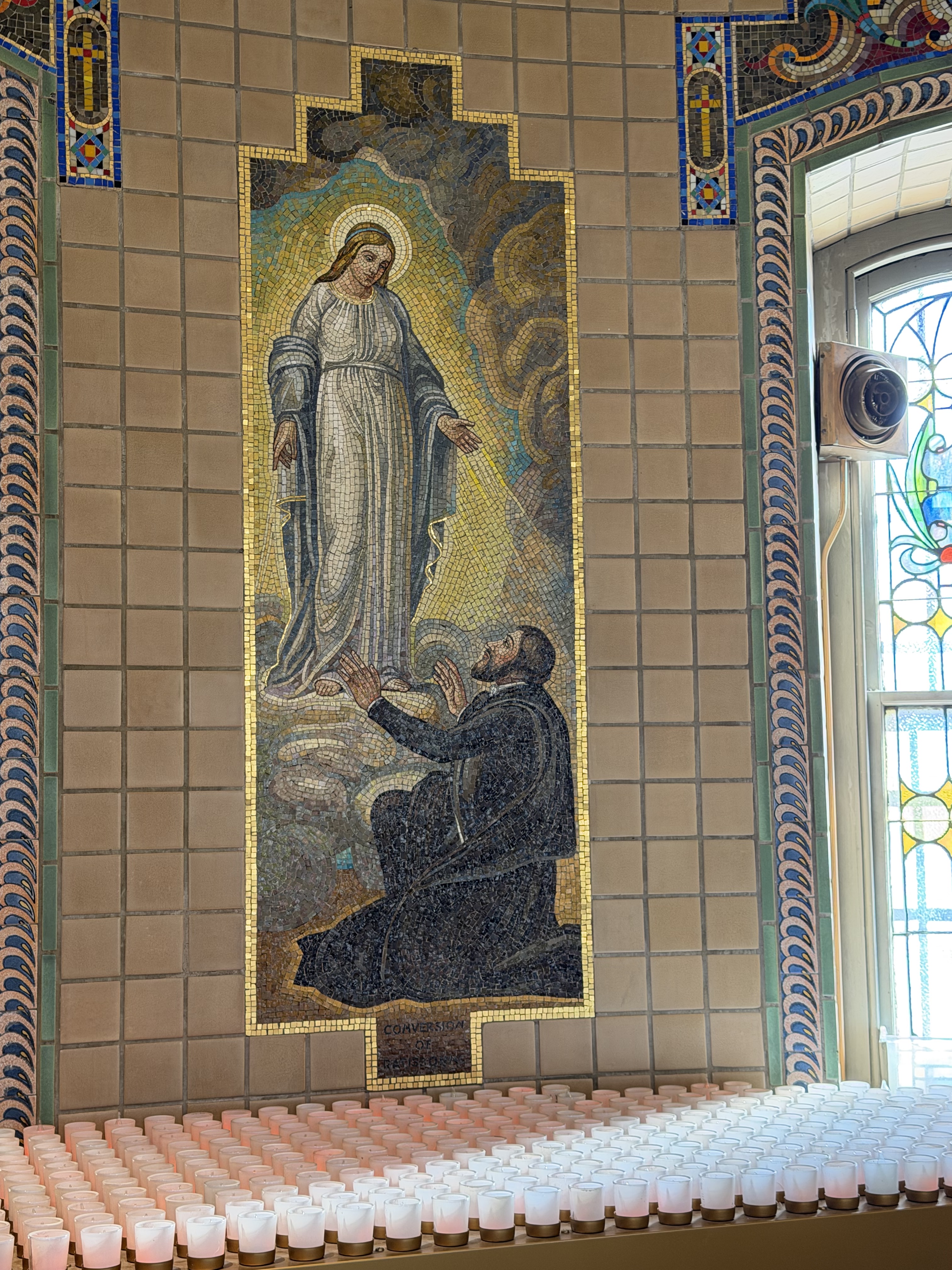
The Conversion of Alphonse Ratisbonne (1842) — Mosaic at the Basilica Shrine of Our Lady of the Miraculous Medal, Philadelphia.

The Conversion of Alphonse Ratisbonne

One of the beautiful mosaics at the Basilica Shrine depicts the conversion of Alphonse Ratisbonne (1814–1884), one of the most celebrated events associated with the Miraculous Medal.

Ratisbonne was a young French Jewish man visiting Rome in January 1842. During his visit, Baron Théodore de Bussières persuaded him to wear a Miraculous Medal and recite the Memorare, a traditional prayer seeking the intercession of the Blessed Virgin Mary.

On January 20, 1842, while visiting the Church of Sant’Andrea delle Fratte in Rome, Ratisbonne experienced an apparition of the Blessed Mother. He described Mary as appearing in the likeness of her image on the Miraculous Medal.

The experience transformed his life. He was baptized into the Catholic faith eleven days later and was ordained a priest in 1847, dedicating his life to religious service.

Following an ecclesiastical investigation, his conversion was officially recognized on June 3, 1842, as a miracle of divine grace through the intercession of the Blessed Virgin Mary.

Marian Hymn — O Sanctissima
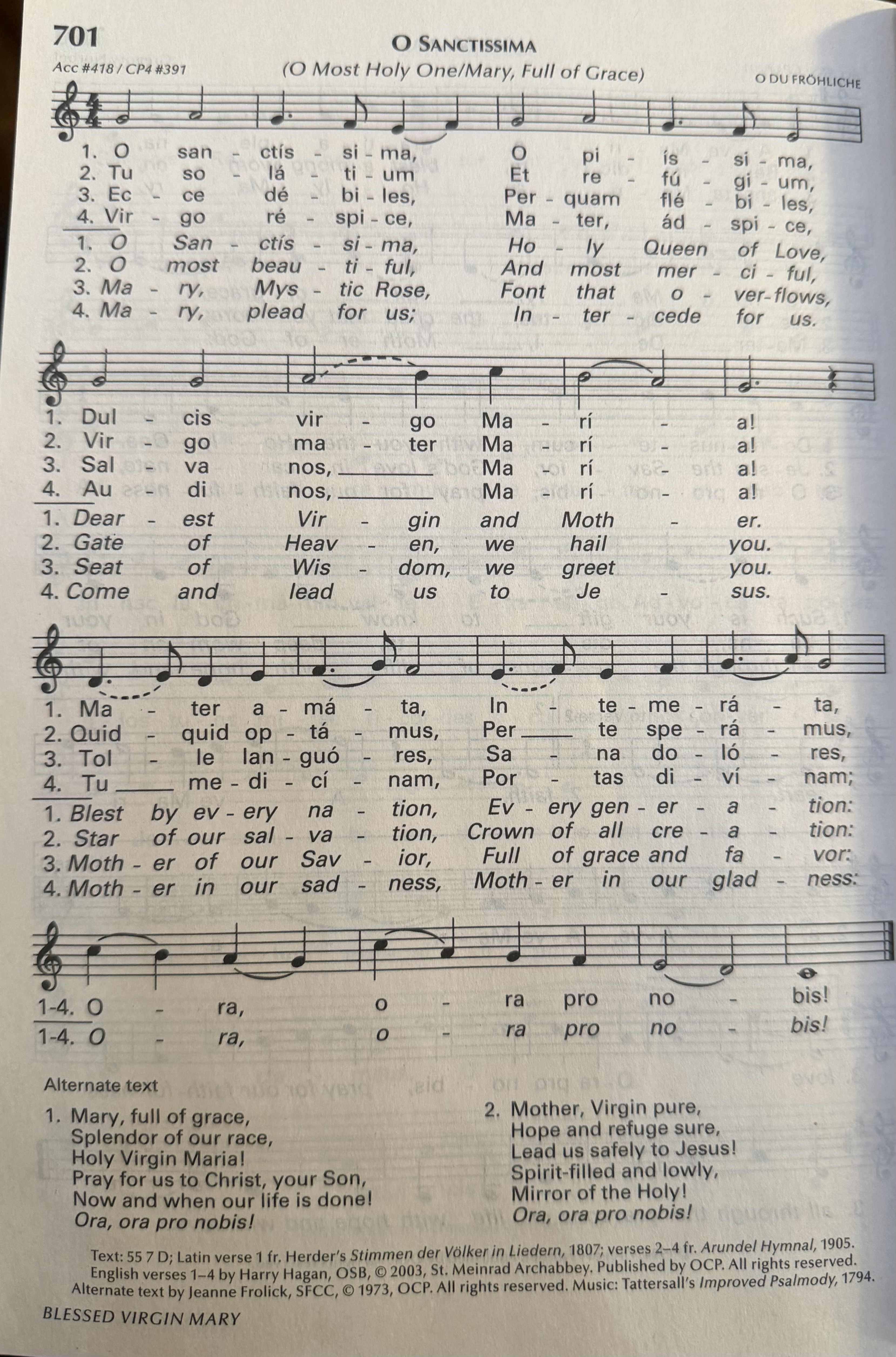
On Day 4 of the Solemn Novena, we sang O Sanctissima with organ accompaniment. Dating back to at least the 18th century, this traditional Marian hymn is also known as the Sicilian Mariners’ Hymn. Its verses honor the Blessed Mother’s purity, maternal love and spiritual protection. The recurring Latin refrain, Ora, ora pro nobis — “Pray, pray for us” — expresses the same confidence in Mary’s intercession found in the prayer inscribed on the Miraculous Medal:

O Mary, conceived without sin, pray for us who have recourse to thee.

Scripture: Revelation 5:1–10

As mentioned earlier, eight of the nine days of the Solemn Novena feature a first reading from the Book of Revelation.

The Scroll and the Lamb

In this reading on Day 4, St. John describes a heavenly vision in which God holds a scroll written on both sides and sealed with seven seals. The scroll represents God’s divine plan for humanity. Jesus Christ, the Lamb of God, is worthy to open the scroll and reveal its mysteries.

One of the elders announces that the Lion of the tribe of Judah has triumphed. As John looks toward the throne, he sees a Lamb that appears to have been slain.

Particularly meaningful during this Solemn Novena is the image of the twenty-four elders holding golden bowls filled with incense, which represent the prayers of the holy ones (Revelation 5:8).

This image brings to mind the prayers contained in the Our Lady of the Miraculous Medal pamphlet and, as the Solemn Novena draws to a close, my intention of obtaining a plenary indulgence for my deceased mother, Ma Wilde.

The reading concludes with a heavenly hymn celebrating Christ’s sacrifice and the redemption of people from every tribe, tongue, people and nation. It expresses the universal nature of God’s love and His invitation to share in a life of worship, holiness and service.

Today’s Scripture reading and the image of Our Lady on the Miraculous Medal offer two beautiful expressions of our relationship with God — our prayers rising to heaven and God’s grace descending upon us. Through the spiritual gift of a plenary indulgence, we can also express our enduring love for those who have gone before us.

The Legion of Mary and the Miraculous Medal

There is a deep historical and spiritual connection between the Miraculous Medal and the Legion of Mary.

Founded by Frank Duff in Dublin, Ireland, on September 7, 1921, the Legion of Mary is a Catholic lay apostolate dedicated to prayer, personal holiness and Christian service under the spiritual guidance of the Blessed Mother.

At its very first meeting, a statue of Our Lady modeled after the image on the Miraculous Medal was placed on a table covered with a white cloth, accompanied by two lighted candles and flowers. This arrangement remains a cherished tradition at Legion of Mary meetings throughout the world.

The Miraculous Medal is also incorporated into the Legion’s official standard, known as the Vexillum Legionis, reflecting its spiritual connection to Our Lady’s apparitions to St. Catherine Labouré in 1830.

The Official Handbook of the Legion of Mary dedicates an entire appendix to the Miraculous Medal, emphasizing its importance in the devotional and apostolic life of the Legion.

Through prayer, devotion to Mary, evangelization and acts of Christian service, members of the Legion seek to bring the love of Christ into the lives of others. In doing so, they carry forward the spiritual message of today’s Solemn Novena — Mary: Bearer of the Beams of God’s Love.

A Personal Reflection

On Wednesday morning, November 18, prior to attending the third day of the Solemn Novena at the Basilica Shrine, I attended a weekly Legion of Mary meeting at St. Basil the Great Parish in Kimberton, Pennsylvania. I have recently been participating in the Legion’s meetings as a guest.

During the meeting, I was presented with a blessed Miraculous Medal by Sister McCarthy, the president of the praesidium, along with a prayer pamphlet. (Within the Legion of Mary, members traditionally address one another as Brother and Sister, reflecting their spiritual fellowship in Christ). The idea was to share the medal and accompanying prayers with others as a means of evangelization and spreading devotion to the Blessed Mother. I was both humbled and proud to receive it, particularly during these nine days of prayer dedicated to Our Lady of the Miraculous Medal. This simple gesture touched my heart.

Later that day, I attended the Solemn Novena at the Basilica Shrine, carrying my newly received Miraculous Medal with me. For good measure, I had it blessed again by the deacon.

The Solemn Novena and the Plenary Indulgence

One of the spiritual opportunities associated with this year’s nine-day Solemn Novena at the Basilica Shrine of Our Lady of the Miraculous Medal is the possibility of obtaining a plenary indulgence.

The Shrine has announced that those attending all nine days in person, November 16–24, 2026, may obtain a plenary indulgence on the final day, provided they fulfill the Church’s special conditions.

The Spiritual Meaning of an Indulgence

The Catholic Church teaches that an indulgence is the remission of temporal punishment resulting from sins that have already been forgiven. A plenary indulgence removes all such punishment, while a partial indulgence removes part of it.

Through the Sacrament of Reconciliation, our sins are forgiven and our relationship with God is restored. However, the effects of sin may remain even after forgiveness. The Church calls this temporal punishment.

These remaining effects must be purified, either during our earthly lives through prayer, penance, charity and suffering accepted in faith, or after death in purgatory.

Purgatory is the final purification of those who die in God’s grace and friendship, preparing them to enter the fullness of heaven. Those undergoing this purification are already assured of their eternal salvation.

Source – The Catechism of the Catholic Church, paragraphs 1030–1032 and 1471–1479, explains these teachings.

The Historical Origins of Indulgences

The practice of indulgences developed from the early Church’s traditions of prayer, penance and reconciliation.

In the early Christian centuries, those who committed serious sins often undertook lengthy periods of public penance. The prayers and intercession of other Christians, particularly martyrs, sometimes helped penitents obtain reconciliation sooner.

Over the centuries, this practice developed into the Church’s teaching on indulgences.

The Council of Trent reaffirmed the spiritual value of indulgences while instituting reforms to address historical abuses. Pope Paul VI further clarified the Church’s teaching in his 1967 apostolic constitution, Indulgentiarum Doctrina.

Today, indulgences remain part of Catholic spiritual life, encouraging repentance, conversion and a closer relationship with Christ.

Indulgences and the Faithful Departed

A Catholic may obtain an indulgence for oneself or offer it on behalf of someone who has died.

This practice is rooted in the Catholic belief in the Communion of Saints — the spiritual union of the faithful on earth, the souls undergoing purification in purgatory and the saints in heaven.

Our spiritual relationship with those who have gone before us continues beyond death. We can express our enduring love for them through our prayers, Mass offerings and indulgences.

Source – The Catechism of the Catholic Church, paragraph 1479, specifically encourages obtaining indulgences for the faithful departed.

The Requirements for a Plenary Indulgence

In addition to fulfilling the Novena’s attendance requirements, the Church’s usual conditions for obtaining a plenary indulgence include:

  1. Sacramental Confession: Receiving the Sacrament of Reconciliation, ordinarily within approximately 20 days before or after the indulgenced act.
  2. Holy Communion: Receiving the Eucharist, preferably on the day the indulgence is obtained.
  3. Prayer for the Holy Father’s intentions: Traditionally an Our Father and a Hail Mary.
  4. Complete detachment from sin: A sincere interior rejection of all attachment to sin, including venial sin.
  5. Being in a state of grace: At least when the prescribed indulgenced act is completed.

A Note About Livestream Participation

The Shrine’s published announcement specifies in-person attendance for all nine days of the Solemn Novena to obtain a plenary indulgence. During the Novena, however, I heard both a priest and a deacon explain that participation through the livestream could substitute for physical attendance.

This was an encouraging clarification for those who might be unable to attend every day in person. As of this writing, I have yet to see a written clarification on the Shrine’s website confirming how livestream participation applies to the plenary indulgence.

At the heart of obtaining a plenary indulgence are genuine repentance, spiritual renewal, complete detachment from sin and the fulfillment of the Church’s prescribed conditions.

My Intention for Ma Wilde

For me, this Novena carries a special personal intention.

My mother, Donna A. Wilde — Ma Wilde — passed away on July 3, 2026. She has been very much in my thoughts and prayers since her passing.

One of my principal reasons for attending all nine days of the Solemn Novena is the hope of obtaining a plenary indulgence that I can offer for her.

Naturally, I cannot know whether my mother is undergoing purification in purgatory or has already entered the fullness of heaven. But the Church teaches that our prayers for the faithful departed are meaningful and that indulgences may be offered on their behalf.

If Ma Wilde is still undergoing purification, my prayer is that, through God’s mercy and the merits of Jesus Christ, any remaining temporal punishment may be remitted and she may enter the fullness of heaven.

Ultimately, I entrust my mother to God’s infinite mercy, knowing that her eternal destiny rests in His loving hands.

As I continue these nine days of prayer at the foot of Mary’s altar, I ask the Blessed Mother to intercede for Ma Wilde and for all the faithful departed.

Eternal rest grant unto her, O Lord, and let perpetual light shine upon her. May she rest in peace. Amen.

Day 4 Novena and Mass Livestream

This special livestream features Day 4 of the 2026 Solemn Novena and Mass from the Basilica Shrine of Our Lady of the Miraculous Medal in Philadelphia.

Come to the foot of the altar. There graces will be shed, great or little, upon all who ask for them.

— Words spoken by the Blessed Virgin Mary to St. Catherine Labouré during her apparition in Paris on July 18–19, 1830.

References
  • Catechism of the Catholic Church, 1471–1479: Indulgences
  • Catechism, 1030–1032: The Final Purification, or Purgatory
  • Pope Paul VI, Indulgentiarum Doctrina (1967)
  • Basilica Shrine – Plenary Indulgences
  • Basilica Shrine – Fall 2026 Events

Come to the Foot of the Altar — Solemn Novena, Day 3

18 Wednesday Nov 2026

Posted by Brian in Shrines of Philadelphia, Miraculous Medal, Saints

≈ Leave a comment

Tags

Basilica Shrine of Our Lady of the Miraculous Medal, hymns, Miraculous Medal Shrine, music, St. Vincent de Paul

Basilica Shrine of Our Lady of the Miraculous Medal
Wednesday, November 18, 2026

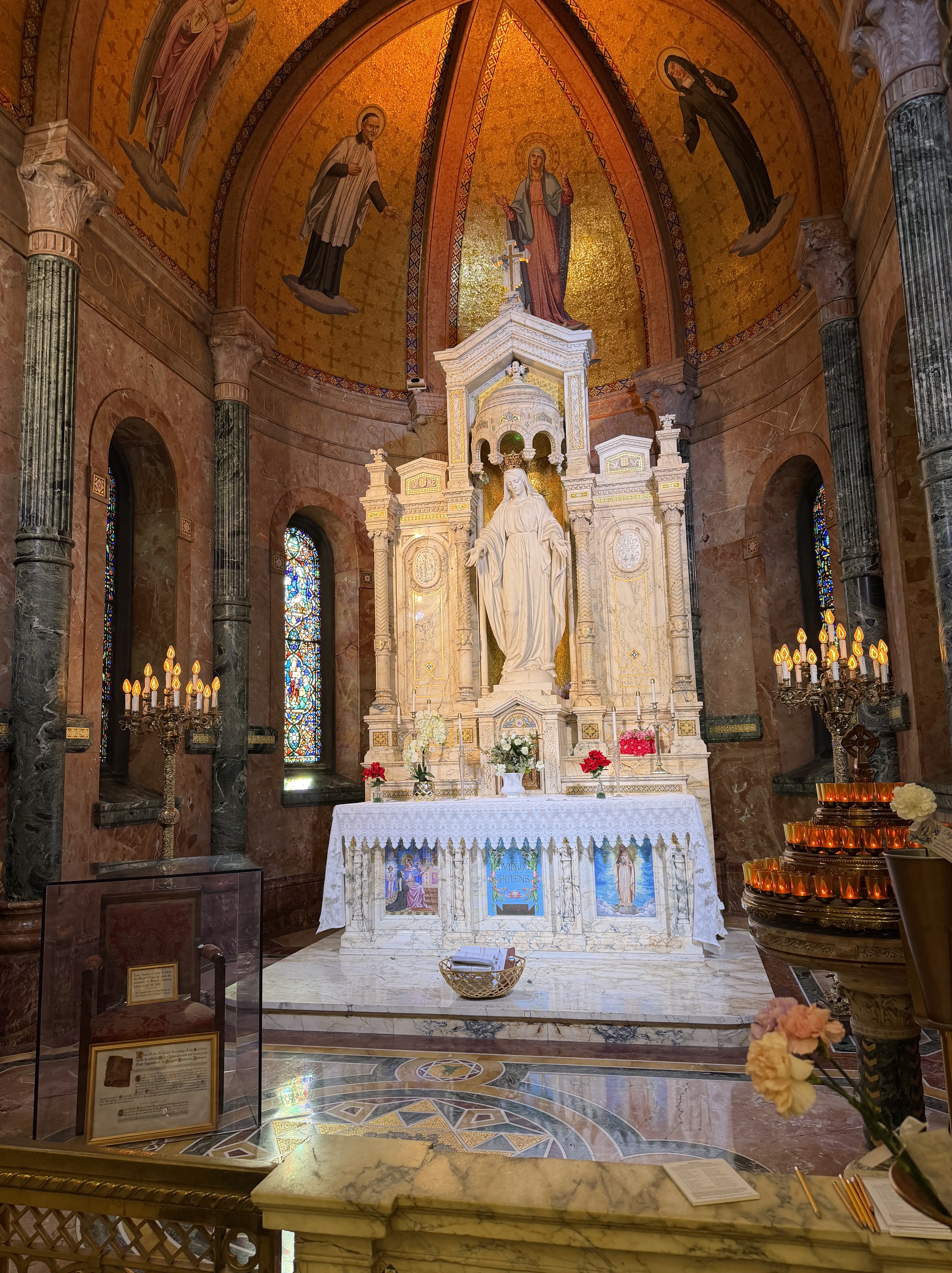
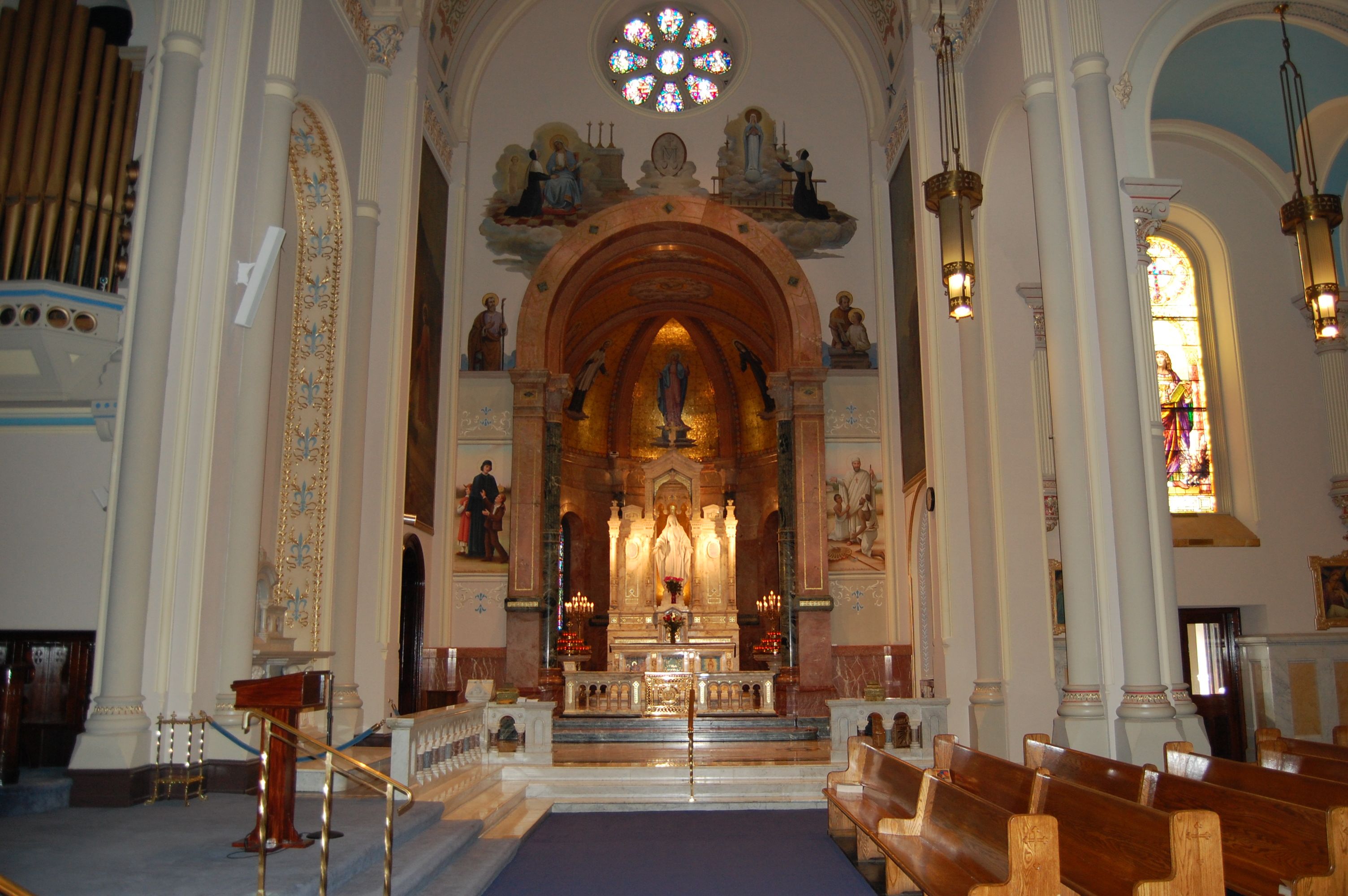
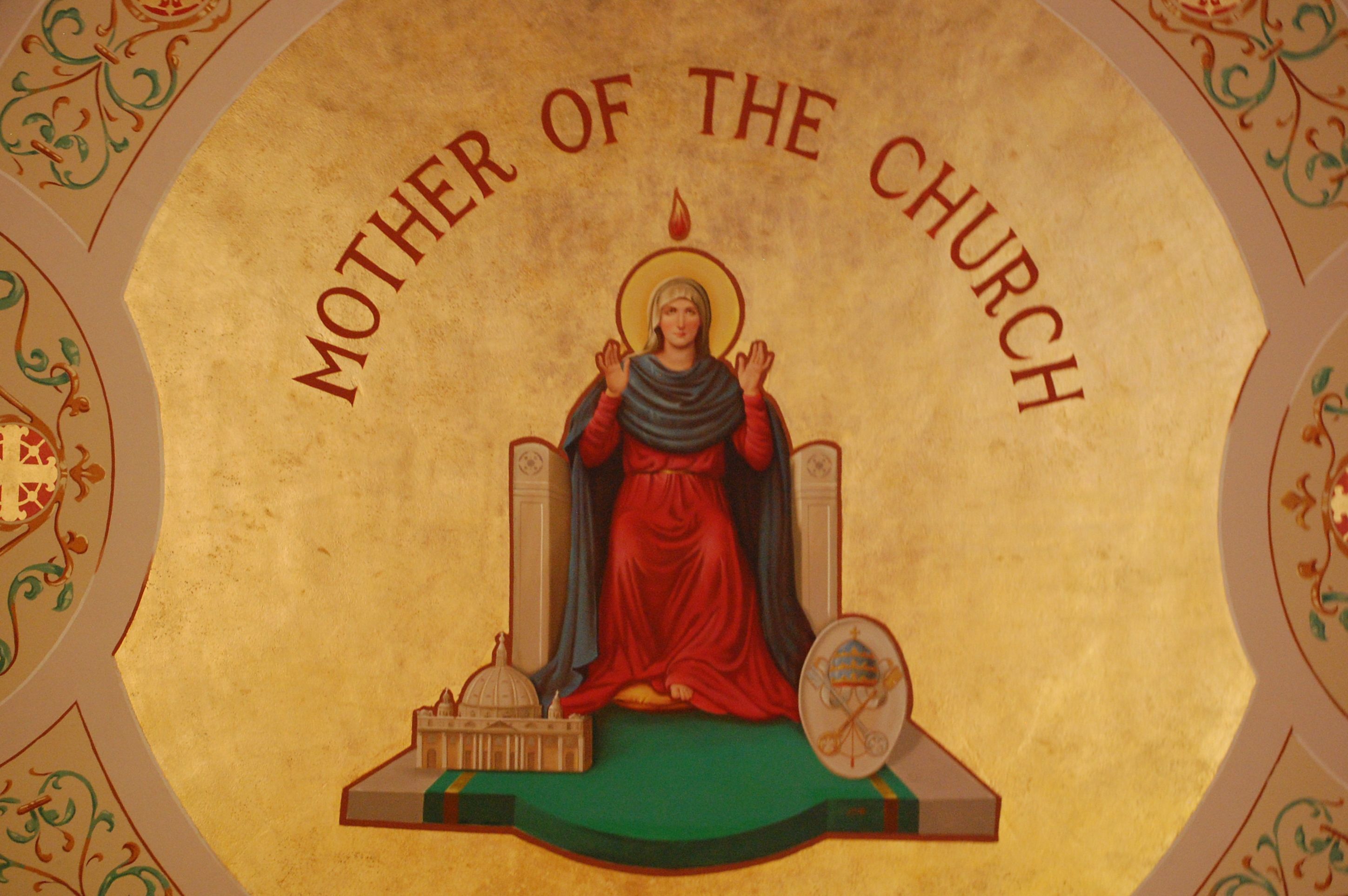
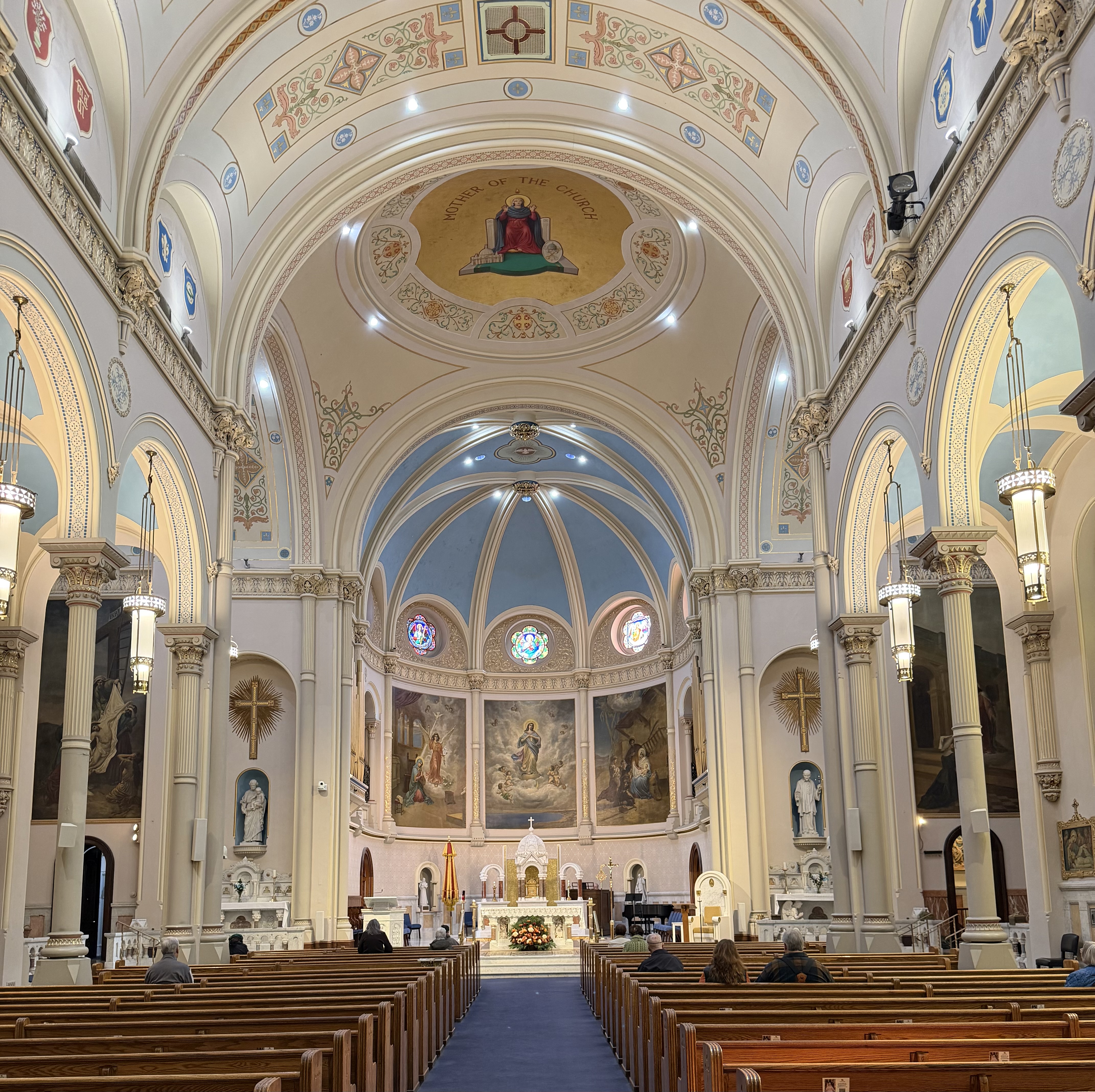
The main altar at the Basilica Shrine of Our Lady of the Miraculous Medal in Germantown, Philadelphia, with “Mother of the Church” depicted on the ceiling above.

The Hymns

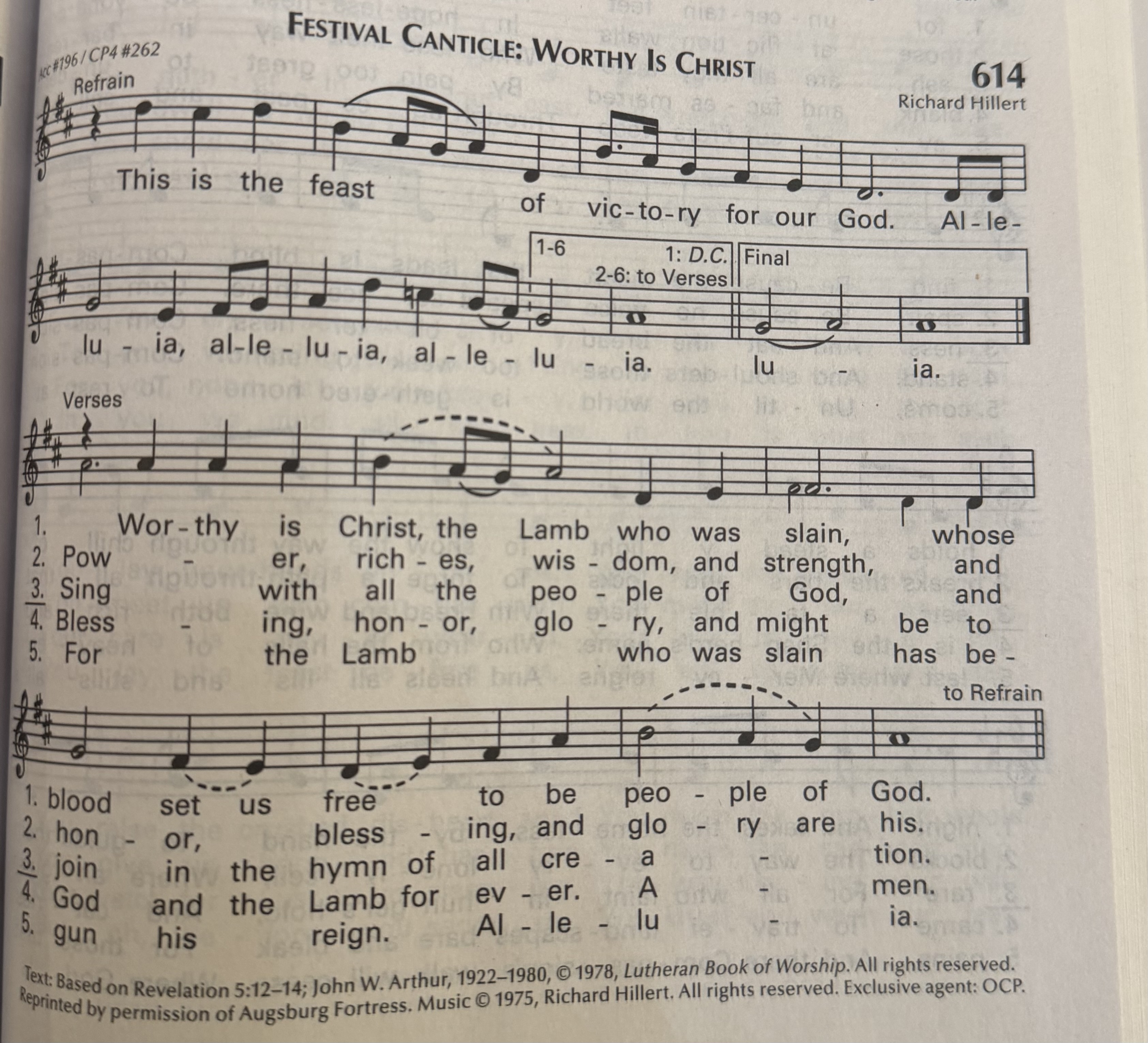
The hymns on Day 3 of the Solemn Novena were Immaculate Mary, whose familiar refrain, “Ave, ave, ave Maria,” echoes the angel Gabriel’s greeting to Mary at the Annunciation; Festival Canticle: Worthy Is Christ, a hymn of praise based on Revelation 5:12–14. The canticle draws upon St. John’s vision of heavenly worship, where Christ is acclaimed as the Lamb who was slain. Its joyful refrain celebrates Christ’s victory over sin and death.

Holy, Holy, Holy is a hymn of praise to the Holy Trinity, drawing upon the biblical visions of heavenly worship in Isaiah and Revelation. Its verses describe the angels and saints adoring God and conclude by proclaiming the Father, Son and Holy Spirit as one God.

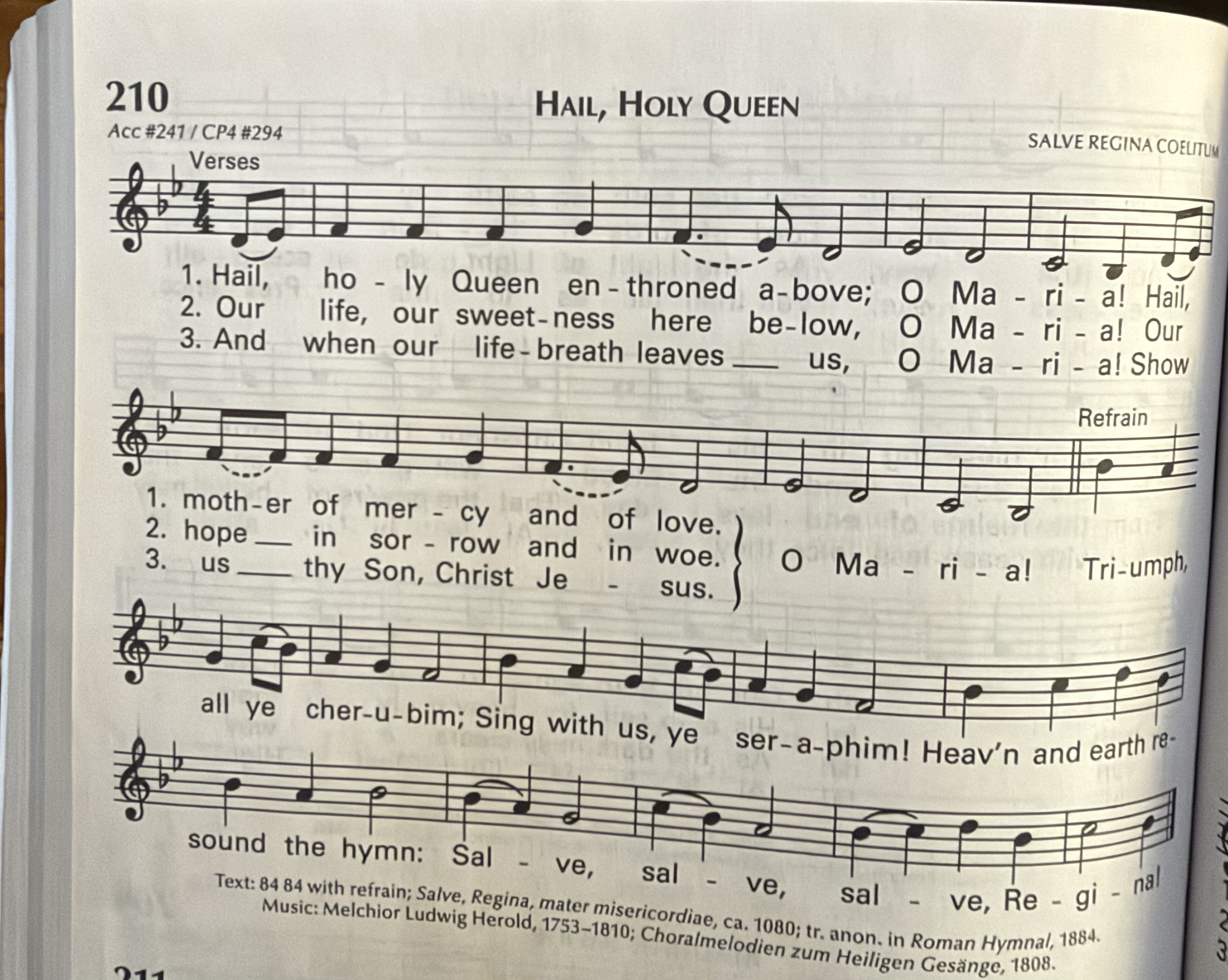
The final hymn sung on Day 3 was Hail, Holy Queen, an English hymn based on the ancient Marian prayer Salve Regina(“Hail, Holy Queen”), with music attributed to Melchior Ludwig Herold (1753–1810).

Festival Canticle: Worthy Is Christ is a joyful hymn of praise inspired by Revelation 5:12–14. The lyrics are heartfelt, particularly the invitation to join all creation in praising God, bringing together the voices of heaven and earth. The repeated alleluias give the canticle a triumphant character, expressing the joy of Christ’s resurrection and the promise of eternal life. Sung during Day 3 of the Solemn Novena, the hymn reminds us that our earthly worship is joined with the eternal praise of heaven.


The Apparitions of Our Lady and the Creation of the Miraculous Medal

The story of the Miraculous Medal began in Paris in 1830, when the Blessed Virgin Mary appeared to Catherine Labouré, a 24-year-old novice with the Daughters of Charity of St. Vincent de Paul. The apparitions took place in the community’s chapel at 140 Rue du Bac, a place that remains an important Marian pilgrimage destination today.

The First Apparition — July 18–19, 1830

Late on the evening of July 18, Catherine was awakened by a mysterious child who led her to the convent chapel. There, according to Catherine’s account, she encountered the Blessed Virgin seated in a chair near the altar. Catherine knelt beside Mary and rested her hands on her knees, later describing the encounter as one of the greatest joys of her life.

During their conversation, Mary spoke of difficult times ahead for France and the Church. She also assured Catherine of God’s protection and told her that she would be entrusted with a special mission.

The Second Apparition — November 27, 1830

Four months later, while Catherine was praying in the chapel, Mary appeared again. This time, Catherine saw her standing upon a globe, holding a smaller golden globe in her hands as though offering it to God. Mary explained that the globe represented the world and every person within it.

As the vision changed, rays of light streamed from jeweled rings on Mary’s fingers. These represented the graces obtained through her intercession for those who ask with confidence. Catherine also learned that some rays remained unlit, representing graces that people had neglected to request.

Mary then appeared with her arms extended downward, standing upon the earth with a serpent beneath her feet. An oval frame formed around her, bearing the invocation:

“O Mary, conceived without sin, pray for us who have recourse to thee.”

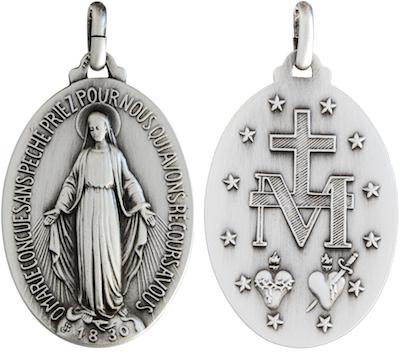
Catherine then saw the reverse of the design. It displayed a large letter M surmounted by a cross, with the Sacred Heart of Jesus encircled by thorns and the Immaculate Heart of Mary pierced by a sword. Twelve stars surrounded the image.

Mary instructed Catherine to have a medal made according to the design she had seen, promising abundant graces to those who wore it with faith and confidence.

The front and reverse of the Miraculous Medal, first produced in Paris in 1832, two years after the apparitions of Our Lady to St. Catherine Labouré. Their early distribution coincided with the cholera epidemic in Paris, which contributed to the medal’s rapid spread.

The Meaning of the Medal

On the front, Mary stands upon the world, crushing the serpent beneath her feet, recalling the struggle between good and evil described in Genesis 3:15. The rays from her hands symbolize God’s graces flowing through her intercession.

On the reverse, the cross and the letter M express Mary’s close relationship with the saving work of her Son. The two hearts recall the love and suffering of Jesus and Mary, while the twelve stars evoke St. John’s vision in Revelation 12:1 of a woman crowned with twelve stars.

The invocation surrounding Mary also has particular historical significance. It proclaims her Immaculate Conception, a doctrine formally defined by Pope Pius IX on December 8, 1854, twenty-four years after the apparitions.

The First Miraculous Medals — 1832

Catherine shared her experiences with her spiritual director, Fr. Jean-Marie Aladel, C.M., a Vincentian priest who initially approached her accounts with caution. After further consideration and ecclesiastical approval, the first medals were struck in Paris in 1832.

That same year, Paris suffered a devastating cholera epidemic. The Daughters of Charity distributed the medals among the sick and those in need. Reports of healings, conversions and other extraordinary favors soon followed.

Originally known as the Medal of the Immaculate Conception, it gradually became known as the Miraculous Medalbecause of the many graces and miracles attributed to Mary’s intercession.

Catherine herself remained largely unknown to the public, continuing her quiet work caring for the elderly and infirm. She died on December 31, 1876, having lived most of her religious life without revealing publicly that she was the recipient of the apparitions.

Today, nearly two centuries later, the Miraculous Medal continues to be worn by Catholics throughout the world. It is not regarded as a magical object or good-luck charm, but as a sacramental — a visible reminder of faith, prayer and trust in Mary’s maternal intercession, always leading the faithful closer to her Son, Jesus Christ.

Day 3 Novena and Mass Livestream

This is a special livestream of the 2026 Solemn Novena and Mass from The Basilica Shrine of Our Lady of the Miraculous Medal in Philadelphia. The nine-day Solemn Novena continues with Day 3, Wednesday, November 18, and the invited homilist was Fr. Patrick Obot, C.M., whose topic was “When Life Takes an Unexpected Turn … What We Can Learn from Mary.”

“Come to the foot of the altar. There graces will be shed, great or little, upon all who ask for them.”

— Words spoken by the Blessed Virgin Mary to St. Catherine Labouré during her apparition in Paris on July 18–19, 1830.

Come to the Foot of the Altar — Solemn Novena, Day 2

17 Tuesday Nov 2026

Posted by Brian in Miraculous Medal, Saints, Shrines of Philadelphia

≈ Leave a comment

Tags

Miraculous Medal Shrine, Solemn Novena, St. Vincent de Paul

Basilica Shrine of Our Lady of the Miraculous Medal
Tuesday, November 17, 2026

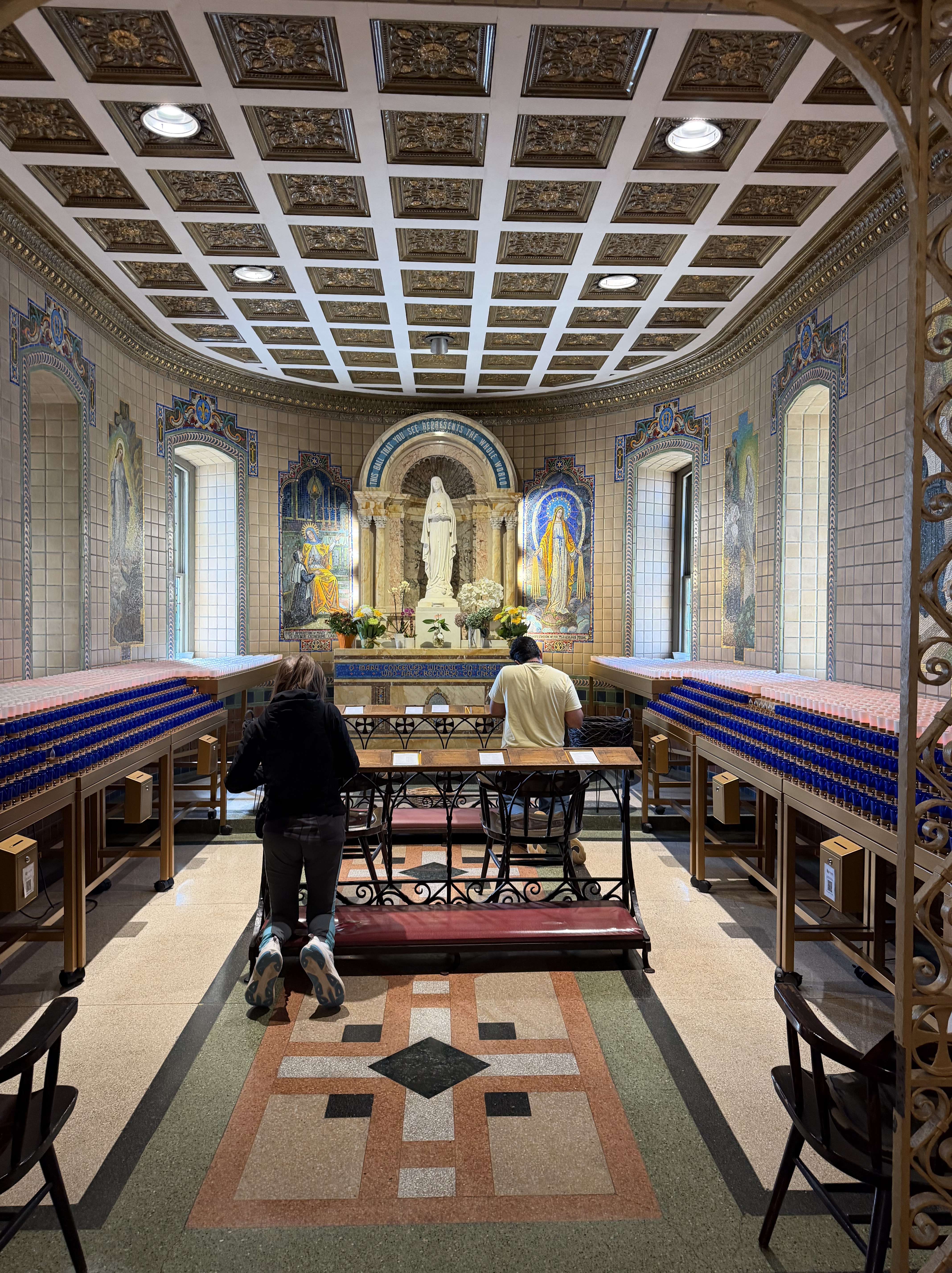
A side chapel at the Basilica Shrine of Our Lady of the Miraculous Medal in Germantown, Philadelphia.

The hymns on Day 1 of the Solemn Novena were special. I learned that because the first day fell on a Monday, it also coincided with the Shrine’s weekly Perpetual Novena. The Perpetual Novena is prayed every Monday and has continued uninterrupted at the Shrine since 1930.

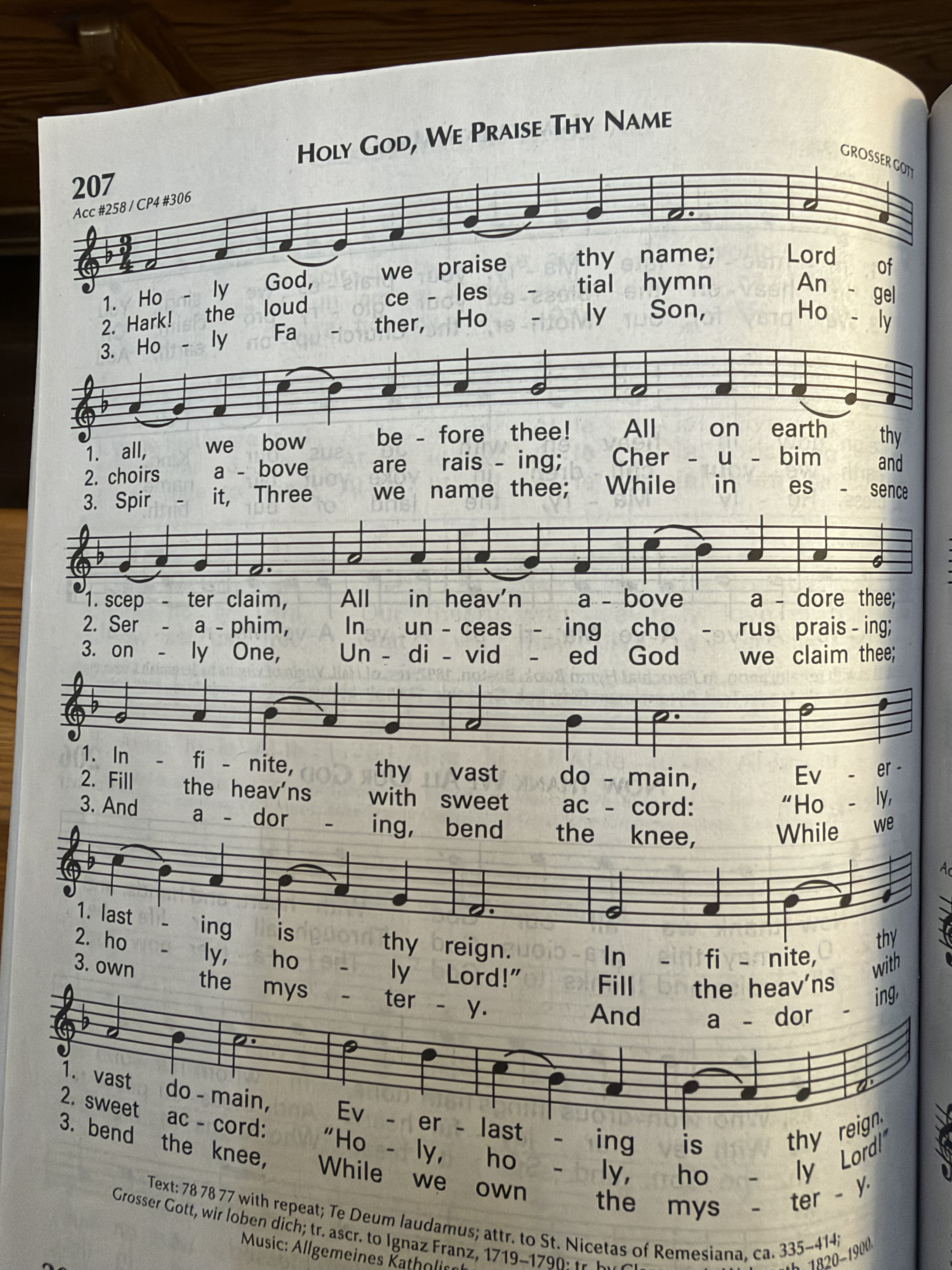
“Holy God, We Praise Thy Name” is a true classic hymn.


The nine-day Solemn Novena began Monday, November 16. Each day’s novena prayers are offered before Mass. On Day 2, the invited homilist was Fr. Jordan Kelly, OP. His topic was “What Mary Has Done for Me!”

The Day 2 hymns were “Immaculate Mary,” also known as the Lourdes Hymn; “Lord, You Give the Great Commission”; “The Cry of the Poor”; and “Holy God, We Praise Thy Name”

The Novena Prayers

These prayers were recited before Mass. They are prayed throughout the Solemn Novena and form its spiritual heart. I’m including them here as they appear in the pamphlet handed out at the Shrine.

Miraculous Medal Novena Opening

In the name of the Father and of the Son and of the Holy Spirit.
Amen.

Come, O Holy Spirit, fill the hearts of Your faithful, and kindle in them the fire of Your love.
Send forth Your Spirit, and they shall be created.
And You shall renew the face of the earth.

Let Us Pray

O God, who did instruct the hearts of the faithful by the light of the Holy Spirit, grant us in the same Spirit to be truly wise and ever to rejoice in His consolation, through Jesus Christ Our Lord.
Amen.

O Mary, conceived without sin, pray for us who have recourse to you. (3 times)

O Lord Jesus Christ, who have vouchsafed to glorify by numberless miracles the Blessed Virgin Mary, immaculate from the first moment of her conception, grant that all who devoutly implore her protection on Earth, may eternally enjoy Your presence in Heaven, who, with the Father and Holy Spirit, live and reign, God, forever and ever.
Amen.

O Lord Jesus Christ, who for the accomplishment of Your greatest works, have chosen the weak things of the world, that no flesh may glory in Your sight; and who for a better and more widely diffused belief in the Immaculate Conception of Your Mother, have wished that the Miraculous Medal be manifested to Saint Catherine Labouré, grant, we beseech You, that filled with like humility, we may glorify this mystery by word and work.
Amen.

Memorare

Remember, O most compassionate Virgin Mary, that never was it known that anyone who fled to your protection, implored your assistance, or sought your intercession, was left unaided. Inspired with this confidence, we fly unto you, O Virgin of Virgins, our Mother. To you we come; before you we kneel sinful and sorrowful, O Mother of the Word Incarnate, despise not our petitions, but in your clemency hear and answer them.
Amen.

Novena Prayer

O Immaculate Virgin Mary, Mother of Our Lord Jesus and our Mother, penetrated with the most lively confidence in your all-powerful and never-failing intercession, manifested so often through the Miraculous Medal, we, your loving and trustful children, implore you to obtain for us the graces and favors we ask during this Novena, if they be beneficial to our immortal souls, and the souls for whom we pray (here privately form your prayer requests). You know, O Mary, how often our souls have been the sanctuary of your Son who hates iniquity. Obtain for us then a deep hatred of sin and that purity of heart which will attach us to God alone so that our every thought, word and deed may tend to His greater glory. Obtain for us also a spirit of prayer and self-denial that we may recover by penance what we have lost by sin and at length attain to that blessed abode where you are the Queen of Angels and of men.
Amen.

Act of Consecration to Our Lady of the Miraculous Medal

O Virgin Mother of God, Mary Immaculate, we dedicate and consecrate ourselves to you under the title of Our Lady of the Miraculous Medal. May this Medal be for each one of us a sure sign of your affection for us and a constant reminder of our duties toward you. Ever while wearing it, may we be blessed by your loving protection and preserved in the grace of your Son. O most powerful Virgin, Mother of our Savior, keep us close to you every moment of our lives. Obtain for us, your children, the grace of a happy death; so that, in union with you, we may enjoy the bliss of Heaven forever.

Amen.

O Mary, conceived without sin, pray for us who have recourse to you. (3 times)

First Reading: Revelation 3:1–6, 14–22

In this reading, for Day 2, Christ calls the churches at Sardis and Laodicea to wake up, repent and renew their faith. The words about Christ standing at the door and knocking are especially striking: he invites us to open our lives to him. As I listened, I thought of the novena’s invitation to come to the foot of the altar and bring our needs to Mary, who leads us to her Son.

Day 2 Novena and Mass Livestream

In a later post, I’ll look back at the apparitions to St. Catherine Labouré and the story behind the Miraculous Medal.

O Mary, conceived without sin, pray for us who have recourse to thee.

Come to the Foot of the Altar — Solemn Novena, Day 1

17 Tuesday Nov 2026

Posted by Brian in Saints

≈ Leave a comment

Tags

Miraculous Medal Shrine, Shrine, St. Vincent de Paul

Basilica Shrine of Our Lady of the Miraculous Medal
Monday, November 16, 2026

The Hymns

The opening hymns at the first Mass of the Solemn Novena took hold of me. They bring old memories to the forefront of the mind.

Immaculate Mary

Also called the Lourdes Hymn, this hymn is associated with pilgrimages to Lourdes. The French hymn Ô Vierge Marie is associated with Abbé Jean Gaignet, who wrote verses for pilgrims in 1873. The familiar English opening is generally credited to Fr. Jeremiah Cummings, adapted from an earlier hymn of his. The tune is a traditional Pyrenean melody, published in Grenoble in 1882. No individual composer is known.

Ave Maria

Ave Maria is the Latin name for the Hail Mary. Its opening draws on the angel Gabriel’s greeting to Mary and Elizabeth’s words in Luke.

We Gather Together

The original Dutch text, Wilt heden nu treden, has an unknown author. It was published in 1626 in a collection by Adrianus Valerius and is associated with Dutch freedom from Spanish rule. Theodore Baker translated it into English in 1894. Its tune, KREMSER, is a Dutch folk melody. Edward Kremser popularized it in an 1877 arrangement, though he is not identified as its original composer.

O Holy Mary

This contemporary hymn begins, “O radiant star of heaven,” and its refrain includes, “O holy Dwelling Place of God.” Owen Alstott wrote both the text and music. OCP published it in 1985.

Hail, Holy Queen

This English hymn draws on the medieval Latin prayer Salve Regina, mater misericordiae, which dates to about 1080. The verses and refrain in the hymnbook were translated anonymously for the Roman Hymnal in 1884. The tune is attributed to Melchior Ludwig Herold and appeared in his 1808 collection, Choralmelodien zum Heiligen Gesänge.

The Prayers

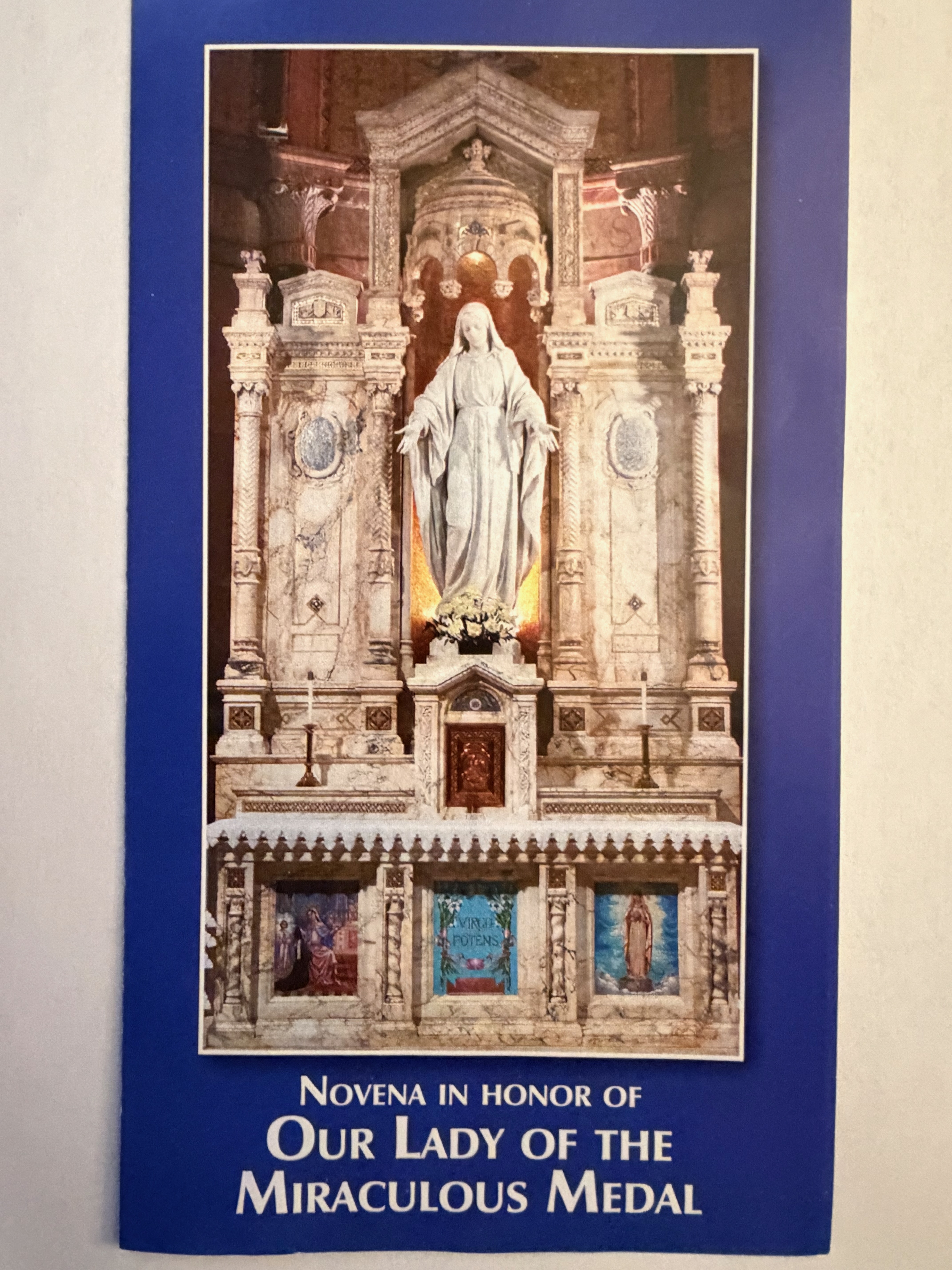
The pamphlet handed out at Mass contains the prayers used during the novena.

Miraculous Medal Novena Prayers As Said in the Mass

In the name of the Father and of the Son and of the Holy Spirit.
Amen.

Come, O Holy Spirit, fill the hearts of Your faithful, and kindle in them the fire of Your love.
Send forth Your Spirit, and they shall be created.
And You shall renew the face of the earth.

These opening prayers set the spiritual direction for the whole novena.

  • “In the name of the Father…” begins in the name of the Trinity. You are praying to God—Father, Son and Holy Spirit—before turning to the prayers honoring Mary.
  • “Come, O Holy Spirit…” asks the Spirit to awaken faith and love in those praying. This is a familiar Pentecost invocation used in the Church’s liturgy.
  • “Send forth Your Spirit…” comes from Psalm 104:30. The psalm praises God as the giver and renewer of life; the Church also uses this verse at Pentecost.

So the novena begins by asking the Holy Spirit to make the prayer fruitful and renew the hearts of those taking part. Then the prayers turn to Mary, asking her intercession and help in drawing closer to Christ.

Let Us Pray

O God, who did instruct the hearts of the faithful by the light of the Holy Spirit, grant us in the same Spirit to be truly wise and ever to rejoice in His consolation, through Jesus Christ Our Lord.
Amen.

O Mary, conceived without sin, pray for us who have recourse to you. (3 times)

O Lord Jesus Christ, who have vouchsafed to glorify by numberless miracles the Blessed Virgin Mary, immaculate from the first moment of her conception, grant that all who devoutly implore her protection on Earth, may eternally enjoy Your presence in Heaven, who, with the Father and Holy Spirit, live and reign, God, forever and ever.
Amen.

O Lord Jesus Christ, who for the accomplishment of Your greatest works, have chosen the weak things of the world, that no flesh may glory in Your sight; and who for a better and more widely diffused belief in the Immaculate Conception of Your Mother, have wished that the Miraculous Medal be manifested to Saint Catherine Labouré, grant, we beseech You, that filled with like humility, we may glorify this mystery by word and work.
Amen.

This section moves from asking the Holy Spirit to help the people praying to asking Mary’s intercession and reflecting on the meaning of the Miraculous Medal.

“Let Us Pray” introduces the prayers that follow.

  1. “O God, who did instruct the hearts of the faithful…”
    This continues the opening invocation to the Holy Spirit. It asks God for wisdom and for the comfort and joy that come from the Spirit.
  2. “O Mary, conceived without sin…”
    This is the prayer inscribed on the Miraculous Medal. Repeating it three times makes it a brief, repeated appeal for Mary’s prayers.
  3. “O Lord Jesus Christ, who have vouchsafed…”
    Vouchsafed means “graciously chosen” or “deigned.” This prayer addresses Jesus and asks that those who seek Mary’s protection may one day share in God’s presence in heaven.
  4. “O Lord Jesus Christ, who for the accomplishment…”
    This recalls the medal’s appearance to St. Catherine Labouré and asks for humility. The closing words, “by word and work,” mean that the faithful should honor the mystery of Mary’s Immaculate Conception both in what they say and in how they live.

The sequence keeps Christ at the center: the prayers ask Mary to intercede, while addressing Jesus as Lord and asking for grace to follow him.

Memorare

Remember, O most compassionate Virgin Mary, that never was it known that anyone who fled to your protection, implored your assistance, or sought your intercession, was left unaided. Inspired with this confidence, we fly unto you, O Virgin of Virgins, our Mother. To you we come; before you we kneel sinful and sorrowful, O Mother of the Word Incarnate, despise not our petitions, but in your clemency hear and answer them.
Amen.

The Memorare is a prayer of trust in Mary’s intercession. Its Latin name means “Remember.” It asks Mary to remember those who seek her help and to pray for them.

  • “We fly unto you” means “we turn to you for refuge.”
  • “Before you we kneel sinful and sorrowful” expresses humility and repentance.
  • “Mother of the Word Incarnate” calls Mary the mother of Jesus, who is God’s Word made flesh.
  • “Hear and answer them” asks Mary to bring the petitions to God. It expresses confidence in her care, not a promise that every request will be granted exactly as asked.

Novena Prayer

O Immaculate Virgin Mary, Mother of Our Lord Jesus and our Mother, penetrated with the most lively confidence in your all-powerful and never-failing intercession, manifested so often through the Miraculous Medal, we, your loving and trustful children, implore you to obtain for us the graces and favors we ask during this Novena, if they be beneficial to our immortal souls, and the souls for whom we pray (here privately form your prayer requests). You know, O Mary, how often our souls have been the sanctuary of your Son who hates iniquity. Obtain for us then a deep hatred of sin and that purity of heart which will attach us to God alone so that our every thought, word and deed may tend to His greater glory. Obtain for us also a spirit of prayer and self-denial that we may recover by penance what we have lost by sin and at length attain to that blessed abode where you are the Queen of Angels and of men.
Amen.

This Novena Prayer gathers the main intentions of the devotion: asking Mary to intercede, bringing personal petitions, seeking freedom from sin and praying for a life turned toward God.

  • “Obtain for us the graces and favors…if they be beneficial to our immortal souls” means you can ask for particular needs, while entrusting the outcome to God’s wisdom. The prayer asks for what will help you and those you pray for spiritually.
  • “The souls for whom we pray” lets you include other people in your intention, including loved ones who have died.
  • “Our souls have been the sanctuary of your Son” refers to Christ dwelling in the faithful through grace. The prayer asks for a heart that rejects sin and stays close to God.
  • “A spirit of prayer and self-denial” asks for deeper prayer and the willingness to make sacrifices as part of turning away from sin.
  • “Recover by penance what we have lost by sin” asks for conversion and restoration through repentance—not that penance earns salvation on its own.

The phrase “all-powerful…intercession” is traditional devotional language for Mary’s powerful prayer on our behalf. It does not mean Mary has power apart from God; the prayer asks her to intercede with him.

Act of Consecration to Our Lady of the Miraculous Medal

O Virgin Mother of God, Mary Immaculate, we dedicate and consecrate ourselves to you under the title of Our Lady of the Miraculous Medal. May this Medal be for each one of us a sure sign of your affection for us and a constant reminder of our duties toward you. Ever while wearing it, may we be blessed by your loving protection and preserved in the grace of your Son. O most powerful Virgin, Mother of our Savior, keep us close to you every moment of our lives. Obtain for us, your children, the grace of a happy death; so that, in union with you, we may enjoy the bliss of Heaven forever. Amen.

O Mary, conceived without sin, pray for us who have recourse to you. (3 times)

This Act of Consecration is a prayer of dedication to Mary under the title of Our Lady of the Miraculous Medal. Here, consecrate means to entrust oneself to God with Mary’s help and to seek to live faithfully as her child.

The prayer describes the Medal as both a sign of Mary’s care and a reminder of the wearer’s commitment to her. It asks for her protection, while recognizing that the grace being sought comes from her Son, Jesus.

The request for “the grace of a happy death” means the grace to remain close to God and die reconciled with him. The prayer ends with the Medal’s familiar invocation, said three times: “O Mary, conceived without sin, pray for us who have recourse to you.”

Watch the Day 1 Mass

The full livestream of the Day 1 Solemn Novena Mass is available below.

Our Lady of the Miraculous Medal, pray for us.

Come to the Foot of the Altar

16 Monday Nov 2026

Posted by Brian in Saints

≈ Leave a comment

Tags

Miraculous Medal Shrine, Shrine, St. Vincent de Paul

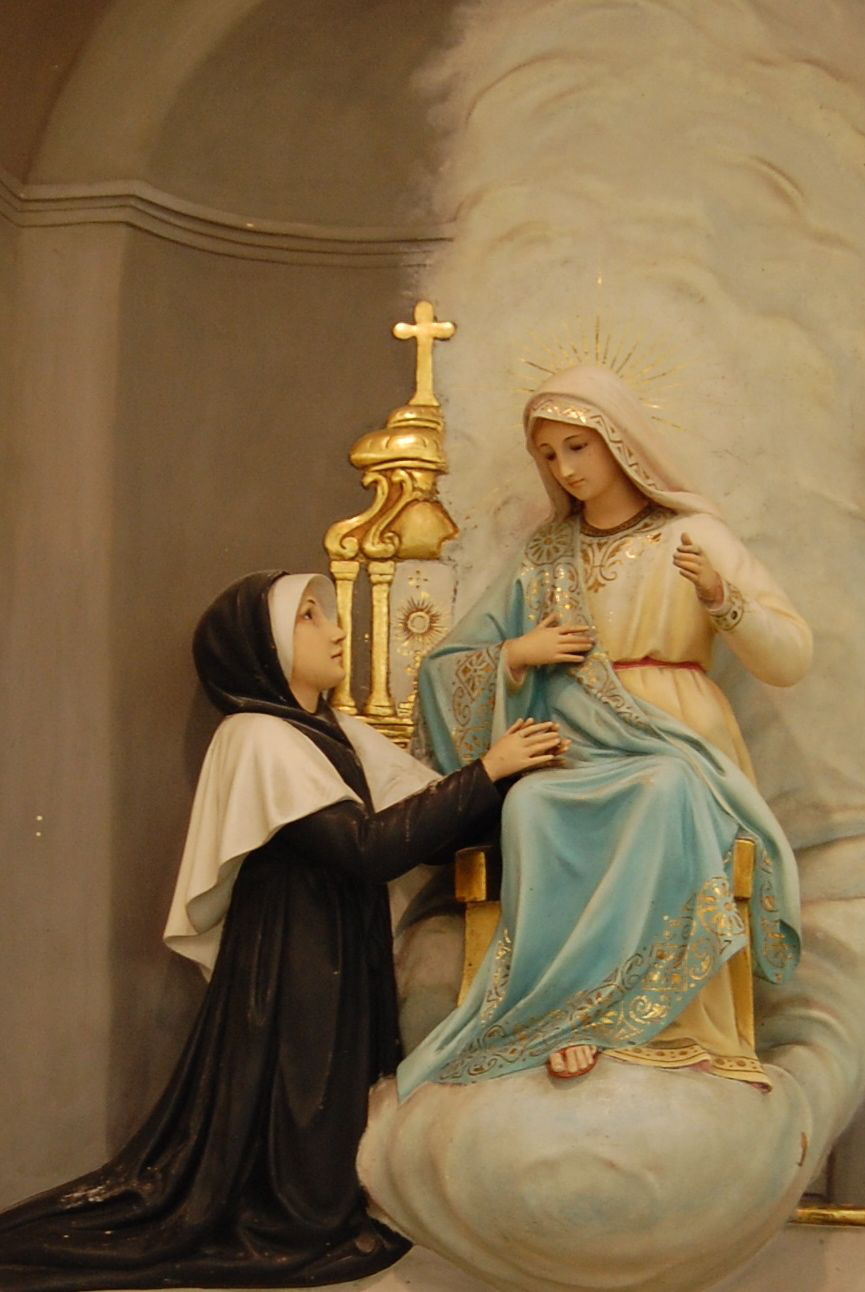
St. Catherine Labouré kneels before Our Lady at the Basilica Shrine of Our Lady of the Miraculous Medal in Philadelphia. The scene recalls Mary’s invitation: “Come to the foot of the altar.”

Solemn Novena
Basilica Shrine of Our Lady of the Miraculous Medal
November 16–24, 2026

Today I begin nine days of prayer at the Solemn Novena at the Basilica Shrine of Our Lady of the Miraculous Medal in Philadelphia.

This year’s theme, “Come to the Foot of the Altar,” recalls Our Lady’s words to St. Catherine Labouré. I hear in them an invitation to bring our prayers and intentions to Mary, trusting in her maternal care and asking her to keep us close to her Son.

I plan to attend each day in person. The Shrine says that those who attend all nine days and fulfill the Church’s usual conditions may receive a plenary indulgence on the final day, November 24.

I’ll share a brief reflection from each day of the novena. May these days of prayer deepen our trust in Our Lady’s intercession and lead us closer to Christ.

Our Lady of the Miraculous Medal, pray for us.

The Miraculous Medal Prayer

01 Sunday Nov 2026

Posted by Brian in Miraculous Medal, Shrines of Philadelphia

≈ 1 Comment

Tags

Basilica of the National Shrine of the Immaculate Conception, Miraculous Medal Shrine, Mother Mary, Saint Catharine Laboure

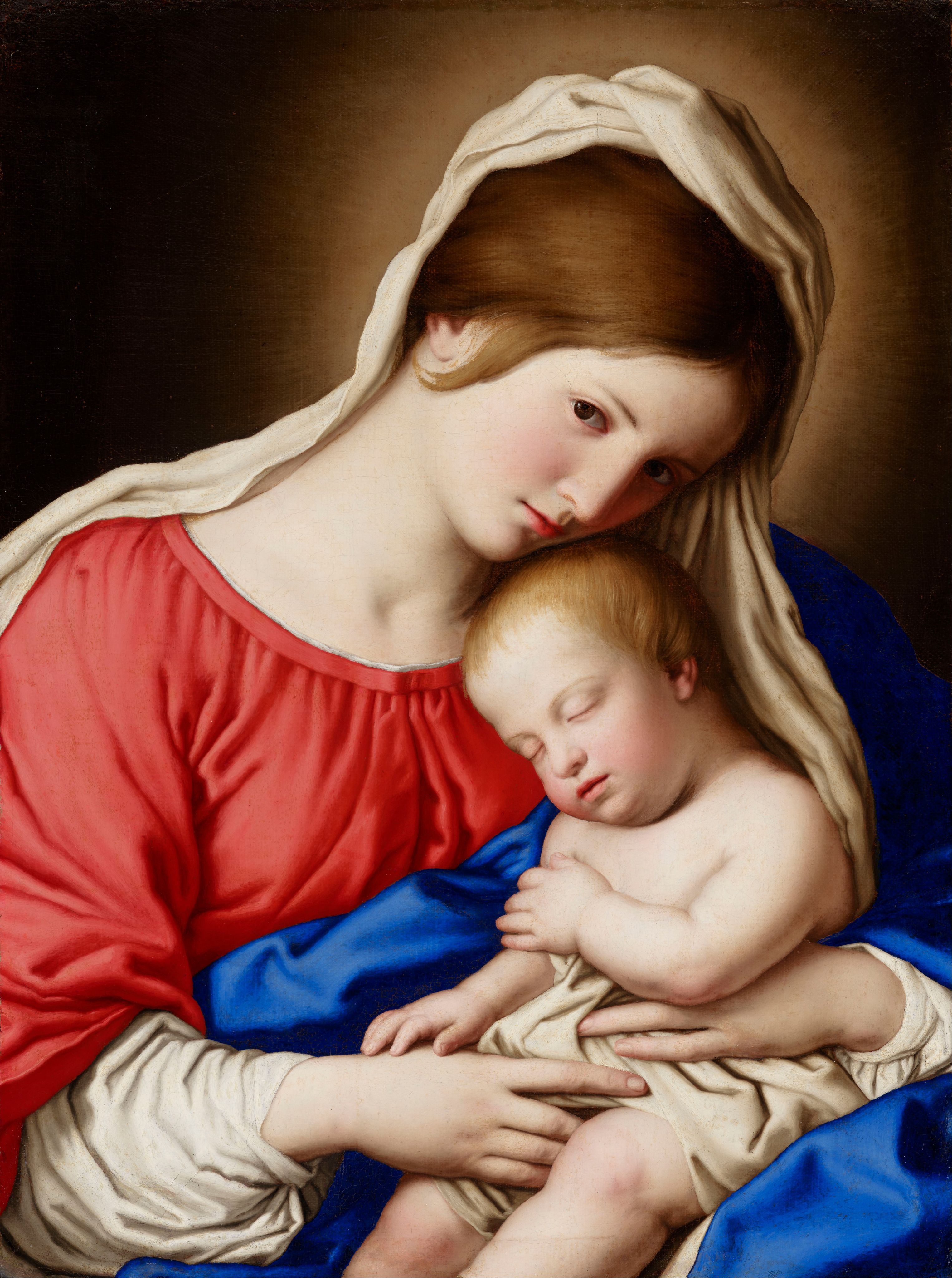
Madonna and Child Workshop of Sassoferrato (Giovanni Battista Salvi, 1609–1685) Oil on canvas, 17th century Indianapolis Museum of Art at Newfields

The Miraculous Medal Prayer

O Virgin Mother of God, Mary Immaculate,
we dedicate and consecrate ourselves to you
under the title of Our Lady of the Miraculous
Medal. May this Medal be for each one of
us a sure sign of your affection for us and
a constant reminder of our duties toward you.
Ever while wearing it, may we be blessed
by your loving protection and preserved in
the grace of your Son. O Most powerful Virgin,
Mother of our Savior, keep us close to you
every moment of our lives. Obtain for us, your
children, the grace of a happy death;
so that, in union with you, we may enjoy the
bliss of heaven forever.

Amen.

Madonna and Child

The November artwork is Madonna and Child, a 17th-century oil painting attributed to the workshop of Giovanni Battista Salvi, better known as Sassoferrato. It is now in the collection of the Indianapolis Museum of Art at Newfields.

Sassoferrato became known especially for devotional paintings of the Virgin Mary and Christ Child. He and his workshop produced numerous versions of this composition. In the Indianapolis painting, the Christ Child sleeps peacefully in Mary’s arms while she remains awake, her eyes directed outward toward the viewer.

Recent conservation work at Newfields revealed more of the painting’s original richness. Scientific analysis identified vermilion in Mary’s red garment and lapis lazuli in her blue mantle — both costly pigments in 17th-century Italy. Removal of an old yellowed varnish also brought back the depth of the colors and the delicacy of the figures.

The painting predates the apparitions to St. Catherine Labouré and the Miraculous Medal by nearly two centuries, yet Mary’s watchful gaze gives it a particular resonance with this month’s prayer. She holds Christ close while looking outward toward us, beautifully accompanying its petition:

Mother of our Savior, keep us close to you every moment of our lives.

The painting has also found a new audience in our own time. In 2024, the United States Postal Service selected this Madonna and Child for its traditional Christmas stamp, bringing this centuries-old image of Mary and the Christ Child into millions of American homes.

The Meaning of the Prayer

The Miraculous Medal Prayer is a prayer of entrustment that follows the course of an entire life. It begins with dedication to Mary under the title of Our Lady of the Miraculous Medal and asks that the medal remain a visible reminder of that relationship.

From there, the prayer turns to Mary’s maternal protection. We ask to be kept in the grace of her Son and under Mary’s maternal care throughout our lives. The purpose of that closeness is ultimately Christ. Mary’s protection is sought not as an end in itself, but as help in remaining faithful to her Son.

The final petitions look toward the end of earthly life. We ask Mary to obtain for us “the grace of a happy death” and, ultimately, “the bliss of heaven forever.” The prayer therefore traces a spiritual journey: dedication, protection, perseverance in grace, death and eternal life.

That progression gives the prayer particular meaning in November. Christian preparation for death is really a way of living, remaining close to Christ throughout our lives in the hope of being with Him forever.

The Prayer’s Origin

The Miraculous Medal Prayer is more specifically an Act of Consecration to Our Lady of the Miraculous Medal. An Act of Consecration is a prayer of self-dedication, entrusting ourselves to Mary’s maternal care so that she may keep us close to her Son throughout our lives and lead us ultimately to heaven.

Its devotional roots reach back to St. Catherine Labouré and the apparitions of the Blessed Virgin Mary in Paris in 1830. On November 27, Catherine received the vision that would become the Miraculous Medal, bearing the invocation:

O Mary, conceived without sin, pray for us who have recourse to thee.

The first medals were struck in 1832. The Act of Consecration later became part of the Miraculous Medal devotional tradition and is included in the Perpetual Novena to Our Lady of the Miraculous Medal prayed at the Basilica Shrine of Our Lady of the Miraculous Medal in Philadelphia.

In this series dedicated to the memory of my mother — whom I affectionately called “Ma Wilde” — the prayer’s petitions for a happy death and the hope of heaven carry a special meaning.

Our Lady of the Miraculous Medal — November 27

November opens with All Saints’ Day on November 1 and All Souls’ Day on November 2, beginning a month in which the Church gives particular attention to the faithful departed and the hope of eternal life. This makes November a particularly fitting time for a prayer that asks Mary to accompany us throughout life and ultimately toward heaven.

The month also brings a direct connection to the prayer itself. November 27 is the Feast of Our Lady of the Miraculous Medal. The following day, November 28, is the feast of St. Catherine Labouré.

At the Basilica Shrine of Our Lady of the Miraculous Medal in Philadelphia, the annual Solemn Novena continues this tradition of devotion. In 2026, the nine days of prayer and Mass take place November 16–24, under the theme Come to the Foot of the Altar, recalling Mary’s invitation to St. Catherine Labouré during the July 1830 apparition. The novena culminates in a special feast-day Mass on November 25, ahead of the traditional November 27 feast.

Together, these feasts and devotions give November a natural progression: remembering those who have died, praying in the hope of heaven and turning to Mary for her maternal care throughout life and at the hour of death.

In Loving Memory of Ma Wilde

Death separates us physically, but our Catholic faith teaches that the bonds between the living and the dead are not simply erased.

Through the Communion of Saints, the Church on earth remains joined to the saints in heaven and to the faithful departed. This communion becomes especially meaningful at Mass, where heaven and earth meet in the worship of God and we remember and pray for those who have died.

For me, that includes Ma Wilde. At Mass I can bring her memory with me and pray for her soul, knowing that our faith offers a way to remain connected beyond death.

Personal Reflection

Since Ma Wilde’s passing, that belief has taken on a more personal meaning for me. In a sense, our connection has become spiritual, through Jesus and through prayer.

While she was alive, I would sometimes tell her I was going to Mass. She always asked me to pray for her. Those prayers accompanied her through the challenges of her later years — bronchitis, repeated falls and eventually pneumonia.

Now that she has passed from this life, I continue to pray for her. I also believe she can know the prayers offered for her by family and others throughout her life. There is something comforting in imagining that she now understands more fully how many people carried her in prayer.

Death has changed the way we are connected, but it has not ended the connection.

ShrineTower Connection

The Miraculous Medal has appeared often on ShrineTower through my visits, writings and photographs of the Basilica Shrine of Our Lady of the Miraculous Medal in Philadelphia.

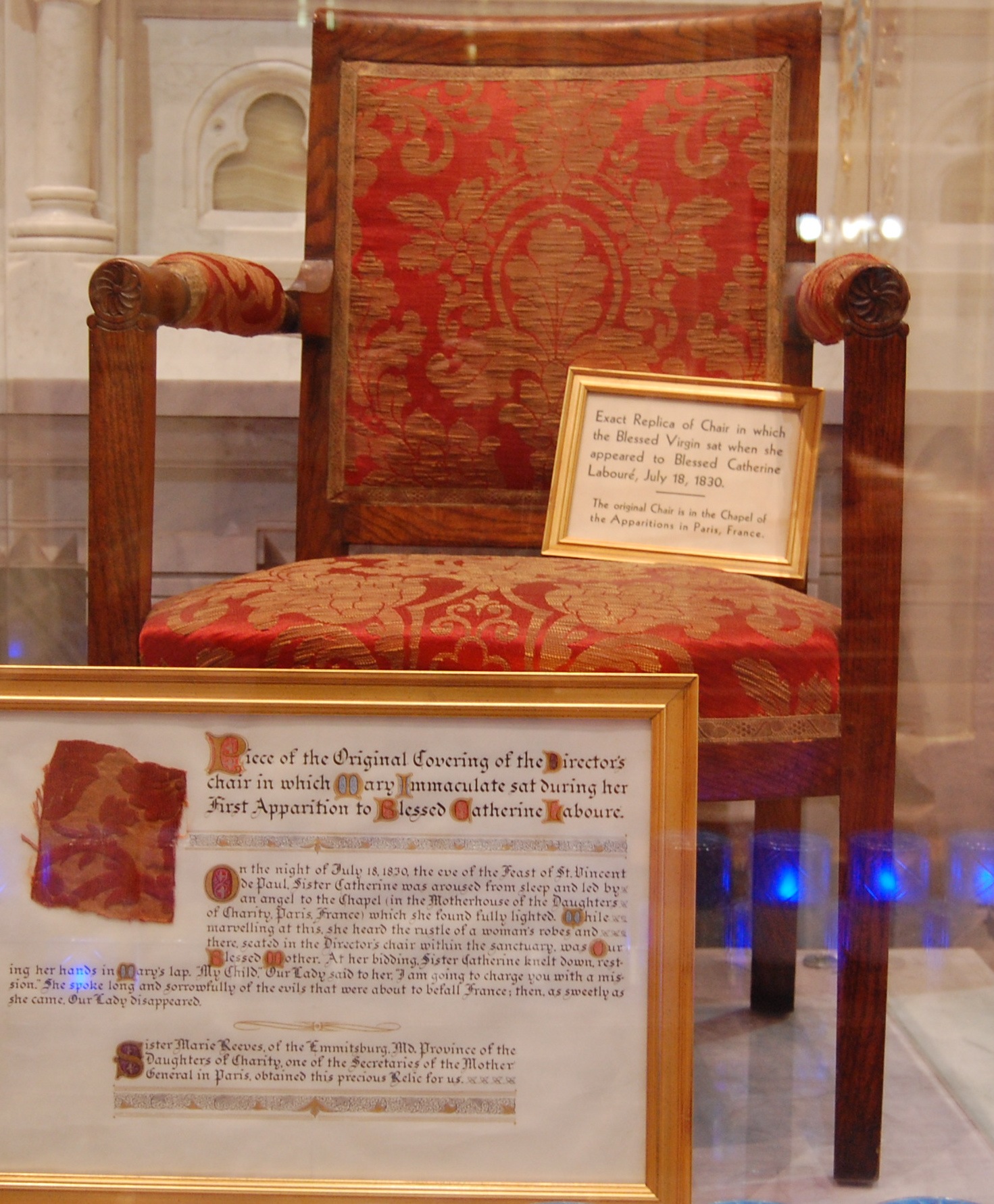
In March 2022, I wrote about St. Catherine Labouré and the story of the Miraculous Medal while exploring the shrine and its developing St. Vincent Rosary Walk. That visit brought together many of the tangible reminders of Catherine’s story: a replica of the chair associated with Mary’s apparition in Paris, a relic of St. Catherine and the familiar shrine image of Mary with Catherine kneeling at her side. 

I returned to the subject on November 28, 2022, in the ShrineTower post Immaculate Conception and St. Catherine Laboure at Miraculous Medal Shrine. There I explored the connection between the medal and the Immaculate Conception. The medal was originally known as the Medal of the Immaculate Conception.

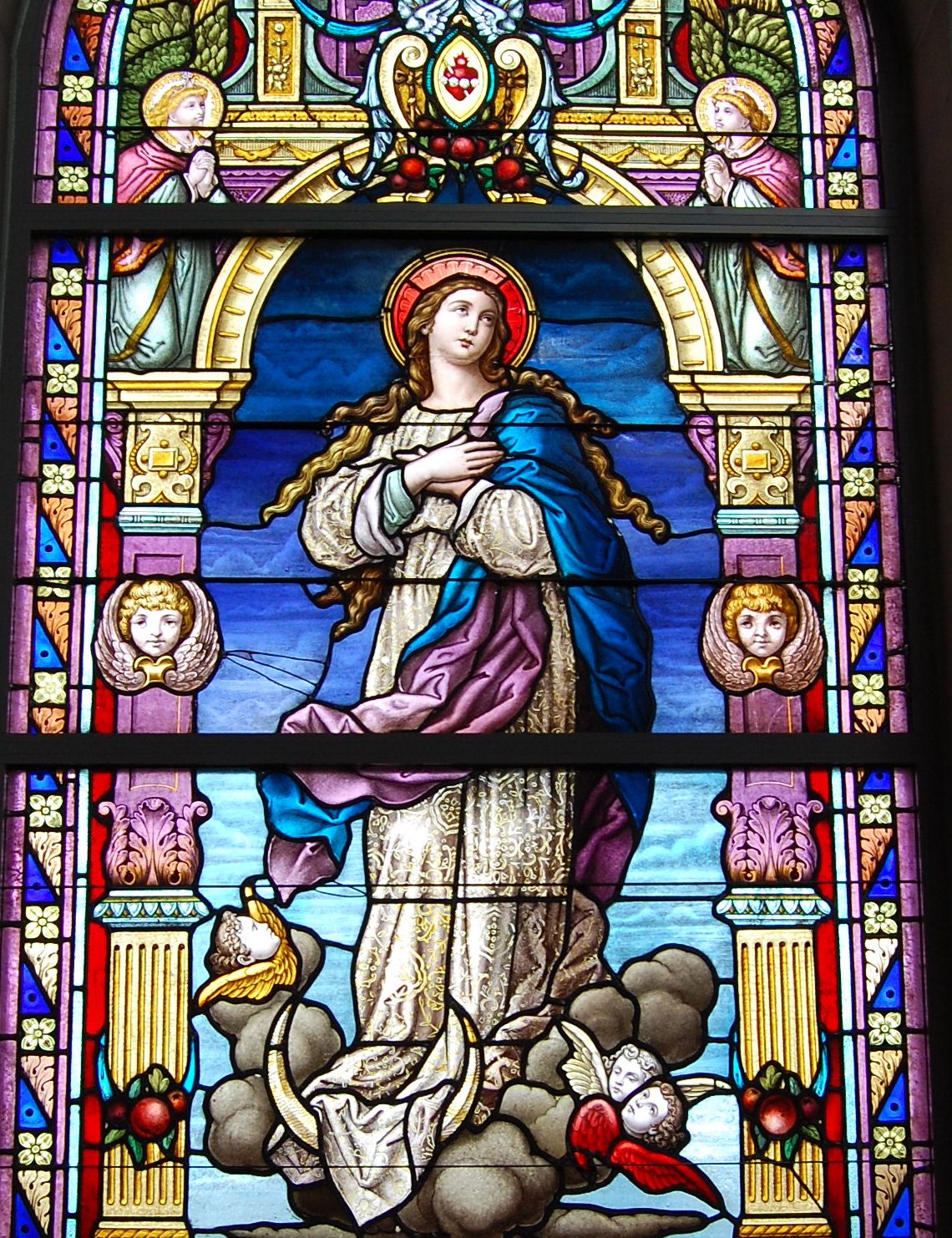
That post also brought the story surprisingly close to home. I connected Murillo’s paintings of the Immaculate Conception with the late-19th-century Immaculate Conception stained-glass window at my own parish, St. Basil the Great. 

The Vincentian connection has also been part of ShrineTower. In September 2022, I wrote about St. Vincent de Paul and photographed the seminary and shrine in Germantown. The Vincentian priests and brothers have long served the Philadelphia Miraculous Medal Shrine, linking the devotion to the wider spiritual family of St. Vincent de Paul and St. Catherine Labouré.

Looking back at those ShrineTower posts, the Miraculous Medal is not a new subject for me. I have encountered it through the shrine, its sacred art, St. Catherine Labouré, the Vincentians and even the stained glass of my own parish. 

This November prayer returns to that familiar devotion from a different place in my life.

Closing Prayer

Mary, Mother of God, keep us close to your Son throughout our lives and guide us toward our eternal home.

Remember Ma Wilde and all the faithful departed. May the prayers offered for them on earth join the prayers of the saints in heaven, united in the Communion of Saints.

Help us to remember that death does not end the bonds of love and prayer. Keep our hearts open to those who have gone before us and strengthen our hope that one day we may be reunited in the presence of your Son.

Our Lady of the Miraculous Medal, pray for us.

Amen.

Some lives are hidden with Christ in God (Col. 3:3). Words received in prayer are not forgotten but carried forward in  their own time.

United in prayer with and for you.

Sources

  • ShrineTower — Immaculate Conception and St. Catherine Labouré at Miraculous Medal Shrine — November 28, 2022 reflection on St. Catherine Labouré, the Miraculous Medal and its connection with the Immaculate Conception.
  • ShrineTower — The Miraculous Medal Shrine Goes Green — March 15, 2022 visit to the Basilica Shrine of Our Lady of the Miraculous Medal in Philadelphia, including St. Catherine Labouré, her relic and the St. Vincent Rosary Walk.
  • ShrineTower — St. Vincent de Paul — September 27, 2022 exploration of St. Vincent de Paul, the Vincentian presence at the Miraculous Medal Shrine and St. Vincent’s Seminary in Germantown.
  • Central Association of the Miraculous Medal — Perpetual Novena — the Perpetual Novena prayed at the Basilica Shrine in Philadelphia, including the Act of Consecration to Our Lady of the Miraculous Medal used in this post.
  • Central Association of the Miraculous Medal — The Story of the Miraculous Medal and CAMM — history of St. Catherine Labouré’s 1830 apparitions, the Miraculous Medal and the development of the Philadelphia shrine.

Immaculate Conception and St. Catherine Laboure at Miraculous Medal Shrine

28 Monday Nov 2022

Posted by Brian in Miraculous Medal

≈ 1 Comment

Tags

Immaculate Conception, Miraculous Medal Shrine, St. Vincent de Paul

mary side shrine 2Immaculate Conception, or the birth of Mary. Her parents were Saint Joachim and Saint Anne. She was born free of original sin as proclaimed in 1854, Pope Pius IX’s solemn declaration, Ineffabilis Deus. As a result she shares in the benefits of salvation in Christ from the very moment of her conception.

mother of the church

The Miraculous Medal was originally known as the Medal of the Immaculate Conception. Oh Mary conceived without sin, pray for us who has recourse to thee.

main altar miraculous medal shrine

In 1830, the Blessed Mother appeared to St. Catherine Laboure in 1830 three times. The first time, to tell her of troubling times to come and job she had for Catherine.
ist apparation without frame
1st apparation

The second time, appearing as the Mother of the World, holding a globe with a cross on top.
2nd apparation

The third time, depicted in what we now call the Miraculous Medal, hands outstretched, standing on the globe, crushing the snake, with rays of graces shining down on the world.

3rd apparation

The Blessed Mother said that people who wore the medal around their necks and prayed would be blessed with special graces.

Mary told St. Catherine to “Come to the altar and pray and great graces will be shed upon you.”

The famous Spanish painter Bartolome Esteban Murillo had a devotion to Mary, and created several paintings of the Immaculate Conception in the mid to late 1660s.

409px-Murillo_immaculate_conception

Murillo was the inspiration for the the stained glass window at St. Basil’s Church in eastern Pennsylvania. The Immaculate Conception was created in late 1890’s of German design.

immaculate conception Murillo st.basil

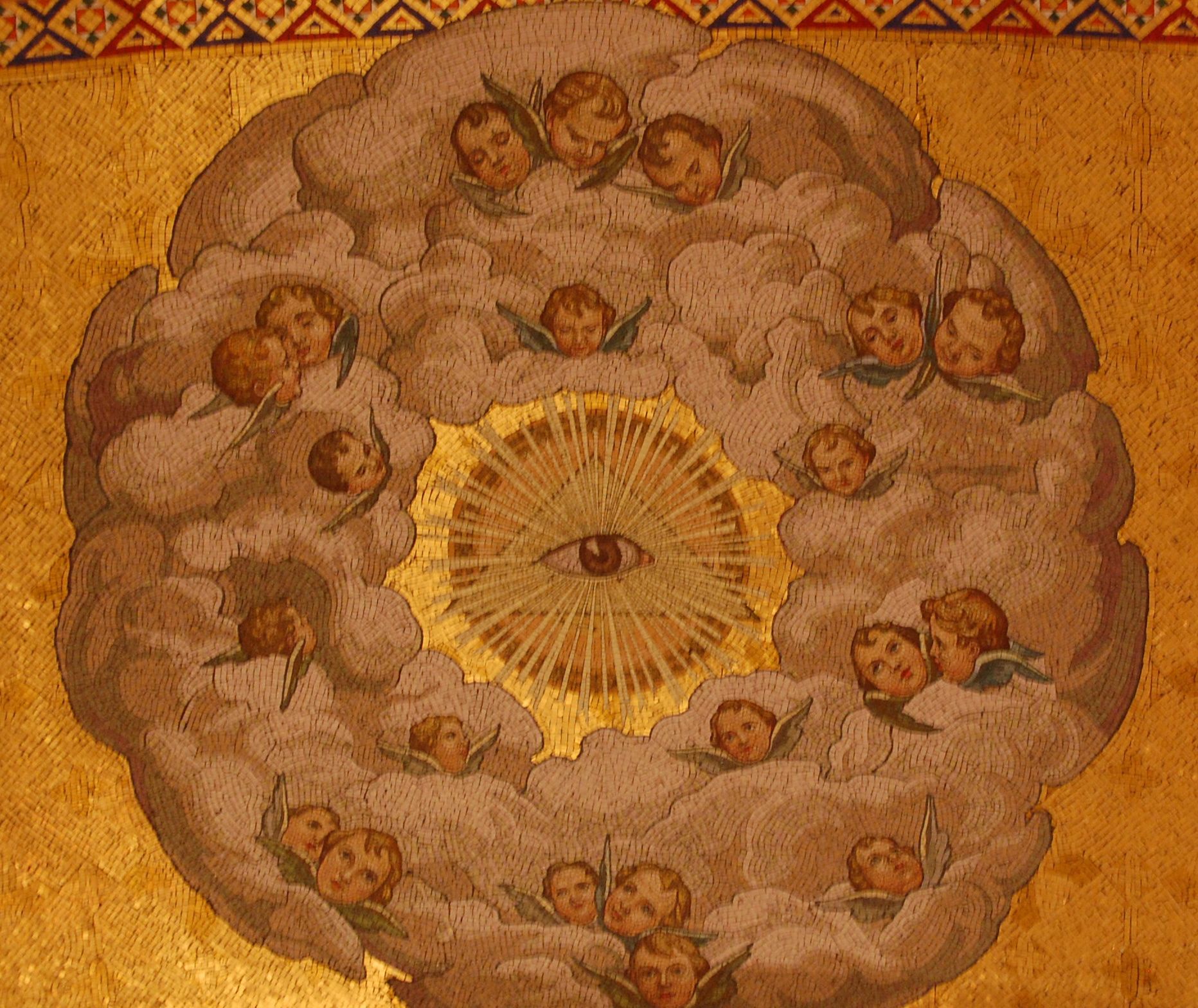
Appropriately, high in the ceiling is The Eye symbolizing the Holy Spirit and the important role in the Immaculate Conception.

st.francis de paul

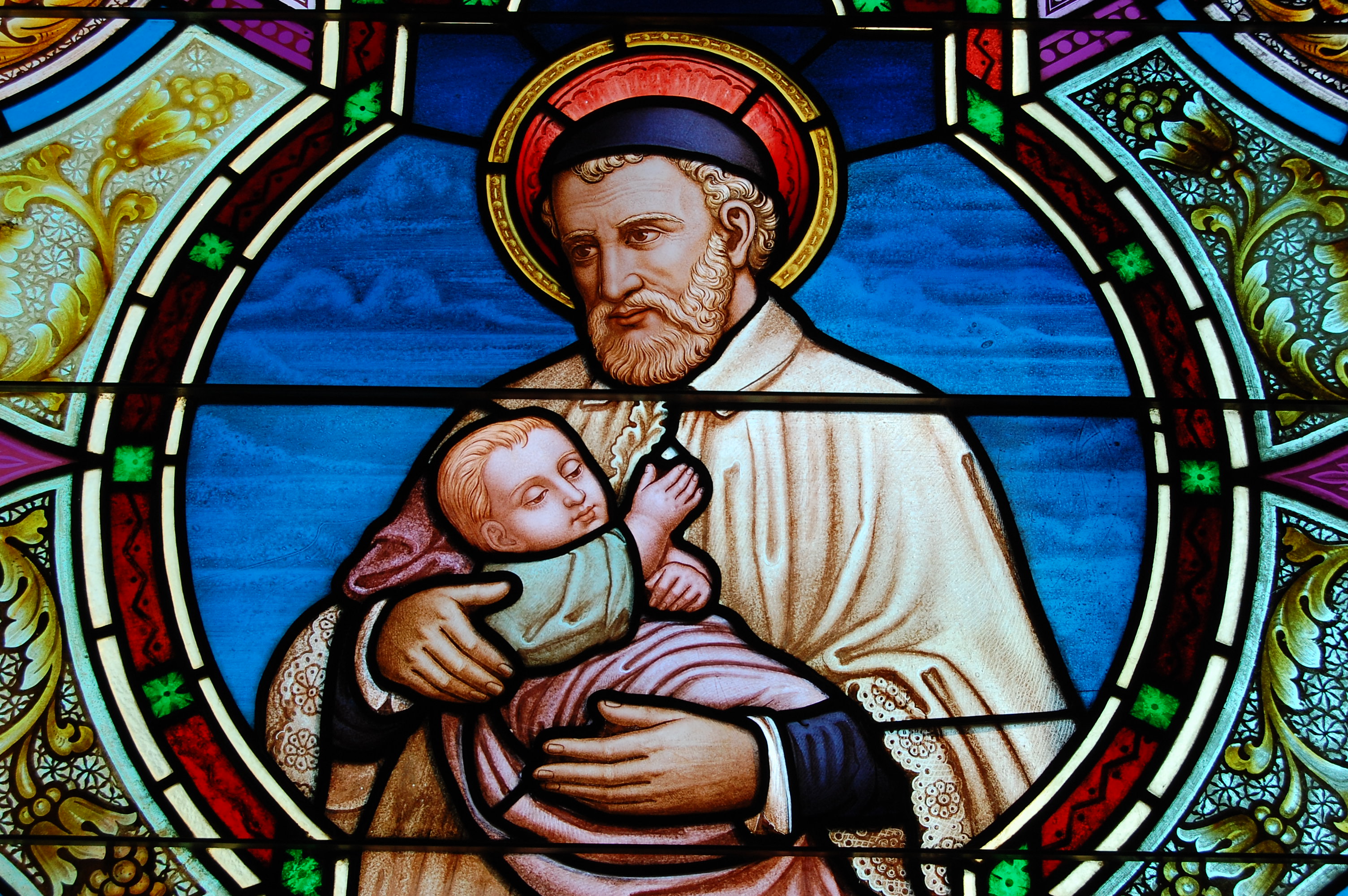
The Vincentians, Congregation of the Mission are the shrine gaurdians of the Miraculous Medal Shrine. St. Vincent dePaul stands at the entrance to the Seminary, and at Mother Mary’s side.

eye holy spirit

St. Vincent de Paul

27 Tuesday Sep 2022

Posted by Brian in Miraculous Medal

≈ 1 Comment

Tags

Miraculous Medal Shrine, Shrine of Philadelphia, St. Vincent de Paul, Vincentians, Vincentians Catholic

4 Vincent de Paul

St. Vincent dePaul is founder of the Vincentians Catholic religious order. A peasant from birth, he chose the priesthood to make something of his life and succeeded in reaching the highest levels of society through his charm and social skills. A turning point came in midleife when he heard the dying confession of a peasant and determined afterward to devote his life to serving the poor.

The Vincentians operate The Miraculous Medal in Germantown, Pennsylvania which is a suburb of Philadelphia. Along with St. Loiuse de Maillac, Vincent founded the Daughters of Charity to serve the poor and sick. They have a presence in Germantown PA today.

DSC_0042
Vincent instructed priests and religious, “The poor are your masters and you are their servants.”

DSC_0015
A view of the Miraculous Medal Shrine in Germantown Pennsylvania, a suburb of Philadelphia.

vincent at entrance2
Vincent icon in front of St. Vincent’s Seminary building, which is next to the Miraculous Medal Shrine they operate. Vincent died on September 27, 1660 at the age of eighty. He was later named patron of all charitable societies. Sources: Blessed Among Us/Give Us This Day Daily Prayer Guide.

mm shrine entrance

mm church overview
Inside the Miraculous Medal Shrine.

lower shrine close up
Inside the Lower Level Shrine – The Virgo Potens.

The Miraculous Medal Shrine Goes Green

15 Tuesday Mar 2022

Posted by Brian in Miraculous Medal, Saints, Shrines of Philadelphia

≈ 2 Comments

Tags

Miraculous Medal Shrine, Mother Mary, st catherine laboure

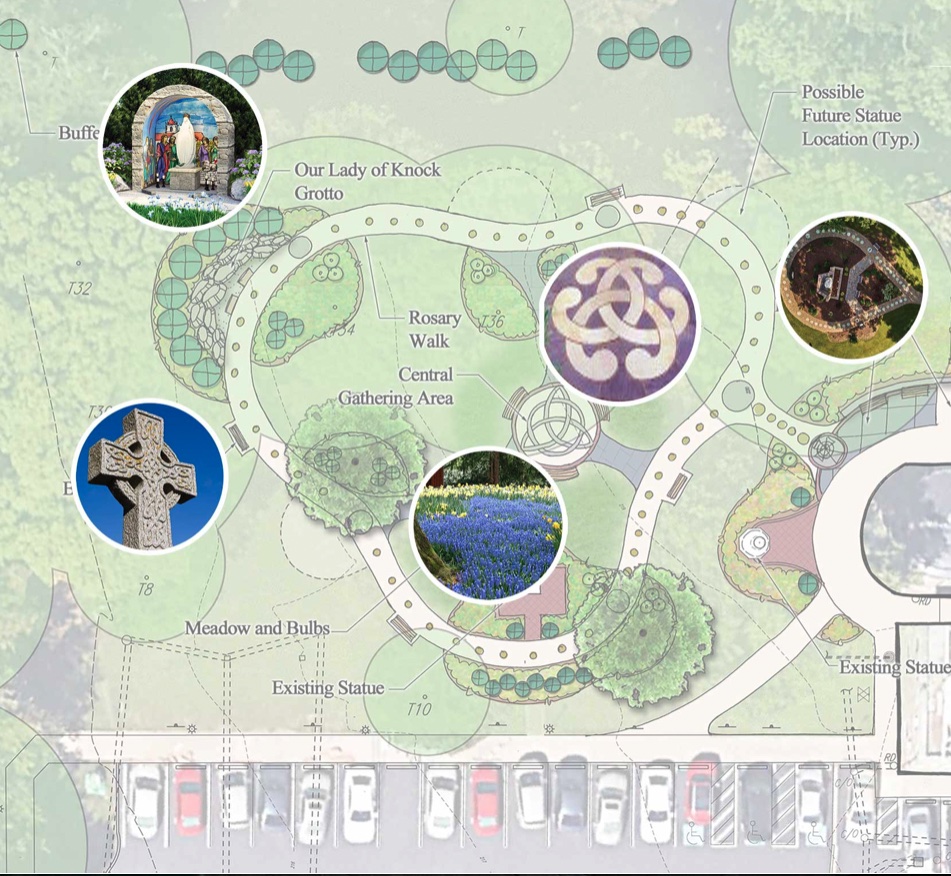
The Miraculous Medal is expanding into nature with St. Vincent’s Rosary Walk and a new grotto of Our Lady of Knocks. The outdoor sanctuary will include:

  • A Rosary Walk
  • A Meditation Garden
  • A Marian Garden for Children
  • Our Lady of Knock Statue and Grotto
  • Our Lady of knock Mosaic

The centerpiece of Vincent’s Rosary Walk is our Lady of Knock Shrine which will highlight the Irish heritage of Germantown. On future St. Patrick’s day of March 17th, there will surly be activity in the Garden, once it is complete in late 2022.

Artist edition of the St. Vincent Rosary Walk and Our Lady of Knock Groto.1
St. Vincent’s Rosary Walk design plans. Currently the area is under construction. (Spring 2022)2

According to the Miraculous Medal, the outdoor shrine will expand the spiritual experience for visitors and members. The Meditation Garden will also “serve as an outdoor sanctuary and green space for devotees and the Children’s Garden will provide an educational opportunity to teach the next generations of Catholics and Marian devotees to learn to pray the rosary and love the story of the miraculous medal.”3

Mary, the Mother of God, appeared in an 1830 apparition in Paris, France to Catherine Labourè, now a Saint. November 28th is St. Catherine’s feast day. Her born name is Zoe Labouré.

“Then the Blessed Virgin said to me: ‘Get a medal struck after this model; those who wear it when it is blessed will receive great graces, especially if they wear it round their neck. Graces will be abundant for those who have confidence’.” – St. Catherine Labourè

The Miraculous Medal Shrine is located in Germantown (Philadelphia). As St. Catherine was a member of the Daughters of Charity of Saint Vincent de Paul and a Marian visionary, the Miraculous Medal Shrine is operated and influenced by The Vincentian religious order.

The chair below is at side altar in Miraculous Medal Shrine.

This is an exact replica of the chair Immaculate Mary sat in while on earth in Paris France.

There is a blessing following each Mass and/or Novena Service at the Miraculous Medal Shrine for those who wish to reverence the relic of St. Catherine Laboure.  Reverencing a relic whether with a kiss, or having it placed on a different part of the body [i.e. over the heart or on the head] is a tradition which dates back to the Middle Ages when the cult of Saints became a devotional practice.  In this, the faithful express their belief in the intercessory prayer of the saint whose relic it is.  In this case, the relic of St. Catherine is offered as the one who first received the message of Mary and faithfully kept to the mission entrusted to her in the making of the medal of the Immaculate Conception [aka. The Miraculous Medal.] – – – From correspondence with Fr. Bill Allegretto, C.M. Associate Director for the Central Association for the Miraculous Medal in Philadelphia, Pennsylvania.

This is a rare photo of St. Catherine Laboure herself!

The medal was designed by Mary, herself, which is amazing! Here is what Mary, Mother of God said, “Have a medal struck after this model. All who wear it will receive great graces; they should wear it around the neck. Graces will abound for persons who wear it with confidence”. The Miraculous Medal shows an image of Our Lady of Grace with her hands emitting rays of light, just as she appeared to Saint Catherine. This devotion to Our Lady of Grace on the medal marked a true renewal of devotion to Our Lady in Europe in the mid to late 1800’s.

On the medal Mary asked that this put on it, “O Mary, conceived without sin, pray for us who have recourse to thee.”

Note that St. Catherine Laboure’s confessor put her account of the apparitions into writing, and that St. Catherine, before her death in 1876 also wrote down her accounts. Up until that time, no one outside her confessor was aware that she received the apparitions. She kept it secret for 47 years!

Exhumed in 1933, her body was judged to be incorrupt by the church, and now lies in a glass coffin in a chapel in Paris, at one of the spots where the Blessed Mother appeared to her.

The following video shows the Miraculous Medal Monday Mass and novena from March 7, 2022. There are many great clips of the shrine in this video.

Famous statue in the Miraculous Medal Shrine front altar.

A popular remembrance of Mary with St. Catherine kneeling at her side, just as she did on November 27, 1830. From theMiraculous Medal Shrine, Philadelphia, PA.

1 2 3 Miraculous Medal website https://miraculousmedal.org

Enter your email address to receive new ShrineTower posts by email.

Join 72 other subscribers
Follow @shrinetower

Most Recent Posts

  • Come to the Foot of the Altar — Solemn Novena, Day 4
  • Come to the Foot of the Altar — Solemn Novena, Day 3
  • Come to the Foot of the Altar — Solemn Novena, Day 2
  • Come to the Foot of the Altar — Solemn Novena, Day 1
  • Come to the Foot of the Altar
  • The Miraculous Medal Prayer

Previous Posts

Tags

Eastern Christianity Miraculous Medal Shrine music Pope Francis Saint saints Shrine St. Basil St. Ignatius of Loyola St. Vincent de Paul

The Cover Art

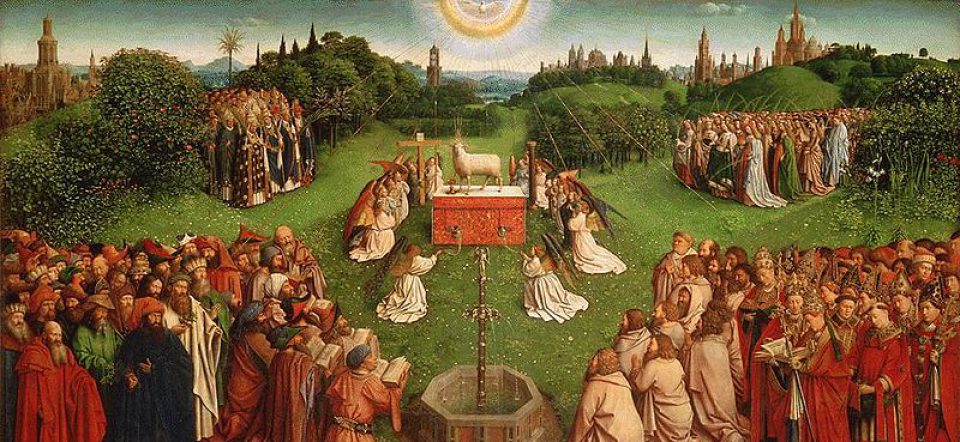
Jan Van Eyck, “The Adoration of the Lamb” 1432 from the Ghent Alterpiece. Detail: The red altar where the lamb stands reads, “Behold the Lamb of God, which taketh away the sins of the world” and “Jesus the way, the truth, and the life”, both quotes from Gospel of John. In this image and in the book of Revelation the Lamb is Jesus. Directly around the Lamb on the altar are angels who are carrying the instruments in the Passion scenes, like the cross and crown of thorns.

gichontree

Unknown's avatarThere's beauty in sacred spaces; from the stories they tell in architecture, stained glass windows and icons; to the rituals and liturgy that arises our soul. Inside a shrine, the angels and saints praise God with us. I hope to relay the message for the kingdom, power and glory of God, now and forever.

Blog at WordPress.com.

  • Subscribe Subscribed
    ShrineTower
    Join 72 other subscribers

    Have a WordPress.com account? Log in now.

  • ShrineTower
    View site in Reader
    Manage subscriptionsSign upLog in
    Report this content
    Collapse this bar
Loading Comments...