• Shrines of Philadelphia
    • St. Katharine Drexel
    • Miraculous Medal
    • St. John Neumann
    • St. Rita of Cascia
    • Our Lady of Czestochowa
    • St. Gianna Molla
  • Sacred Places
  • Art, Film, Poetry
  • Saints
  • Music
  • Services

ShrineTower

~ Saints, Shrines and Sacred Places

ShrineTower

Tag Archives: Mother Mary

The Miraculous Medal Prayer

01 Sunday Nov 2026

Posted by Brian in Miraculous Medal, Shrines of Philadelphia

≈ 1 Comment

Tags

Basilica of the National Shrine of the Immaculate Conception, Miraculous Medal Shrine, Mother Mary, Saint Catharine Laboure
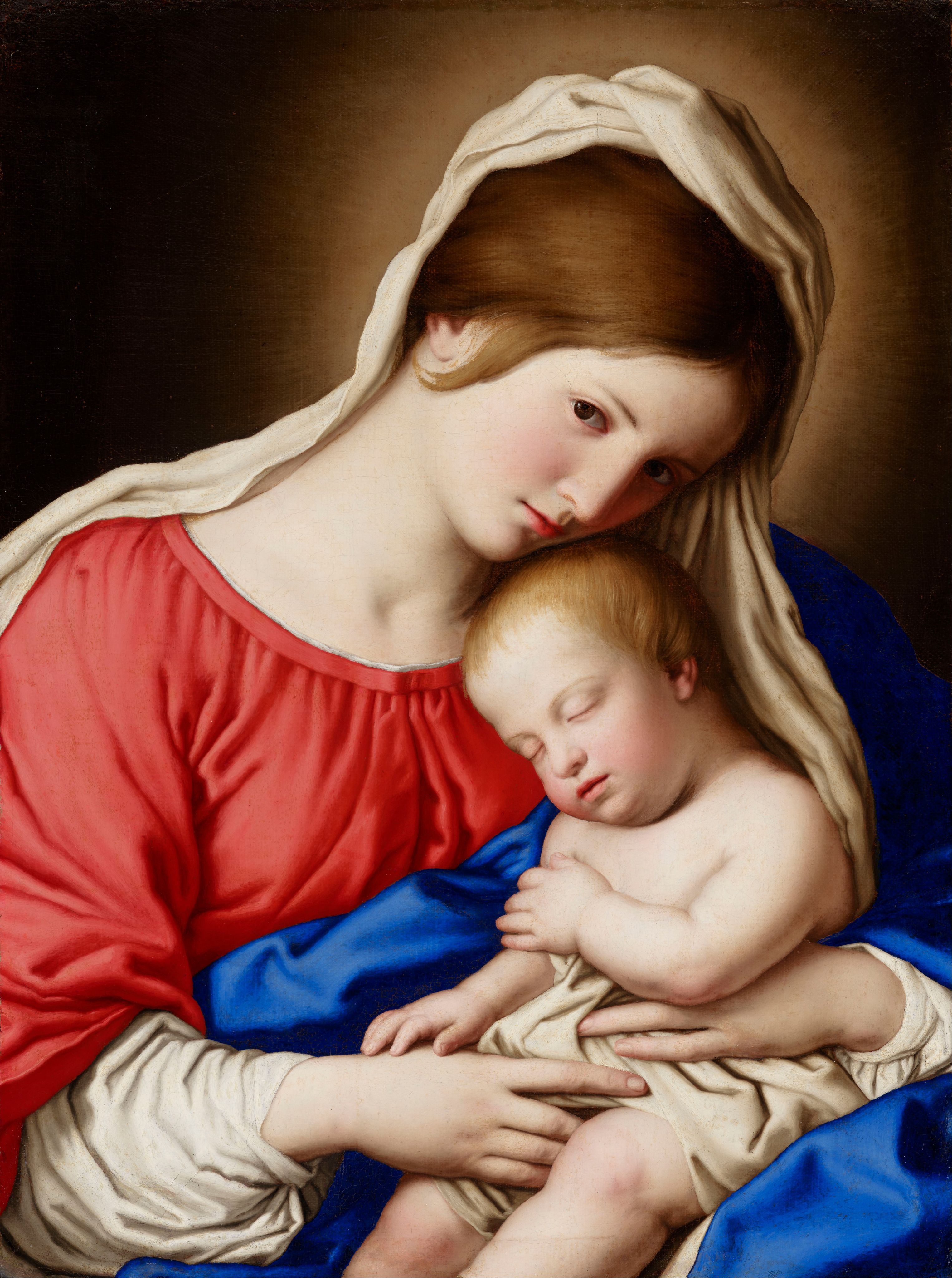
Madonna and Child Workshop of Sassoferrato (Giovanni Battista Salvi, 1609–1685) Oil on canvas, 17th century Indianapolis Museum of Art at Newfields

The Miraculous Medal Prayer

O Virgin Mother of God, Mary Immaculate,
we dedicate and consecrate ourselves to you
under the title of Our Lady of the Miraculous
Medal. May this Medal be for each one of
us a sure sign of your affection for us and
a constant reminder of our duties toward you.
Ever while wearing it, may we be blessed
by your loving protection and preserved in
the grace of your Son. O Most powerful Virgin,
Mother of our Savior, keep us close to you
every moment of our lives. Obtain for us, your
children, the grace of a happy death;
so that, in union with you, we may enjoy the
bliss of heaven forever.

Amen.

Madonna and Child

The November artwork is Madonna and Child, a 17th-century oil painting attributed to the workshop of Giovanni Battista Salvi, better known as Sassoferrato. It is now in the collection of the Indianapolis Museum of Art at Newfields.

Sassoferrato became known especially for devotional paintings of the Virgin Mary and Christ Child. He and his workshop produced numerous versions of this composition. In the Indianapolis painting, the Christ Child sleeps peacefully in Mary’s arms while she remains awake, her eyes directed outward toward the viewer.

Recent conservation work at Newfields revealed more of the painting’s original richness. Scientific analysis identified vermilion in Mary’s red garment and lapis lazuli in her blue mantle — both costly pigments in 17th-century Italy. Removal of an old yellowed varnish also brought back the depth of the colors and the delicacy of the figures.

The painting predates the apparitions to St. Catherine Labouré and the Miraculous Medal by nearly two centuries, yet Mary’s watchful gaze gives it a particular resonance with this month’s prayer. She holds Christ close while looking outward toward us, beautifully accompanying its petition:

Mother of our Savior, keep us close to you every moment of our lives.

The painting has also found a new audience in our own time. In 2024, the United States Postal Service selected this Madonna and Child for its traditional Christmas stamp, bringing this centuries-old image of Mary and the Christ Child into millions of American homes.

The Meaning of the Prayer

The Miraculous Medal Prayer is a prayer of entrustment that follows the course of an entire life. It begins with dedication to Mary under the title of Our Lady of the Miraculous Medal and asks that the medal remain a visible reminder of that relationship.

From there, the prayer turns to Mary’s maternal protection. We ask to be kept in the grace of her Son and under Mary’s maternal care throughout our lives. The purpose of that closeness is ultimately Christ. Mary’s protection is sought not as an end in itself, but as help in remaining faithful to her Son.

The final petitions look toward the end of earthly life. We ask Mary to obtain for us “the grace of a happy death” and, ultimately, “the bliss of heaven forever.” The prayer therefore traces a spiritual journey: dedication, protection, perseverance in grace, death and eternal life.

That progression gives the prayer particular meaning in November. Christian preparation for death is really a way of living, remaining close to Christ throughout our lives in the hope of being with Him forever.

The Prayer’s Origin

The Miraculous Medal Prayer is more specifically an Act of Consecration to Our Lady of the Miraculous Medal. An Act of Consecration is a prayer of self-dedication, entrusting ourselves to Mary’s maternal care so that she may keep us close to her Son throughout our lives and lead us ultimately to heaven.

Its devotional roots reach back to St. Catherine Labouré and the apparitions of the Blessed Virgin Mary in Paris in 1830. On November 27, Catherine received the vision that would become the Miraculous Medal, bearing the invocation:

O Mary, conceived without sin, pray for us who have recourse to thee.

The first medals were struck in 1832. The Act of Consecration later became part of the Miraculous Medal devotional tradition and is included in the Perpetual Novena to Our Lady of the Miraculous Medal prayed at the Basilica Shrine of Our Lady of the Miraculous Medal in Philadelphia.

In this series dedicated to the memory of my mother — whom I affectionately called “Ma Wilde” — the prayer’s petitions for a happy death and the hope of heaven carry a special meaning.

Our Lady of the Miraculous Medal — November 27

November opens with All Saints’ Day on November 1 and All Souls’ Day on November 2, beginning a month in which the Church gives particular attention to the faithful departed and the hope of eternal life. This makes November a particularly fitting time for a prayer that asks Mary to accompany us throughout life and ultimately toward heaven.

The month also brings a direct connection to the prayer itself. November 27 is the Feast of Our Lady of the Miraculous Medal. The following day, November 28, is the feast of St. Catherine Labouré.

At the Basilica Shrine of Our Lady of the Miraculous Medal in Philadelphia, the annual Solemn Novena continues this tradition of devotion. In 2026, the nine days of prayer and Mass take place November 16–24, under the theme Come to the Foot of the Altar, recalling Mary’s invitation to St. Catherine Labouré during the July 1830 apparition. The novena culminates in a special feast-day Mass on November 25, ahead of the traditional November 27 feast.

Together, these feasts and devotions give November a natural progression: remembering those who have died, praying in the hope of heaven and turning to Mary for her maternal care throughout life and at the hour of death.

In Loving Memory of Ma Wilde

Death separates us physically, but our Catholic faith teaches that the bonds between the living and the dead are not simply erased.

Through the Communion of Saints, the Church on earth remains joined to the saints in heaven and to the faithful departed. This communion becomes especially meaningful at Mass, where heaven and earth meet in the worship of God and we remember and pray for those who have died.

For me, that includes Ma Wilde. At Mass I can bring her memory with me and pray for her soul, knowing that our faith offers a way to remain connected beyond death.

Personal Reflection

Since Ma Wilde’s passing, that belief has taken on a more personal meaning for me. In a sense, our connection has become spiritual, through Jesus and through prayer.

While she was alive, I would sometimes tell her I was going to Mass. She always asked me to pray for her. Those prayers accompanied her through the challenges of her later years — bronchitis, repeated falls and eventually pneumonia.

Now that she has passed from this life, I continue to pray for her. I also believe she can know the prayers offered for her by family and others throughout her life. There is something comforting in imagining that she now understands more fully how many people carried her in prayer.

Death has changed the way we are connected, but it has not ended the connection.

ShrineTower Connection

The Miraculous Medal has appeared often on ShrineTower through my visits, writings and photographs of the Basilica Shrine of Our Lady of the Miraculous Medal in Philadelphia.

In March 2022, I wrote about St. Catherine Labouré and the story of the Miraculous Medal while exploring the shrine and its developing St. Vincent Rosary Walk. That visit brought together many of the tangible reminders of Catherine’s story: a replica of the chair associated with Mary’s apparition in Paris, a relic of St. Catherine and the familiar shrine image of Mary with Catherine kneeling at her side. 

I returned to the subject on November 28, 2022, in the ShrineTower post Immaculate Conception and St. Catherine Laboure at Miraculous Medal Shrine. There I explored the connection between the medal and the Immaculate Conception. The medal was originally known as the Medal of the Immaculate Conception.

That post also brought the story surprisingly close to home. I connected Murillo’s paintings of the Immaculate Conception with the late-19th-century Immaculate Conception stained-glass window at my own parish, St. Basil the Great. 

The Vincentian connection has also been part of ShrineTower. In September 2022, I wrote about St. Vincent de Paul and photographed the seminary and shrine in Germantown. The Vincentian priests and brothers have long served the Philadelphia Miraculous Medal Shrine, linking the devotion to the wider spiritual family of St. Vincent de Paul and St. Catherine Labouré.

Looking back at those ShrineTower posts, the Miraculous Medal is not a new subject for me. I have encountered it through the shrine, its sacred art, St. Catherine Labouré, the Vincentians and even the stained glass of my own parish. 

This November prayer returns to that familiar devotion from a different place in my life.

Closing Prayer

Mary, Mother of God, keep us close to your Son throughout our lives and guide us toward our eternal home.

Remember Ma Wilde and all the faithful departed. May the prayers offered for them on earth join the prayers of the saints in heaven, united in the Communion of Saints.

Help us to remember that death does not end the bonds of love and prayer. Keep our hearts open to those who have gone before us and strengthen our hope that one day we may be reunited in the presence of your Son.

Our Lady of the Miraculous Medal, pray for us.

Amen.

Some lives are hidden with Christ in God (Col. 3:3). Words received in prayer are not forgotten but carried forward in  their own time.

United in prayer with and for you.

Sources

  • ShrineTower — Immaculate Conception and St. Catherine Labouré at Miraculous Medal Shrine — November 28, 2022 reflection on St. Catherine Labouré, the Miraculous Medal and its connection with the Immaculate Conception.
  • ShrineTower — The Miraculous Medal Shrine Goes Green — March 15, 2022 visit to the Basilica Shrine of Our Lady of the Miraculous Medal in Philadelphia, including St. Catherine Labouré, her relic and the St. Vincent Rosary Walk.
  • ShrineTower — St. Vincent de Paul — September 27, 2022 exploration of St. Vincent de Paul, the Vincentian presence at the Miraculous Medal Shrine and St. Vincent’s Seminary in Germantown.
  • Central Association of the Miraculous Medal — Perpetual Novena — the Perpetual Novena prayed at the Basilica Shrine in Philadelphia, including the Act of Consecration to Our Lady of the Miraculous Medal used in this post.
  • Central Association of the Miraculous Medal — The Story of the Miraculous Medal and CAMM — history of St. Catherine Labouré’s 1830 apparitions, the Miraculous Medal and the development of the Philadelphia shrine.
Prayer After the Rosary

01 Thursday Oct 2026

Posted by Brian in National Shrine of the Immaculate Conception

≈ Leave a comment

Tags

Holy Rosary, Marian Art, Mother Mary, Our Lady of Sorrows, Sacred Art, Shrine

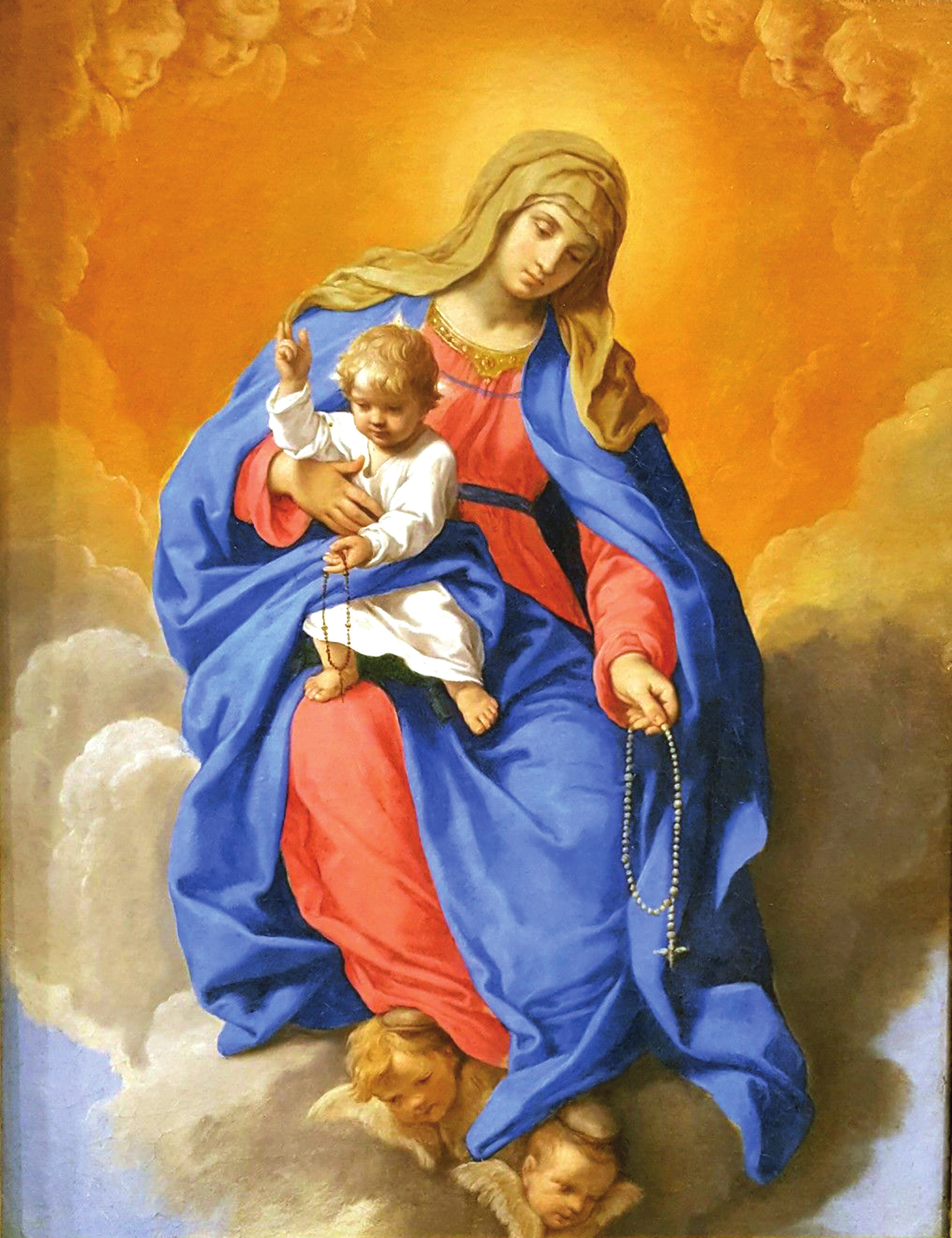
Madonna of the Rosary, Simone Cantarini (1612–1648), c. 1640, oil on canvas. Pinacoteca Tosio Martinengo, Brescia, Italy.

This is the second in a 12-month ShrineTower series contemplating Mary through prayer and sacred art. Each monthly reflection explores a Marian prayer, its meaning and origin and the artwork accompanying it.

The prayer featured this month is traditionally said at the conclusion of the Rosary, gathering together the mysteries just contemplated and directing our prayer toward Christ.

The Prayer

O God, whose only begotten Son,
By His life, death, and resurrection,
Has purchased for us the rewards of eternal life,
Grant, we beseech thee, that by meditating upon
These mysteries of the Most Holy Rosary of
The Blessed Virgin Mary, we may imitate what
They contain and obtain what they promise,
Through the same Christ our Lord.
Amen.

The Vatican’s Compendium of the Catechism of the Catholic Church includes substantially this text as the “Prayer concluding the Rosary.”

Cantarini’s Madonna of the Rosary

Cantarini’s Madonna of the Rosary was a small painting, apparently intended not for a church but for private devotion in the home. Mary holds the rosary in one hand and the Christ Child in the other. Christ himself also holds the rosary while raising His hand in blessing. The Rosary rests in the hands of both Mother and Child, visually joining Marian devotion with the mystery of Christ.

The Meaning of the Prayer

The prayer begins with Christ: “whose only begotten Son, by His life, death and resurrection, has purchased for us the rewards of eternal life.”

Those words remind us of something essential about the Rosary. We pray it with Mary as its mysteries lead us continually toward her Son. We contemplate Christ’s life in the company of the mother who knew Him, loved Him, followed Him and stood beside Him at the Cross.

The heart of the prayer lies in one petition:

“that we may imitate what they contain and obtain what they promise.”

As we meditate upon the mysteries, we ask that what we contemplate might enter into our own lives; that Christ’s humility, sacrifice, mercy and hope might become more fully our own.

Ultimately, the prayer points toward the promise already proclaimed in its opening words. The mysteries upon which we have meditated culminate in the Resurrection and our hope of sharing in Christ’s victory over death.

The Prayer’s Origin

The prayer has roots in the Church’s liturgy. It appears in the Roman Missal for the Feast of Our Lady of the Rosary and became familiar as a concluding prayer to the Rosary, traditionally following the Hail, Holy Queen.

Pope St. John Paul II referred to it in his 2002 apostolic letter Rosarium Virginis Mariae, quoting its petition that through meditation on the mysteries we may “imitate what they contain and obtain what they promise.” The Vatican’s Compendium of the Catechism of the Catholic Church also includes the complete prayer under the heading “Prayer concluding the Rosary.” 

Our Lady of the Rosary — October 7

The Church celebrates the Memorial of Our Lady of the Rosary on October 7 and October itself has traditionally become known as the month of the Rosary.

The devotion developed over centuries, joining familiar prayers; the Our Father, the Hail Mary and the Glory Be; with meditation upon the mysteries of Christ. Its rhythm can become almost instinctive, allowing the mind to rest upon scenes from the Gospel and contemplate the life of Christ in the company of Mary.

October offers two other connections with the Rosary. On October 13, 1917, the final apparition at Fatima took place, when Mary identified herself as Our Lady of the Rosary. And on October 22, the Church celebrates St. John Paul II, whose deep devotion to the Rosary led him to introduce the Luminous Mysteries in 2002.

The words remain familiar while the mysteries can meet us differently at different moments of our lives.

In Loving Memory of Ma Wilde

Under the guidance of Mary, Mother of God, I offer this series in my mother’s loving memory and as a continuing prayer for the repose of her soul.

Personal Reflection

The image of Mary holding the rosary brings back memories of my own sojourn with the Legion of Mary, a worldwide lay Catholic association whose members join prayer and devotion to Mary with active service to the Church and those in need. For a time, I met and prayed with a small Legion group at my parish, St. Basil the Great. As part of our service, I joined them on visits to a local nursing home, where we prayed the Rosary with the residents.

Over time, I came to know several of the residents. Many were nearing the end of their lives and yet their faith remained evident. Praying the Rosary together in that setting took on a particular meaning. These were familiar words spoken by people for whom the mysteries of life, death and eternal life were becoming increasingly immediate.

At that time, my faith was woven deeply into my daily life. I served on parish council, attended daily Mass, sometimes served at the altar and participated in the Legion of Mary.

Over the years, that level of involvement gradually changed. I drifted away from some of the practices that had once been part of my everyday life, including the Legion of Mary and daily Mass. There were changes within the parish as well. More recently, our pastor was unexpectedly removed because of a serious matter, the circumstances of which I never fully knew. I don’t know that any one event explains the course my faith took. Looking back, much of it is simply a blur of years, changes and circumstances.

Now, following my mother’s passing, I find myself returning to some of these practices. Her death has also led me to think more deeply about eternal life and our communion with those who have gone before us.

That brings me back to the Rosary.

This is why the concluding prayer of the Rosary speaks to me differently today: “that we may imitate what they contain and obtain what they promise.” Years ago, I prayed those words alongside men and women approaching the end of their earthly lives. Today, after accompanying my own mother to that threshold, those words have a more immediate meaning.

It may be time for me to return to the Rosary — and to the Legion of Mary.

ShrineTower Connection

In October 2022, ShrineTower returned to the Carmelite Monastery in Philadelphia in Sacred Path to the Summit of Mt. Carmel with John of the Cross and Teresa of Jesus. St. Teresa of Jesus, whose feast is celebrated on October 15, was one of the great teachers of prayer and contemplation in the Church. 

The Carmelite connection also leads naturally to Mary. As I wrote in that ShrineTower exploration, “Discalced Carmelites are known for their deep devotion to Our Lady of Mount Carmel.” The opening prayer invokes Our Lady of Mount Carmel together with St. Teresa and St. John of the Cross, asking that “the spirit of prayer” flourish in the community. 

St. Teresa described prayer as the entrance into the spiritual life: “The door of entry to this castle is prayer and reflection.” That thought seems particularly appropriate alongside the Rosary. Its repeated prayers provide the rhythm, but its mysteries invite us into contemplation of the life, death and Resurrection of Christ.

Closing Prayer

Blessed Mother, as I contemplate the Rosary,
help me once again to follow the mysteries of your Son.
Strengthen my faith in His promise of eternal life
and keep close those who have gone before us.

I entrust my mother to your loving care,
and ask that you accompany me as I find my way
to the prayer that illuminates my heart.

Lead me always through the mysteries of the Rosary
to a deeper understanding of this life and the life to come.

Amen.

Sources

  • Vatican — Compendium of the Catechism of the Catholic Church — The appendix presents the featured prayer under the heading “Prayer concluding the Rosary” and gives substantially the same text used in the Marian calendar. 
  • Vatican — St. John Paul II, Rosarium Virginis Mariae — John Paul II discusses the Christ-centered and contemplative character of the Rosary, introduces the Mysteries of Light and specifically quotes the concluding prayer’s petition that we may “imitate what they contain and obtain what they promise.” 
  • Lombardia Beni Culturali — Simone Cantarini, Madonna del rosario con Bambino — Official catalogue record for Cantarini’s painting in the Pinacoteca Tosio Martinengo, Brescia. It identifies the work as oil on canvas and describes Mary and the Christ Child each holding a rosary, with Christ raising His hand in blessing. 
  • USCCB — Memorial of Our Lady of the Rosary — Liturgical reference for the October 7 Memorial of Our Lady of the Rosary in 2026. 
  • Shrine of Fatima — Route with Our Lady of the Rosary — Fatima Shrine material recounting that at the October 13, 1917 apparition Mary identified herself as the “Lady of the Rosary” and repeatedly asked that the Rosary be prayed. 
  • Legion of Mary — About the Legion of Mary — Official description of the Legion as a lay Catholic apostolic association combining prayer and Marian spirituality with active service, including visits to the sick and others in need. 
  • ShrineTower — Sacred Path to the Summit of Mt. Carmel with John of the Cross and Teresa of Jesus — October 2022 ShrineTower reflection on St. Teresa of Jesus, St. John of the Cross, Carmelite spirituality, prayer and devotion to Our Lady of Mount Carmel. 

The Miraculous Medal Shrine Goes Green

15 Tuesday Mar 2022

Posted by Brian in Miraculous Medal, Saints, Shrines of Philadelphia

≈ 2 Comments

Tags

Miraculous Medal Shrine, Mother Mary, st catherine laboure

The Miraculous Medal is expanding into nature with St. Vincent’s Rosary Walk and a new grotto of Our Lady of Knocks. The outdoor sanctuary will include:

  • A Rosary Walk
  • A Meditation Garden
  • A Marian Garden for Children
  • Our Lady of Knock Statue and Grotto
  • Our Lady of knock Mosaic

The centerpiece of Vincent’s Rosary Walk is our Lady of Knock Shrine which will highlight the Irish heritage of Germantown. On future St. Patrick’s day of March 17th, there will surly be activity in the Garden, once it is complete in late 2022.

Artist edition of the St. Vincent Rosary Walk and Our Lady of Knock Groto.1
St. Vincent’s Rosary Walk design plans. Currently the area is under construction. (Spring 2022)2

According to the Miraculous Medal, the outdoor shrine will expand the spiritual experience for visitors and members. The Meditation Garden will also “serve as an outdoor sanctuary and green space for devotees and the Children’s Garden will provide an educational opportunity to teach the next generations of Catholics and Marian devotees to learn to pray the rosary and love the story of the miraculous medal.”3

Mary, the Mother of God, appeared in an 1830 apparition in Paris, France to Catherine Labourè, now a Saint. November 28th is St. Catherine’s feast day. Her born name is Zoe Labouré.

“Then the Blessed Virgin said to me: ‘Get a medal struck after this model; those who wear it when it is blessed will receive great graces, especially if they wear it round their neck. Graces will be abundant for those who have confidence’.” – St. Catherine Labourè

The Miraculous Medal Shrine is located in Germantown (Philadelphia). As St. Catherine was a member of the Daughters of Charity of Saint Vincent de Paul and a Marian visionary, the Miraculous Medal Shrine is operated and influenced by The Vincentian religious order.

The chair below is at side altar in Miraculous Medal Shrine.

This is an exact replica of the chair Immaculate Mary sat in while on earth in Paris France.

There is a blessing following each Mass and/or Novena Service at the Miraculous Medal Shrine for those who wish to reverence the relic of St. Catherine Laboure.  Reverencing a relic whether with a kiss, or having it placed on a different part of the body [i.e. over the heart or on the head] is a tradition which dates back to the Middle Ages when the cult of Saints became a devotional practice.  In this, the faithful express their belief in the intercessory prayer of the saint whose relic it is.  In this case, the relic of St. Catherine is offered as the one who first received the message of Mary and faithfully kept to the mission entrusted to her in the making of the medal of the Immaculate Conception [aka. The Miraculous Medal.] – – – From correspondence with Fr. Bill Allegretto, C.M. Associate Director for the Central Association for the Miraculous Medal in Philadelphia, Pennsylvania.

This is a rare photo of St. Catherine Laboure herself!

The medal was designed by Mary, herself, which is amazing! Here is what Mary, Mother of God said, “Have a medal struck after this model. All who wear it will receive great graces; they should wear it around the neck. Graces will abound for persons who wear it with confidence”. The Miraculous Medal shows an image of Our Lady of Grace with her hands emitting rays of light, just as she appeared to Saint Catherine. This devotion to Our Lady of Grace on the medal marked a true renewal of devotion to Our Lady in Europe in the mid to late 1800’s.

On the medal Mary asked that this put on it, “O Mary, conceived without sin, pray for us who have recourse to thee.”

Note that St. Catherine Laboure’s confessor put her account of the apparitions into writing, and that St. Catherine, before her death in 1876 also wrote down her accounts. Up until that time, no one outside her confessor was aware that she received the apparitions. She kept it secret for 47 years!

Exhumed in 1933, her body was judged to be incorrupt by the church, and now lies in a glass coffin in a chapel in Paris, at one of the spots where the Blessed Mother appeared to her.

The following video shows the Miraculous Medal Monday Mass and novena from March 7, 2022. There are many great clips of the shrine in this video.

Famous statue in the Miraculous Medal Shrine front altar.

A popular remembrance of Mary with St. Catherine kneeling at her side, just as she did on November 27, 1830. From theMiraculous Medal Shrine, Philadelphia, PA.

1 2 3 Miraculous Medal website https://miraculousmedal.org

Enter your email address to receive new ShrineTower posts by email.

Join 72 other subscribers
Follow @shrinetower

Most Recent Posts

  • The Miraculous Medal Prayer
  • Prayer After the Rosary
  • Our Mother of Sorrows 
  • Orthodox Easter — Same Resurrection, Different Rhythm
  • Theosis: Becoming Like God — “Be Attentive” to Divine Energy
  • St. Basil the Great, the Jesus Prayer, and the Wisdom of the Three Holy Hierarchs

Previous Posts

Tags

Eastern Christianity Miraculous Medal Shrine music Pope Francis Saint saints Shrine St. Basil St. Ignatius of Loyola St. Vincent de Paul

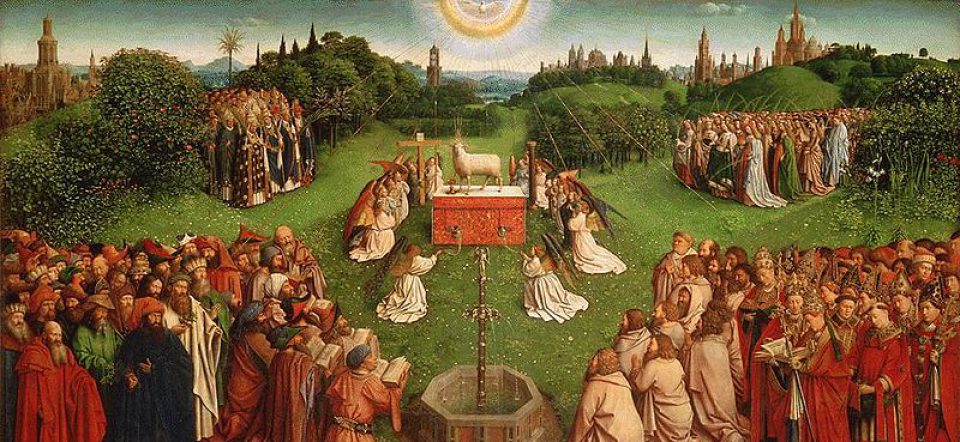
The Cover Art

Jan Van Eyck, “The Adoration of the Lamb” 1432 from the Ghent Alterpiece. Detail: The red altar where the lamb stands reads, “Behold the Lamb of God, which taketh away the sins of the world” and “Jesus the way, the truth, and the life”, both quotes from Gospel of John. In this image and in the book of Revelation the Lamb is Jesus. Directly around the Lamb on the altar are angels who are carrying the instruments in the Passion scenes, like the cross and crown of thorns.

gichontree

Unknown's avatarThere's beauty in sacred spaces; from the stories they tell in architecture, stained glass windows and icons; to the rituals and liturgy that arises our soul. Inside a shrine, the angels and saints praise God with us. I hope to relay the message for the kingdom, power and glory of God, now and forever.

Blog at WordPress.com.

  • Subscribe Subscribed
    ShrineTower
    Join 72 other subscribers

    Have a WordPress.com account? Log in now.

  • ShrineTower
    View site in Reader
    Manage subscriptionsSign upLog in
    Report this content
    Collapse this bar
Loading Comments...