• Shrines of Philadelphia
    • St. Katharine Drexel
    • Miraculous Medal
    • St. John Neumann
    • St. Rita of Cascia
    • Our Lady of Czestochowa
    • St. Gianna Molla
  • Sacred Places
  • Art, Film, Poetry
  • Saints
  • Music
  • Services

Shrine Tower

~ Saints, Shrines and Sacred Places

Shrine Tower

Author Archives: Brian

St. Basil the Great, the Jesus Prayer, and the Wisdom of the Three Holy Hierarchs

02 Friday Jan 2026

Posted by Brian in Saints

≈ Leave a comment

Tags

Eastern Catholic, Eastern Christianity, Gregory of Nyssa, Gregorythe Theologian, iconography, icons, Jesus Prayer, Pantocrator, Pascha, Pope Francis, St. Basil, St. John Chrysostom, Theosis, Three Holy Hierarchs

Enter The Jesus Prayer:

way of the pilgrim

Repeating with reverence The Jesus Prayer is a longstanding Eastern Christian tradition.  I first encountered the Jesus Prayer through the spiritual classic, The Way of the Pilgrim. Its author who has never been identified, but I am sure he is a saint. The pilgrim begins his long journey through Siberia reciting the Jesus Prayer:

Lord Jesus Christ, Son of God, have mercy on me a sinner.

The author repeats this prayer thousands of times a day as he travels to small towns with little clothing or food. He carries only one book, the Philokalia, a collection of writings of saints from the 4th to 15th centuries. Saint Paul’s instruction to “pray without ceasing” is practiced literally in The Way of a Pilgrim:

“Everything drew me to love and thank God: people, trees, plants, and animals. I saw them all as my kinfolk; I found in all of them the magic of the name of Jesus”.

An adapted Jesus Prayer: “Lord Jesus Christ, have mercy on my soul.”

Even St. Basil the Great had a Jesus Prayer variation:
 “Accept Immortal King, my repentance, that of a sinner, and turn towards me and hear my words.”

More on the Jesus Prayer 

The Way of a Pilgrim is a classic of Russian Orthodox spirituality, believed to have been written in the 19th century by an anonymous author. Composed in the first person, it presents itself as the real-life testimony of a wandering pilgrim, though most scholars regard it as a work of devotional fiction or, at most, semi-autobiographical.

The narrative follows an unnamed Russian pilgrim as he journeys through European Russia and Siberia, seeking to practice “unceasing prayer” — through the continual repetition of the Jesus Prayer. Poor and largely uneducated, he carries little more than bread, a Bible and a copy of the Philokalia — a collection of texts written between the 4th and 15th centuries by Eastern Orthodox spiritual masters. The Philokalia, central to the hesychast tradition, emphasizes inner stillness and the ceaseless invocation of God’s name.

As he travels, the pilgrim seeks to embody St. Paul’s exhortation:

“Pray without ceasing” (1 Thessalonians 5:17).

His account records not only his efforts to internalize the Jesus Prayer, but also his struggles, doubts, and encounters with spiritual guides who instruct him along the way.
Despite its modest length, The Way of a Pilgrim has had a lasting influence on Christian spirituality, both within and beyond the Orthodox Church. Revered for its simplicity, humility, and depth, it continues to inspire readers as a timeless portrait of a soul wholly devoted to God through the practice of constant prayer.

The Three Holy Hierarchs

3HolyHierarchs

The Three Holy Hierarchs; St. Basil the Great,  St. John Chrysostom, St. Gregory the Theologian, are giants in Eastern Christianity. Saint Gregory the Theologian is known for purity and profundity of his language, St. Basil for his understanding of the Holy Spirit and Saint Chrysostom for his elegant homilies. They all lived in the east, near Cappadocia (Turkey) at the same time in the 4th century.

Folklore has it that each of the three holy Hierarchs appeared in a vision to Saint John Mauropus, the Metropolitan of Euchaïta. “As you see, the three of us are with God and no discord or rivalry divides us…If they (people) honor us thus as being with and in God, we give them our word that we will intercede for their salvation in our common prayer.”

All three Eastern Church Fathers have their feast day in January. In the Roman Catholic west, they are Doctors of the Church.

January 2, 2026 is the feast of St Basil the Great in the west.

St. Basil the Great

basil the great HTC

St. Basil the Great is a powerhouse figure in Eastern Christianity. From a family of ten siblings, five became saints as well as his grandmother, St. Macrina and his mother, St. Emmellia.

“Examine the actions of each day, advance in virtue, that you may become a companion of the angels.”
– St. Basil the Great (adapted)

Basil traveled to Egypt, where he learned the monastic way of life from ascetic hermits living in caves. Returning to his homeland of Cappadocia, he founded small monastic communities, dividing his time between prayer, meditation on Scripture, and manual labor. Basil believed that when one is living with others in a monastery, the grace bestowed on each individual becomes the common possession of the group.

One of Basil’s teachings on monastic life—equally applicable to religious and secular life—was this:

Prayers are recited early in morning so your first movements are for God. “I remembered God and was delighted.” (Psalm 77)

Basil Family basil-mary-macrina-mother-gregory1
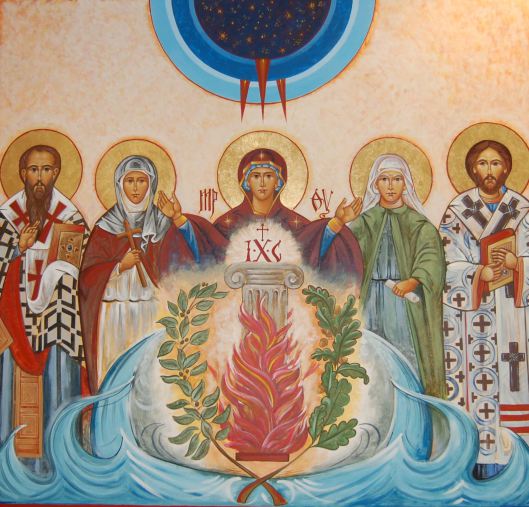
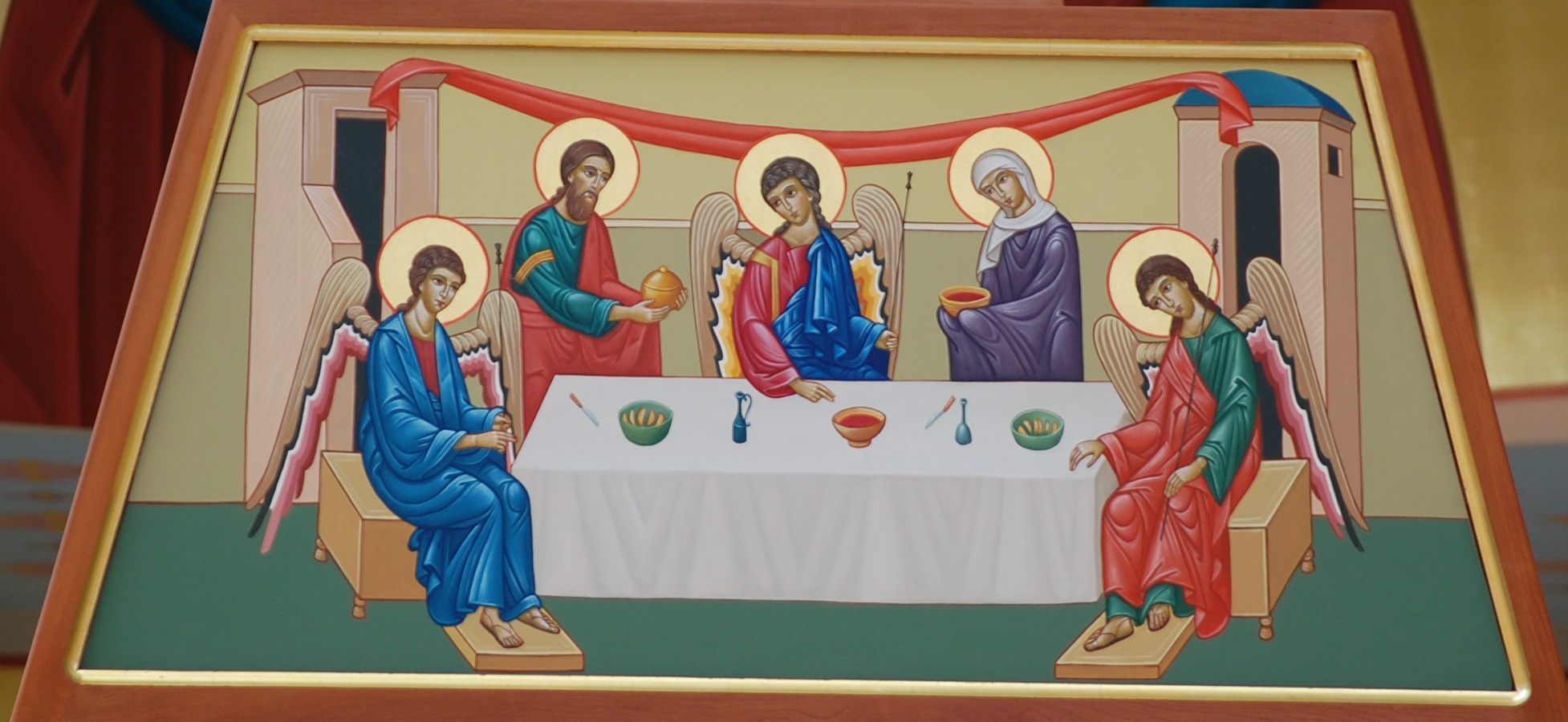
The Basilian Family is often depicted together in iconography:
(left to right) Basil; Macrina the Younger; Mother of God; Macrina the Elder; Gregory of Nyssa.

This tradition is reflected in the spirituality of the Sisters of the Order of St. Basil the Great, whose work emphasizes faith, wisdom, and love of knowledge. Basilian Spirituality Center.

An academic priest from Temple University once shared with our congregation that St. Basil authored the “Glory Be to The Father” prayer, one of the most widely said prayers in Christian history. Many people are unaware that Basil created this prayer.

Pope Francis (RIP) has frequently identified with Basil’s teachings and quoted him in the Laudato Si encyclical

“If the world has a beginning … we must inquire who gave it this beginning, who was its Creator”.

basil #LaudatoSi- If the world has a beginning..we must inquire who gave it this beginning, who was its Creator."“Silence is the beginning of purifying the soul.”
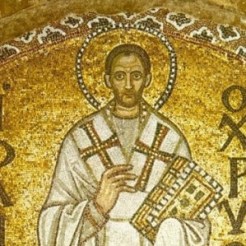
– St. Basil the Great
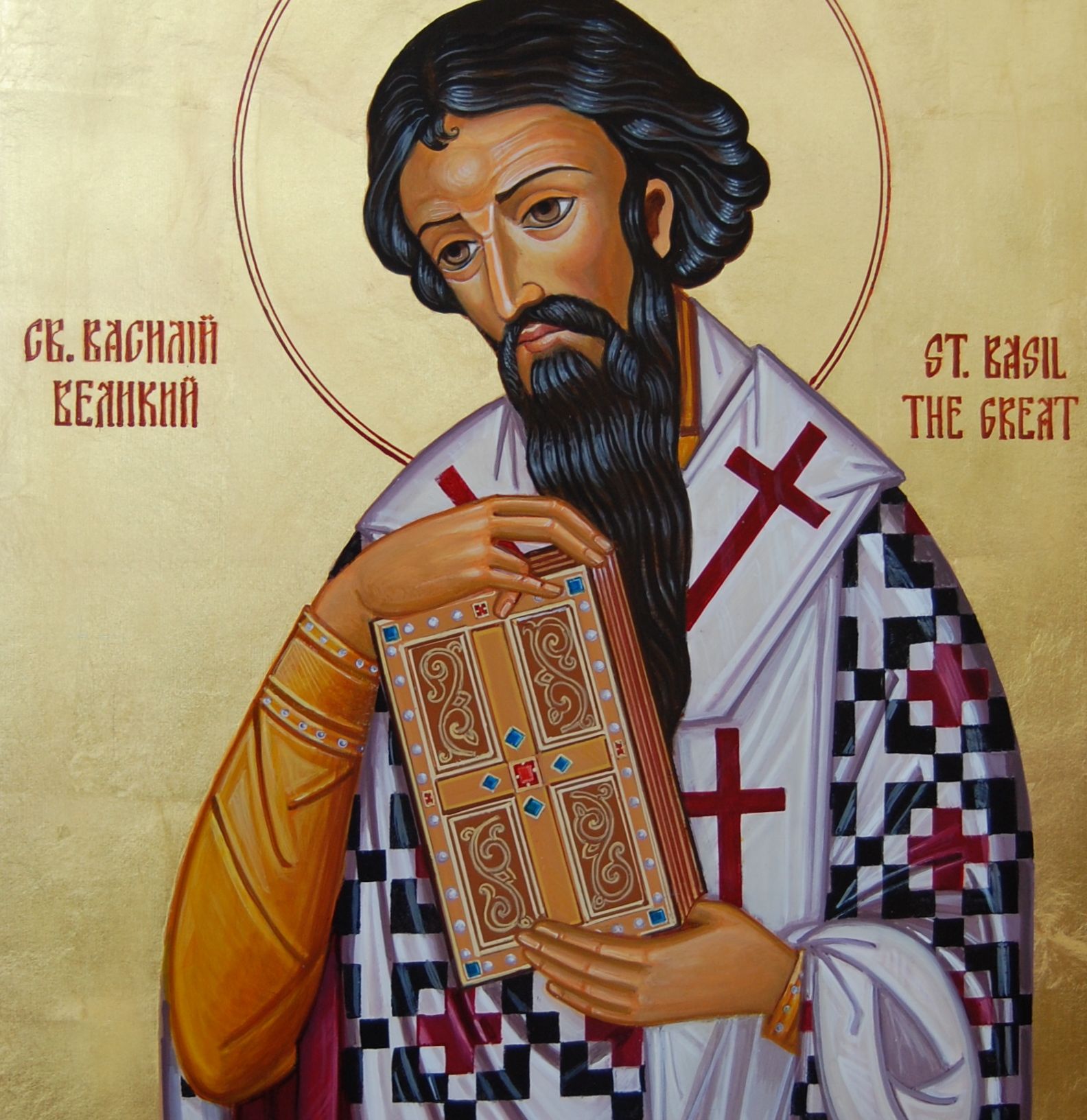
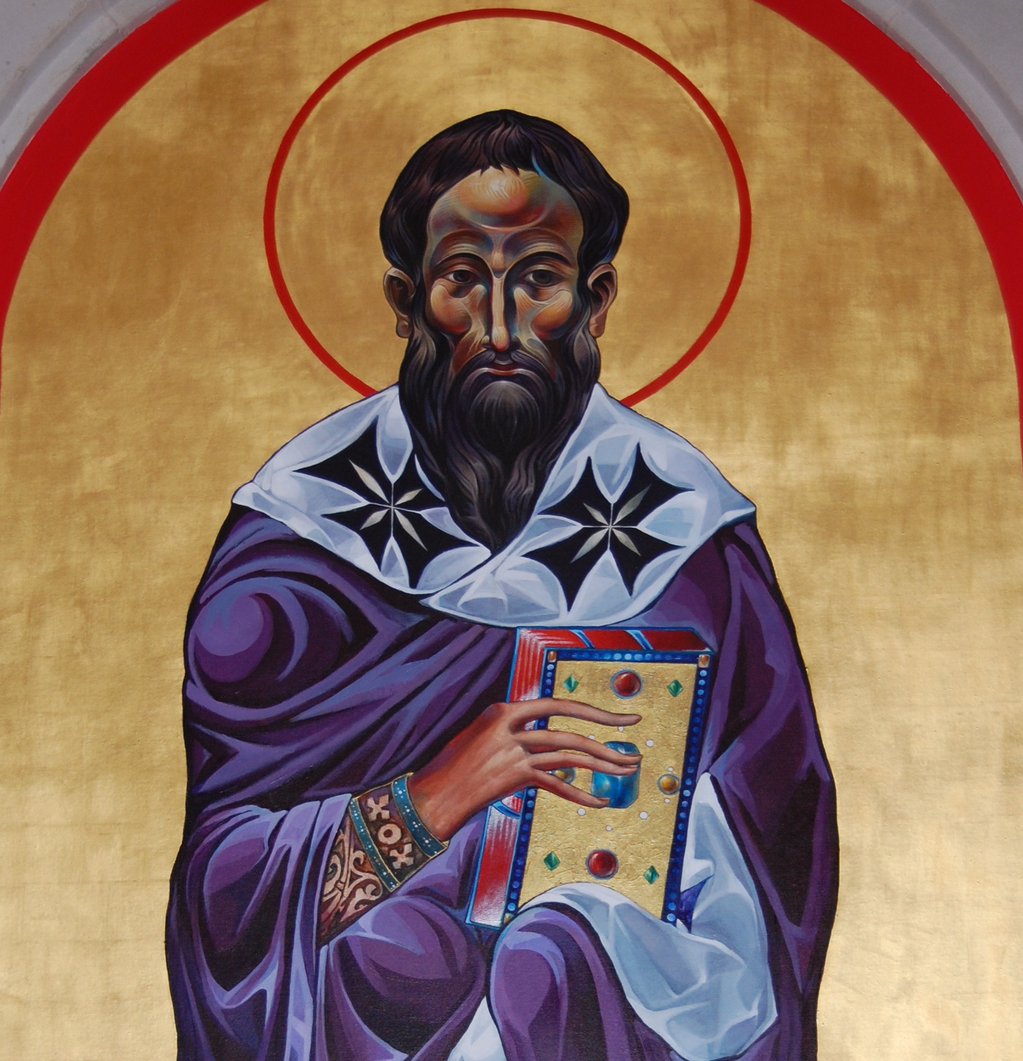
This icon above of St. Basil the Great is an original, written by the famous Georgian iconographer Niko Chocheli from the former Soviet Union, displayed at St. Basil the Great Church, Kimberton PA.

Basil’s theological masterpiece On The Holy Spirit, defining the Holy Trinity as One God in Three Persons, a complex theology topic even today.

“It is impossible to recognize Christ, image of the invisible God, unless the Spirit enlightens you.” – St. Basil

Well after his death, the Council of Chalcedon described Basil as “the great Basil, minister of grace who has expounded the truth to the whole earth”, thereby giving him the name Basil the Great!

ephram the poet

Witness of St. Ephraim the Syrian

St. Ephraim the Syrian was a clairvoyant who actually met St. Basil. In a vision he saw a pillar of flame to heaven and a voice proclaiming:
“Such is the Great Basil!”

Ephraim is also remembered as “the greatest poet of the patristic age and perhaps the only theologian/poet to rank beside Dante.”

“Do nothing at all unless you begin with prayer.”

Here is what St. Basil had to say:

“To you will I pray, O Lord: In the morning you will hear my voice, I will stand before you and will see.”

“Intimacy with the Lord is achieved by cheerful readiness to do the will of God.”

“With the words of Scripture we feed our faith, we lift up our hope, we confirm our confidence.”

St. John Chrysostom

St. John Chrysostom, from Hagia Sophia Turkey
Hagia Sophia

Inside Hagia Sophia | Mosaics & Artifacts
St. John Chrysostom, from inside the Hagia Sophia, pictured at the top.
Hagia Sophia is located in Istanbul, Turkey. It overlooks the Sea of Marmara.
Inside Hagia Sophia showing mosaics and icons.

St. John Chrysostom prayers are used extensively in the Eastern Byzantine Catholic and Orthodox churches liturgy, showing the respect he garners. While the Divine Liturgy of St. Basil the Great is celebrated about ten times each year, most of the liturgical year follows the Liturgy of St. John Chrysostom.

“I am not worthy Lord, for you to come under my roof, yet you wish to dwell in me”
– St. John Chrysostom

St. John took Matthew 8:8 “But the centurion replied to Him, “Lord, I am not worthy to have You come under my roof, but only say the word, and my servant will be healed”.  St. John expanded this humility into one of the Church’s most moving prayers:

“Lord my God, I know that I am not worthy, nor sufficient, that you should come under the roof of the house of my soul, for it is entirely desolate and in ruins, and you do not have a worthy place in me to lay your head. But as you humbled yourself from on high for our sake, do likewise also for my unworthiness.”

In addition to one of the Three Holy Hierarchs in the East, St. John Chrysostom is honored in the West as one of the 33 Doctors of the Church, and remembered especially for his extensive and profound teachings on the subject of the Holy Eucharist. Alongside St. Joseph, he was named co-patron of the Second Vatican Council by Pope Saint John XXIII, underscoring his lasting influence on the universal Church.

“Prayer is a place of refuge for every worry, a foundation for cheerfulness, a source of happiness.”
— St. John Chrysostom

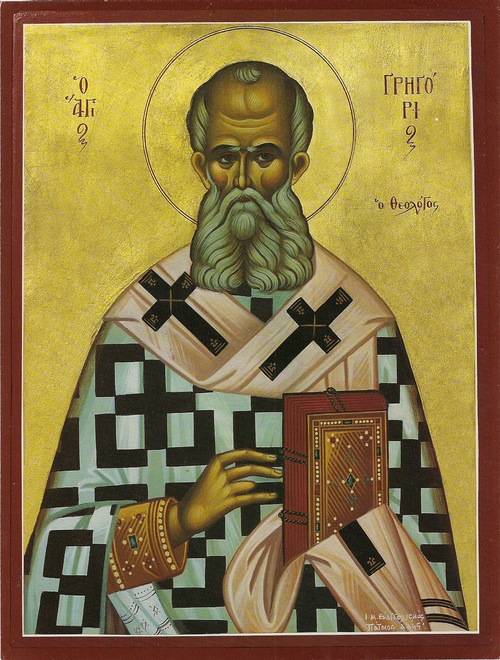
St. Gregory the Theologian

St. Gregory the Theologian

“Let us become like Christ, since Christ became like us.
He assumed the worse that He might give us the better;
He became poor that we might be rich”
– St. Gregory the Theologian

St. Gregory of Nazianzus, who is also called the Theologian, was born in Nazianzus in Cappodocia in 325 A.D. He was the Archbishop of Constantinople.

Becoming or imitating Christ is the basis for theosis, an Eastern Christian theology concept.  St. Peter wrote in the bible that we are called “to become partakers of the Divine nature.” St. Basil the Great likewise described humanity as the creature who has received the command to become godlike through grace.

After his baptism at age 30, St. Gregory the Theologian joined his friend Basil in a newly founded monastery. Together, they opposed Arianism, which denied the divine nature of Jesus Christ, and they helped define the doctrine of the Holy Trinity through their great sermons.

The Three Holy Hierarchs remain powerful intercessors for us in Heaven.

“Let us become as Christ is, since Christ became as we are;
let us become gods for his sake, since he became man for our sake.”
– St. Gregory the Theologian

Closing Prayer
— A prayer inspired by the Three Holy Hierarchs

Holy Hierarchs—St. Basil the Great, St. John Chrysostom, and St. Gregory the Theologian —
faithful servants of Christ and teachers of the Church,
intercede for us before the throne of God.
Teach us to pray without ceasing,
to love the truth with humility,
and to seek unity without rivalry.

May we grow in wisdom, charity, and holiness,
that our lives may give glory to the Father,
the Son, and the Holy Spirit,
now and forever. Amen.

Resources
(for the entire post)

Ukrainian Catholic Archeparchy of Philadelphia

The Sisters of the Order of St. Basil the Great

Byzantine Catholic Eparchy of Passaic (NJ)

Society of St. John Chrysostom Western Region

Greek Orthodox Church of America

Sheptytsky Institute St. Paul University, Ottawa

St. Basil the Great Parish Kimberton PA

From Elijah to Today: The Legacy of Mount Carmel

16 Wednesday Jul 2025

Posted by Brian in Carmelite Monestary

≈ 1 Comment

Tags

Saint

Our Lady of Mt. Carmel (1251 A.D.) is a title of the Blessed Virgin Mary associated with the Carmelite Order. The first Carmelites lived as hermits on Mt. Carmel in the Holy Land beginning in the 12th century. In the middle of their hermitages they built a chapel dedicated to the Virgin Mary, who became the protectress of the Carmelites under the title of Our Lady of Mt. Carmel. The Blessed Virgin Mary appeared to a Carmelite hermit, St. Simon Stock, under this title and gave him a piece of cloth—the brown scapular—as a sacramental to be worn by the faithful to whom she promised her special protection. At the apparitions in Fatima, in addition to appearing as Our Lady of the Rosary, the Virgin Mary appeared as Our Lady of Mt. Carmel. Her feast day is July 16th. – Tascia @TaciaTruss

Image

Celebrating St. Basil: Paths to Divine Union and the Essence of Eastern Christianity

26 Thursday Dec 2024

way of the pilgrim pic monkey

In preparation of St. Basil the Great’s Feast Day on January 2nd, some thoughts.

Saints are those who most fully achieved union with God. Paths to union with God are:

  • Apostles: They spread the teachings of Jesus Christ, establishing the foundations of the Church.
  • Prophets: They received divine messages and foretold the coming of Christ, guiding souls towards God.
  • Martyrs: Their ultimate sacrifice bears witness to their faith, achieving union through their love for God even unto death.
  • Fathers of the Church: Through their theological writings and teachings, they helped define Christian doctrine, deepening the Church’s understanding of God.
  • Monastics: By withdrawing from the world, they seek God in solitude, prayer, and contemplation, aiming for spiritual perfection.
  • Normal lives devoted to God: Ordinary individuals can also achieve union by living out their faith through everyday acts of love, charity, and devotion.

The Special Veneration to Mary: Mary holds a unique place in Christian devotion as the Mother of God, her life a perfect example of human response to divine will.

Icons: They are not mere art; they are windows to the divine, inviting us into a deeper communion with God. Through veneration of icons, we are reminded of the saints’ lives, like St Basil’s, inspiring us towards our own spiritual journey.

Trinity: The mystery of the Trinity—Father, Son, and Holy Spirit—offers a model for human relationships and the ultimate union with the divine.


Tradition:
Tradition keeps the living faith of the Church vibrant, connecting current believers with the teachings and practices of the past.


Scripture:
The Word of God in Scripture provides direct guidance and revelation, serving as a path to knowing and loving God.


The Fathers:
The writings of the Church Fathers offer interpretations and insights into Scripture and tradition, fostering a deeper theological understanding.


Divine Liturgy:
The Divine Liturgy is the Church’s central act of worship, where heaven and earth unite, offering believers a taste of eternal life with God.


Ecumenical Councils:
These councils shaped the Church’s doctrine, ensuring orthodoxy and unity, guiding believers towards truth.


Church Architecture:
Church architecture, with its sacred space and design, is meant to elevate the soul, symbolizing the journey from the material to the divine.

Mary with Holy Spirit

Icon from The Holy Trinity Chapel, Sisters of the Order of Saint Basil the Great located at 710 Fox Chase Road, Philadelphia PA.

Hail, Mother of God; as today you saw the One you bore flying up from earth, with Angels you magnified him.
“How lovely your dwelling, O Lord of Hosts!” Psalm 84:1

220px-Andrej_Rublëv_001

“The Holy Trinity” by Russian iconographer Andrei Rublev (b1360) Holy Spirit on right, Son in middle, Father on left.

Old Trinity

“Old Testament Trinity” Three angels with Abraham and Sarah.

old testament trinity Immaculate Conception

“Old Testament Trinity” Immaculate Conception

During a sermon, His Beatitude Sviatoslav (who is the current Major Archbishop of Kyiv-Galicia and the Primate of the Ukrainian Greek Catholic Church) said that God created us in His own image and likeness, “He who is Light, created people in the image of His own light. He wanted us to be not just like Him and His everlasting light, but become the light ourselves”.

“We cannot hide the lamp that is lit, under a bushel. It must be put on the table to shine through all those who are in the house. So, that is why, the holy ascetics, called Reverend Fathers, are seen as those who shine with the light of God. Moreover, those, who themselves are this way to the Light”,  explained the Major Archbishop.

Major Archbishop Sviatoslav Shevchuk, Father and Head of the Ukrainian Greek Catholic Church

The sanctuary is to be separated from the nave by an iconostasis, outside of which is located the so-called solea. Two large candles, lit during all religious services are to be placed on the solea before the stationary icons.

In the early church a very serious controversy broke out over the use of icons, with the opponents claiming that the use of icons in liturgy was idolatrous and against the First Commandment: “You shall have no other gods before me”. The dispute was finally settled by the Second Council of Nicaea held in 787 at which the Christian Church defined the doctrine concerning the lawfulness of the veneration of icons. On the occasion of the 1200th anniversary of this council Pope John Paul II issued an apostolic letter in which he gives his support both for this council and the use of icons in liturgical worship.

He makes specific reference to the role of icons in the Greek and Slav Churches:
“In particular, the Greek and Slav Churches, basing themselves on the works of the iconodulous theologians Saints Nicephorous of Constantinople and Theodore Studite, considered the veneration of icons as an integral part of the liturgy, like the celebration of the Word. Just as the reading of material books allows the hearing of the living word of the Lord, so also the showing of the painted icon allows those who contemplate it to accede to the mystery of salvation by the sense of sight. What on the one hand is represented by ink and paper is represented on the other hand in the icon, thanks to the various colors and other materials.”

Posted by Brian | Filed under Saints

≈ Leave a comment

Video

J.S. Bach – Christmas Oratorio BWV 248

26 Thursday Dec 2024

Posted by Brian in Saints

≈ Leave a comment

https://youtu.be/SoBzgNOCAVg?si=7iwQqvTGmxPNr0kz
 
 
Listening to J.S. Bach’s Christmas Oratorio, BWV 248, feels like a direct line to the soul. It’s not just music; it’s an experience that grabs at your heart, making you feel every note:

  • Deeply Moving: The reverence in Bach’s music isn’t just heard; it’s felt. It’s like he’s reaching into your chest, squeezing your heart with the beauty and solemnity of Christmas.
  • Thought-Provoking: The melodies make you think, reflect, even in moments where you’re just listening. It’s like Bach is inviting you on a journey inside yourself, to ponder the miracle of Christ’s birth in a way that’s both intimate and sacred.
  • Emotionally Rich: The way the voices and instruments weave together, you can’t help but feel this rollercoaster of emotions. From the highs of celebration to the quiet, introspective moments, it’s like he’s speaking directly to your core.
  • Spiritually Uplifting: There’s something about this oratorio that lifts your spirit, no matter what. It’s like Bach has found a way to make music that feels like a prayer, a connection to something much bigger than ourselves.
  • A Sense of Togetherness: When you hear those harmonies, it’s like Bach is reminding us we’re all in this together, celebrating the same joy, the same hope. It brings a sense of unity, of being part of something timeless.
  • A Beacon of Light: Listening to this, you can’t help but feel a spark of hope, a reminder that even in the darkest times, there’s light, love, and the promise of something new.
The Christmas Oratorio isn’t just music; it’s a journey for the heart and soul, where Bach’s genius makes you feel connected, reflective, and utterly human.
 

Merry Christmas to all!

24 Tuesday Dec 2024

Posted by Brian in Saints

≈ Comments Off on Merry Christmas to all!

Subscribe to continue reading

Subscribe to get access to the rest of this post and other subscriber-only content.

Already a subscriber?

Feast of The Exaltation of the Holy Cross

14 Thursday Sep 2023

Posted by Brian in Saints

≈ Leave a comment

Tags

Holy Cross

Drawing of the Crucifixion From Above, by John of the Cross in late 1500’s. This influenced Salvador Dali’s “Christ of St. John of the Cross” in 1951 (below).

Salvador Dali: “Christ of St. John of the Cross”

Here is a poem by Englishman Peter Hartley about the Dali painting and the Crucifixion from Above:

I

This crucifixion hides the anguish. Racked
With pain, belied by bloodless hands and feet;
Intolerable torments, they compete
As muscles in that arching back contract.
His hanging head forestalls all eye contact;
And here we see Him, harrowing complete,
As Pilate meted out from judgment seat
Beyond this lorn forsaken barren tract.

And Dali gives us stage-lighting to show
These youthful figures, tinctured gold below,
Are simple fishermen. And there they stand,
Aghast at what they cannot understand:
That Christ the Son of God exalted some
To share His state and close to Him become.

II

Beneath their feet they furl a fishing net,
These figures that we see upon the ground.
Twilight, a nightjar makes its urgent sound
Unseen, a distant double bark offset
By otherwise persistent silence. Yet
Wherewith is this scene lit? The black profound
Above, behind us to our left, all round
Embrowned, kaleidoscopic colours set

To raze the parchèd earth. And these young men
Would never know a jeunesse dorée then,
They flung their nets, repaired them when required,
They ate when hungry, slept when they were tired:
But here we see, their garments flecked with gold,
These young ones mark the new as we the old.

.

III

How can His body hang, no nails to hands
Or feet as Dali has Him here portrayed?
So anodyne this bloodless corpse, conveyed
To blackest heights above the barren lands
Of Israel: the dreadful pain demands
Our awe, the horror that is here betrayed,
That dead weight tortured angle still displayed,
Such agony an infant understands.

But this is not a Cranach and nor yet
A Grünewald. We are not moved today
By horrors that were suffered yesterday.
Inured to Bosch and Brueghel scenes of sweat
And pain, more present horrors that we dread:
The pickled shark and that revolting bed.

IV

How sad to see around us decadence
On such a scale there is no turning back,
No slightest evidence that common sense
Can any more prevail against attack.
We cannot ever get back what we had
And there is no return to where we were,
The world’s artistic cognoscenti mad:
Dali the last hope of the connoisseur?

For he could paint, with sable in his hand.
Only in trompe l’œil is there a demand
That we suspend our disbelief, it’s good
His two dimensions keep his art surreal:
In Emin’s bed, Quinn’s head of frozen blood
The horror and the nastiness are real.


Peter Hartley is a retired painting restorer. He was born in Liverpool and lives in Manchester, UK.

Searching for Mt. Carmel

24 Friday Feb 2023

Posted by Brian in Saints

≈ Leave a comment

Tags

Mt. Carmel, St. John of the Cross, St. Teresa of Avila, Teresa of Jesus

The Philadelphia Carmelite Nuns may have left, but the Saints live on. I followed John of the Cross and Teresa of Jesus throughout the Carmelite Monastery asking for directions to reach the summit of Mt. Carmel. Here’s what I found…

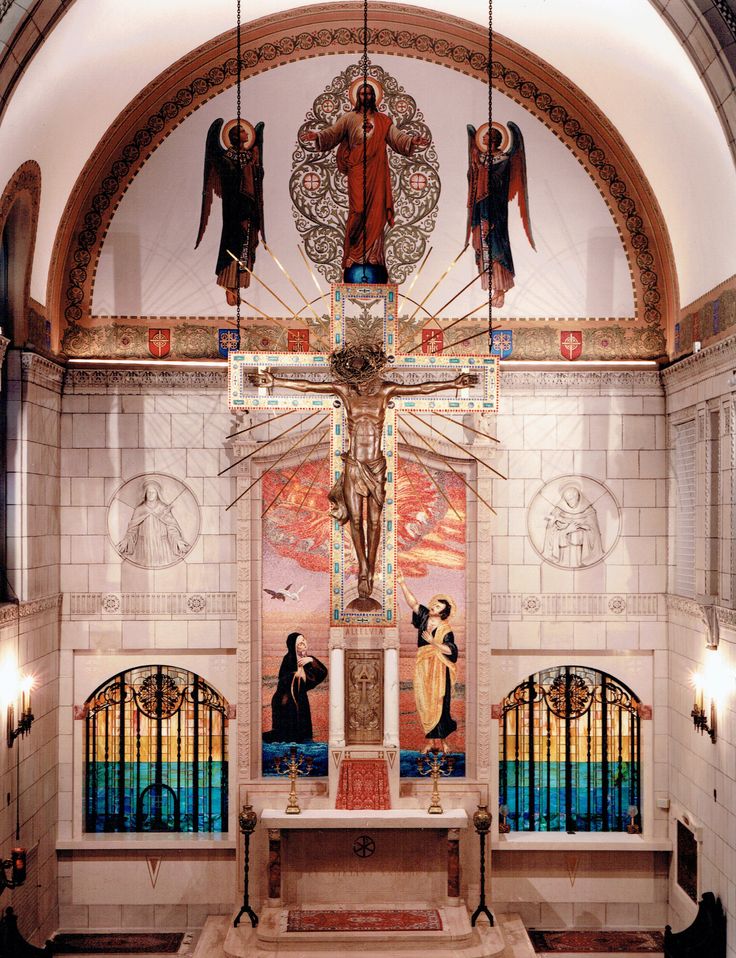
sanctuary Philadelphia CarmelThe Triumphal arch, with crucifix suspended, inspired by the crucifix of Fra Innocenzo de Palerno (1637) in the Church of San Damiano, Assisi. – Philadelphia Carmel

The origins of Triumphal arch comes from the Roman era when captives were led under an arch to symbolize their submission to the authority of Rome. Later centuries the liturgical procession through the triumphal arch symbolizes Christians as captives of Christ are lead to the Kingdom of Heaven. The sacred space of the sanctuary represents the Kingdom of Heaven.

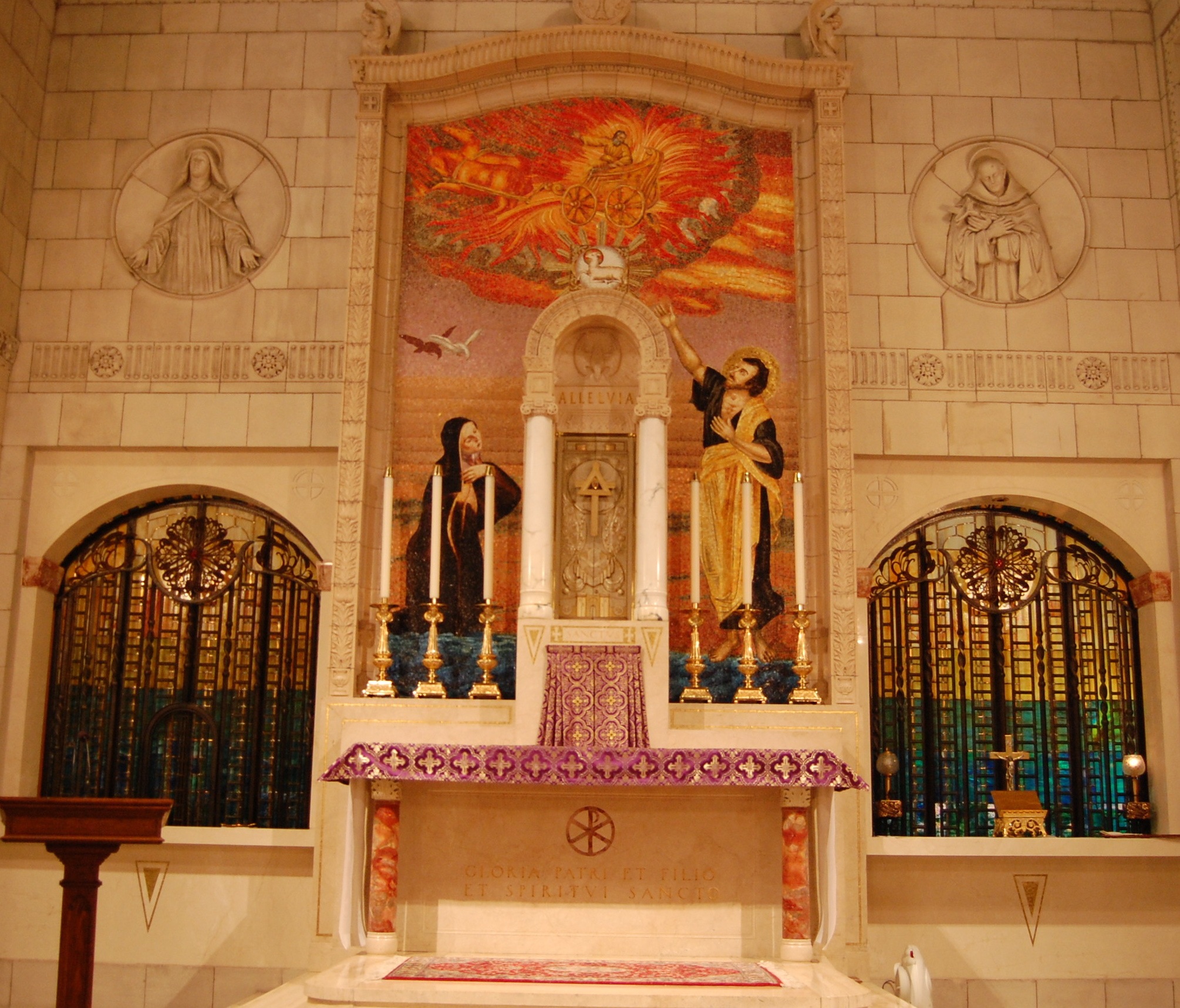
altar best ofThe sanctuary of the Holy Spirit Chapel, Mount Carmel.

The two round medallions are Teresa of Jesus on the left and John of the Cross on the right.

altar mosaic 2The Sanctuary of the Holy Spirit Chapel, Mount Carmel – Detail

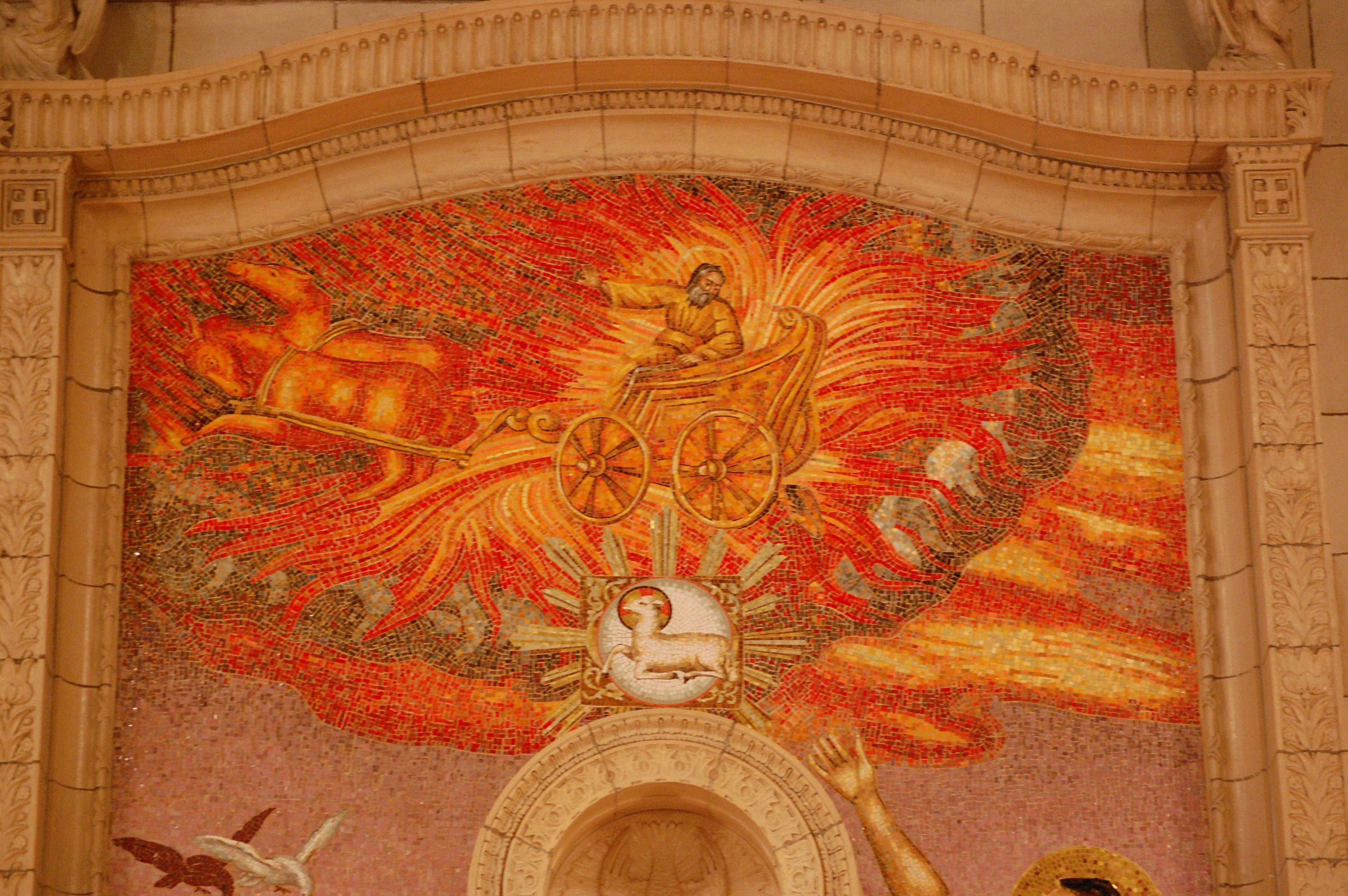
From left to right, Teresa of Jesus, the sanctuary doors with Cross, St. Elisha with hand raised to the Lamb of God. At top is the chariot with Elijah. The Holy Spirit is above Teresa in the form of a dove.

The Mosaic (Sanctuary)
The images of the mosaic express the reality of divine love in the charism of Carmel. It is love revealed by God in the Old Testament and fulfilled in the New, a love that en-kindles our hearts and transforms them. Ultimately this transformation enables one to enter, body and soul into full union with God. Horizontal and spatial concepts of the mosaic echo passages of time in the Old and New Testament history of the Carmelite order.

Images and symbols include the following:

Fire and Water
Fire increased its own virtue in the water – Wisdom 19:20

These lamps of fire are living waters of the spirit…although it is fire, it is also water. – St. John of the Cross, The Living Flame of Love Stanza 3, #8

Oh, God help me, what marvels there are in this greater en-kindling of fire by water. The water does not impede the fire though it’s the fire’s contrary, but rather makes its fire increase! St. Teresa of Jesus, The Way of Perfection 19:3

Water
Water symbolizes cleansing as in the river Jordan; baptism, blessing, grace, prayer and contemplation. – St. Teresa of Jesus, Life 11:7

Fire
Fire symbolizes divine love. – St John of the Cross, Spiritual Canticle 39:14, St. Teresa of Jesus Life 30:20

Chariot of Fire

in Christian art, St. Elijah carried into heaven in a chariot of fire is a symbol of Christ’s Ascension. In the Dialogue of St. Catherine of Siena, Christ himself is referred to by the Father as a fiery chariot.Prophet Elijah in chariot
St. Elijah (c 870 BC) (in chariot)

Elijah the Prophet is called the founder of the Carmelite ideal. There are two accounts of him being taken up to heaven in a fiery chariot 2 Kings 2:1-12 and Sirach 48:9. His feast is celebrated by the Carmelite Order on July 20.

The Holy Spirit (Dove)
The Holy Spirit is the third Person of the Blessed Trinity, the Sanctifier, the living Flame of Love. – Romans 5:5

St. Teresa of Jesus
St.Teresa of Jesus (1515-1582), the foundress of the reformed Carmel (Discalced Carmelites) is portrayed in Eucharistic Adoration. In her spiritual writings one finds frequent images of fire and water.

The Lamb of God and the Eucharist
Fulfillment is found in Christ, the Alpha and Omega, the sacrificial lamb of god, who gave himself for the life of the world. His sacrifice is perpetuated in the Eucharist. From this divine reality the graces symbolized by the fire and the water are sought and obtained. Mt. 26;26-29; 1 John 5:6-8; Rev:5:6-14

Elisha and Teresa reaching
St. Elisha (hand raised)

St. Elisha (c. 840 BC) was the first disciple of St. Elijah. He was the leader of the prophets on Mt. Carmel.  The Carmelite order celebrates his memory on June 14.

Between Elisha and Teresa of Jesus, with the arrow pointing up, are the sanctuary doors. A schematic of the Sanctuary Doors is below.

repository doors sketch
The symbols that are employed on these bronze doors show St. Teresa’s image of the Interior Castle. They are:

Door
“The door of entry to this castle is prayer and reflection.” – St. Teresa of Jesus, Interior Castle I:i,#7

Castle
The castle is the image of the soul: We consider our soul to be like a castle made entirely out of a diamond or of a very clear crystal in which there are many rooms, just as in heaven there are many dwelling places. – St. Teresa of Jesus, Interior Castle

The soul of the just person is nothing else than a paradise where the Lord says He finds His delight. I do not find anything comparable to the magnificent beauty of a soul and its marvelous capacity. – St. Teresa of Jesus, Interior Castle I:i, #1

Triangle
The triangle is the symbol of the Most Holy Trinity dwelling in the center of the soul.

Cross
The Cross is the symbol of the Paschal Mystery of Christ’s passion, Death and Resurrection.

Blood and Water
Blood and water flowed out of our Redeemer on the Cross. The Fathers and Doctors of the Church interpret this to mean that from the pierced Heart of the Son, God the Father pours out through the Holy Spirit, the saving graces of the Church’s Sacraments.

“One of the soldiers pierced His side with a lance and immediately there came out blood and water. – John 19:37

Jesus Christ who came by water and blood, not with water only, but with water and blood. – 1 John 5:6

He loves us and has washed away his own sins in His own Blood… Rev1:5

Then the angel showed me the river of life, rising from the throne of God and of the Lamb and flowing crystal clear down the middle of the city street. Rev 22:1-2

Center Room of the Castle
The castle has many dwelling places. Located at the center, is the abode of the most Blessed Trinity: the Father, the Son, and the Holy Spirit. It is here, in intimacy, that sweet exchanges of love occur between God and the soul. Mysteries of the Holy Trinity are made manifest and the soul comes to understand the Gospel passage:

If anyone loves me he will keep my word,
and my Father will love him,
and we shall come to him
and make out home with him. – John 14:23

Shell
The shell is a symbol of Baptism, the sacrament of initiation to the divine life.

our lady w spirit 14
Blessed Virgin Mary, dwelling with the Holy Trinity in the most profound union, supreme above all creatures, beloved Daughter of the Father, mother of the Son, Spouse of the Holy Spirit Mediatrix of all Graces.

Carmelite coat of arms

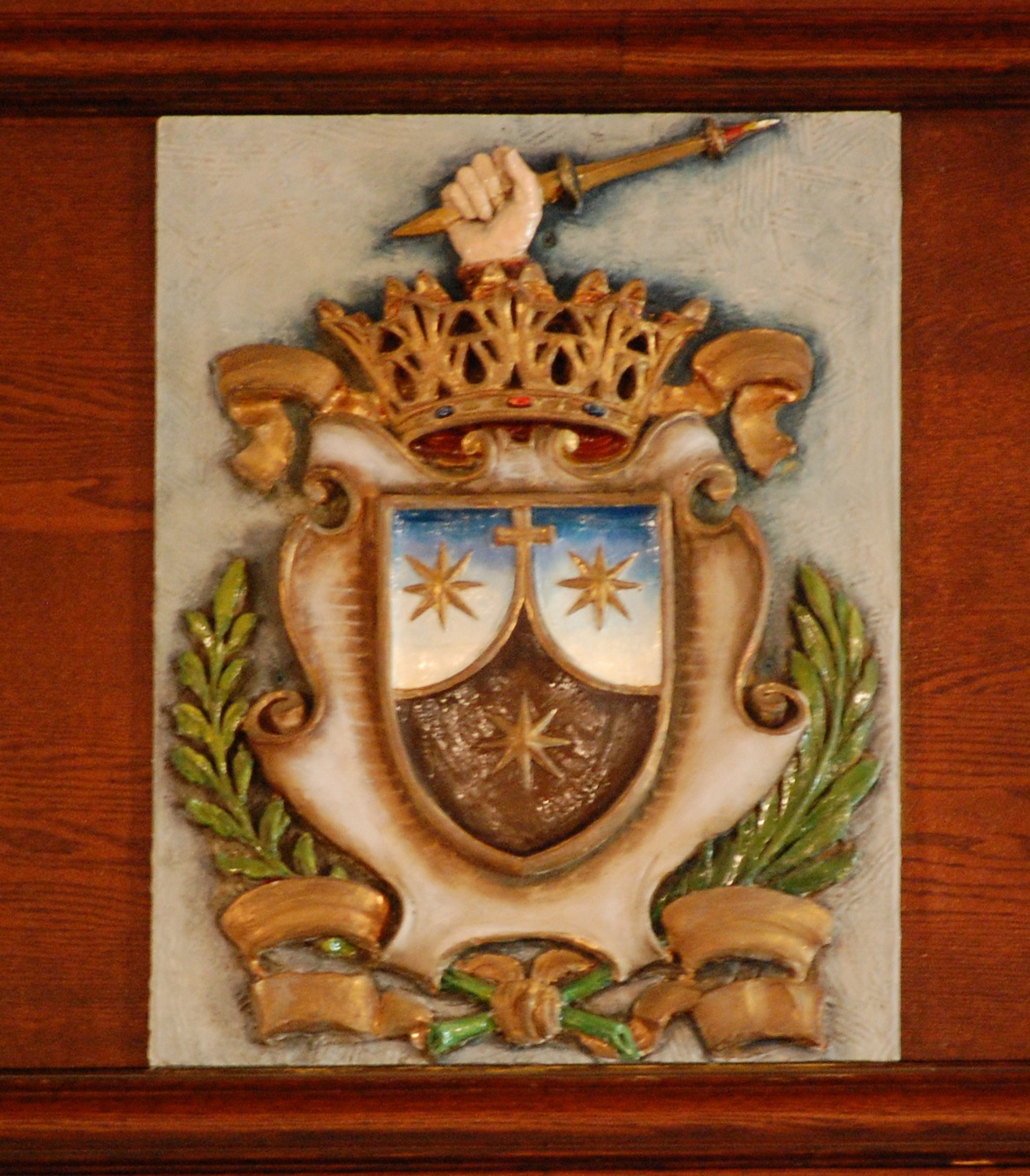
Discalced Carmelite Order (OCD) Coat of Arms plaque.

Located on balcony front, near organ of the Holy Spirit Chapel, Philadelphia Carmel.

Seal of Mount Carmel

In the center of the seal is Mount Carmel, cradle of the Carmelite Order, and the star in the mountain refers to the Our Lady of Mount Carmel. The two stars above are the prophets Elijah and Elisha.

Mount Carmel is the Carmelite’s place of origin located in modern day Haifa, Israel. In the 9th century BC the prophet Elijah lived there and had a profound experience of God. In that same place in the early 12th century some hermits, inspired by the memory of Elijah, gathered there, with a desire “to live a life of allegiance to Jesus Christ” (Rule of St. Albert).

A Poem by Saint Thérèse of Lisieux

22 Wednesday Feb 2023

Posted by Brian in Saints

≈ 1 Comment

St. Thérèse of Lisieux (Jan 2, 1873 – Sept 30, 1897)

Age24 therese

My Hope.

Though in a foreign land I dwell afar,

I taste in dreams the endless joys of heaven.

Fain would I fly beyond the farthest star,

And see the wonders to the ransomed given!

No more the sense of exile weighs on me,

When once I dream of that immortal day.

To my true fatherland, dear God! I see,

For the first time I soon shall fly away.

`

Ah! give me, Jesus! wings as white as snow,

That unto Thee I soon may take my flight.

I long to be where flowers unfading blow;

I long to see Thee, O my heart’s Delight!

I long to fly to Mary’s mother-arms, —

To rest upon that spotless throne of bliss;

And, sheltered there from troubles and alarms,

For the first time to feel her gentle kiss.

`

Thy first sweet smile of welcoming delight

Soon show, O Jesus! to Thy lowly bride;

O’ercome with rapture at that wondrous sight,

Within Thy Sacred Heart, ah! let me hide.

O happy moment! and O heavenly grace!

When I shall hear Thee, Jesus, speak to me;

And the full vision of Thy glorious Face

For the first time my longing eyes shall see.

`

Thou knowest well, my only martyrdom

Is love, O Heart of Jesus Christ! for Thee;

And if my soul craves for its heavenly home,

‘Tis but to love Thee more, eternally.

Above, when Thy sweet Face unveiled I view,

Measure nor bounds shall to my love be given;

Forever my delight shall seem as new

As the first time my spirit entered heaven.

`

June 12, 1896.

From “The Poetry of Saint Therese of Lisieux”

Translated by Donald Kinney O.C.D.

John the Cross and the Chapel of the Holy Spirit

14 Wednesday Dec 2022

Posted by Brian in Poetry, eBooks

≈ Leave a comment

Tags

Carmalite, Carmalite Monestary, Chapel of the Holy Spirit, Discalced Carmelites, John the Cross, Poetry

John of the Cross (1542-1591) was a reformer of the Carmelite Order and is considered, along with Saint Teresa of Ávila, as a founder of the Discalced Carmelites. Saint John the Cross was also a Spanish mystic and a Doctor of the Church. Scholars agree that John the Cross is probably the greatest poet in the Spanish language, not for the volumes produced but for the content “polished and re-polished ceaselessly” to perfection.

outside
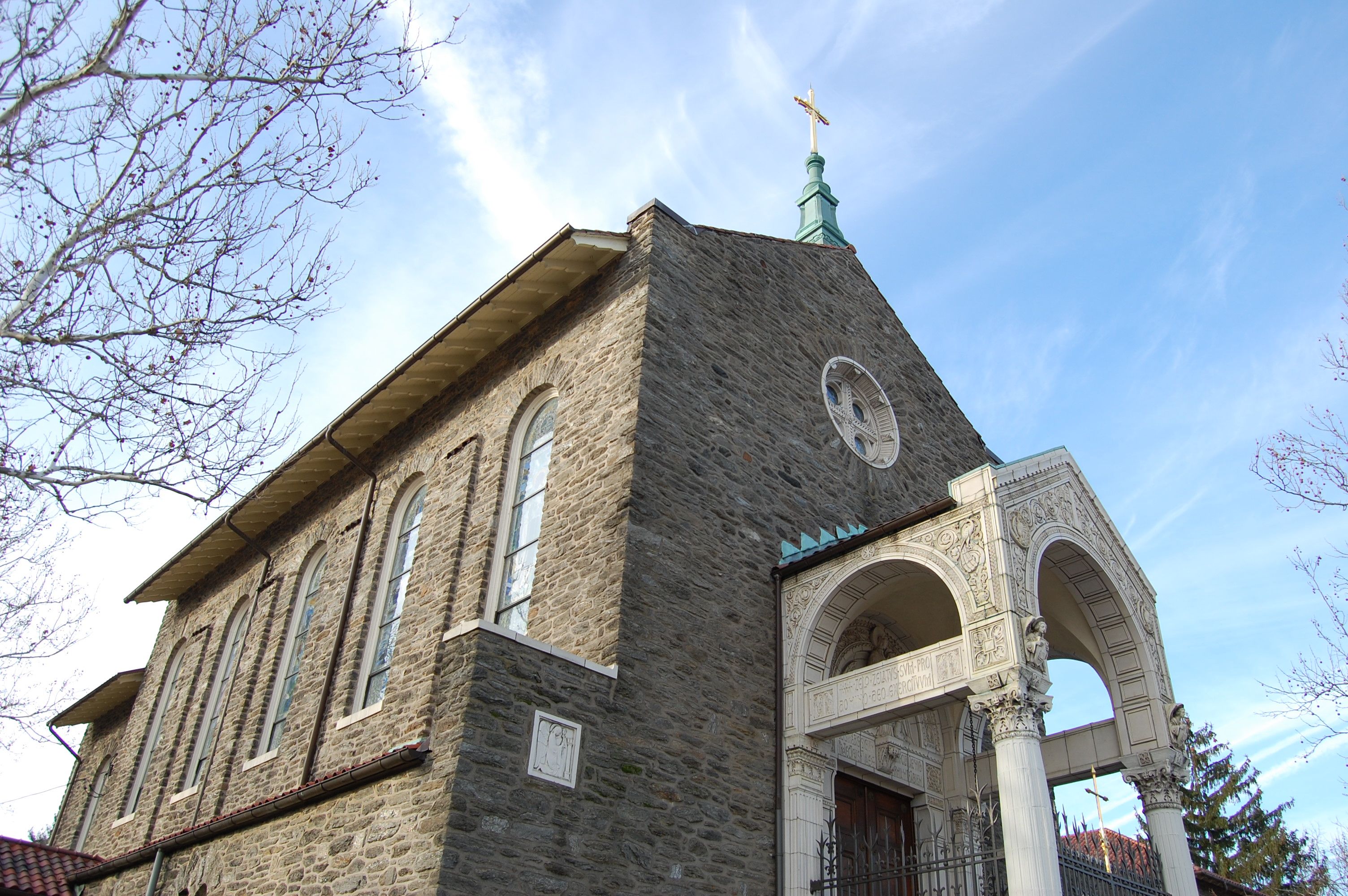
Carmelite Monastery of St. Joseph and St. Anne. Inside is the Chapel of the Holy Spirit. These are true gems of the Archdiocese of Philadelphia.

inside carmalite monestary
Inside the medieval looking Chapel of the Holy Spirit. The Carmelite nuns celebrate Mass on the other side of the reredos immediately behind the altar.

john the cross closeup
Closeup of St. Elisha the prophet on right and St. Teresa of Jesus on the left at the Chapel of the Holy Spirit, Mount Carmel, Philadelphia PA. The prophet Elijah is in the chariot of fire at top, being carried into heaven.

face of john
Face of St. Elisha.

Up to John the Cross’s time, there had been very little mystical prose at all, except for poetry of the mystical experience, called the Prayer of Quiet (similar to contemplative prayer). St. John of the Cross had to invent phrases in order to express ideas which previously had no outlet in Spanish.(1) His greatest poetic work, the Spiritual Canticles was composed for the most part while imprisoned by his own religious order, the Carmelites, who resisted the change he was promoting.

A Spiritual Canticle of the Soul

(1) Reference: St. John of the Cross | Fr. Thomas Dubay, S.M. | From Fire Within: St. Teresa of Avila, St. John of the Cross, and the Gospel–On Prayer

nuns wall

THE BRIDE

My Beloved is the mountains,
The solitary wooded valleys,
The strange islands,
The roaring torrents,
The whisper of the amorous gales;
The tranquil night
At the approaches of the dawn,
The silent music,
The murmuring solitude,
The supper which revives, and enkindles love.

– STANZAS XIV, XV, from The Spiritual Canticle of the Soul by John of the Cross

St. Francis Xavier Parish and the Philadelphia Secular Oratory

03 Saturday Dec 2022

Posted by Brian in Parish Shrines, Saints

≈ Leave a comment

Tags

Secular Oratory, St. Francis Xavier, St. Philip Neri

St. Francis Xavier in Secular Oratory

It makes sense St. Francis Xavier Parish is home to the Secular Oratory of Philadelphia. St. Francis Xavier was canonized with St. Philip Neri on the same day in 1622. Both saints were part of the Jesuit community of Saint Ignatius Loyola and the Society of Jesus. St. Francis travelled extensively through India and Japan, implanting small Catholic communities. While traveling on his first trip to China, in 1552, he became seriously ill and died on December 3 at the age of forty-six. He was canonized in 1662 and in 1927 was named patron of foreign missions. He is also the patron saint of India. The feast day of St. Francis Xavier is December 3.

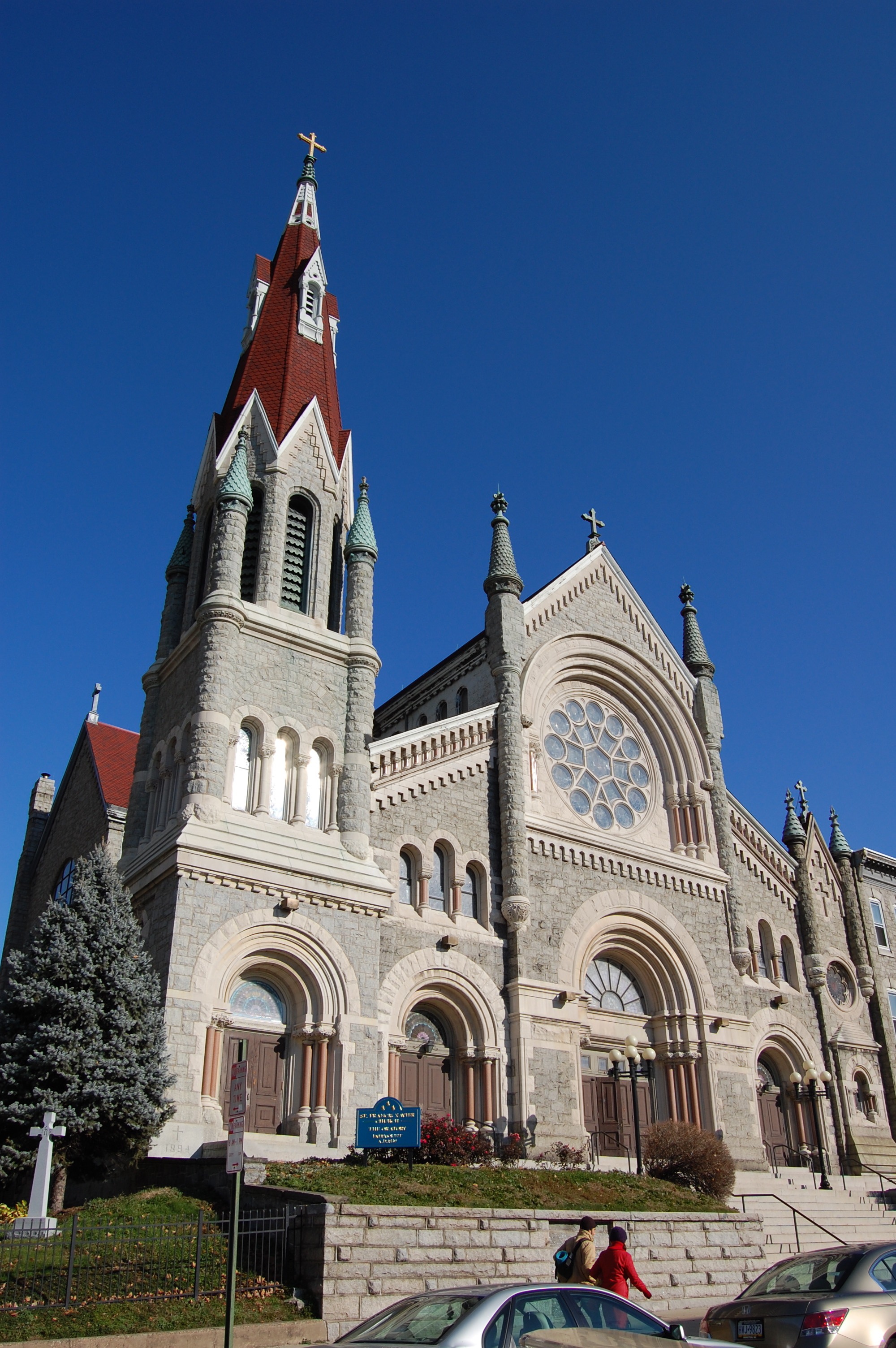
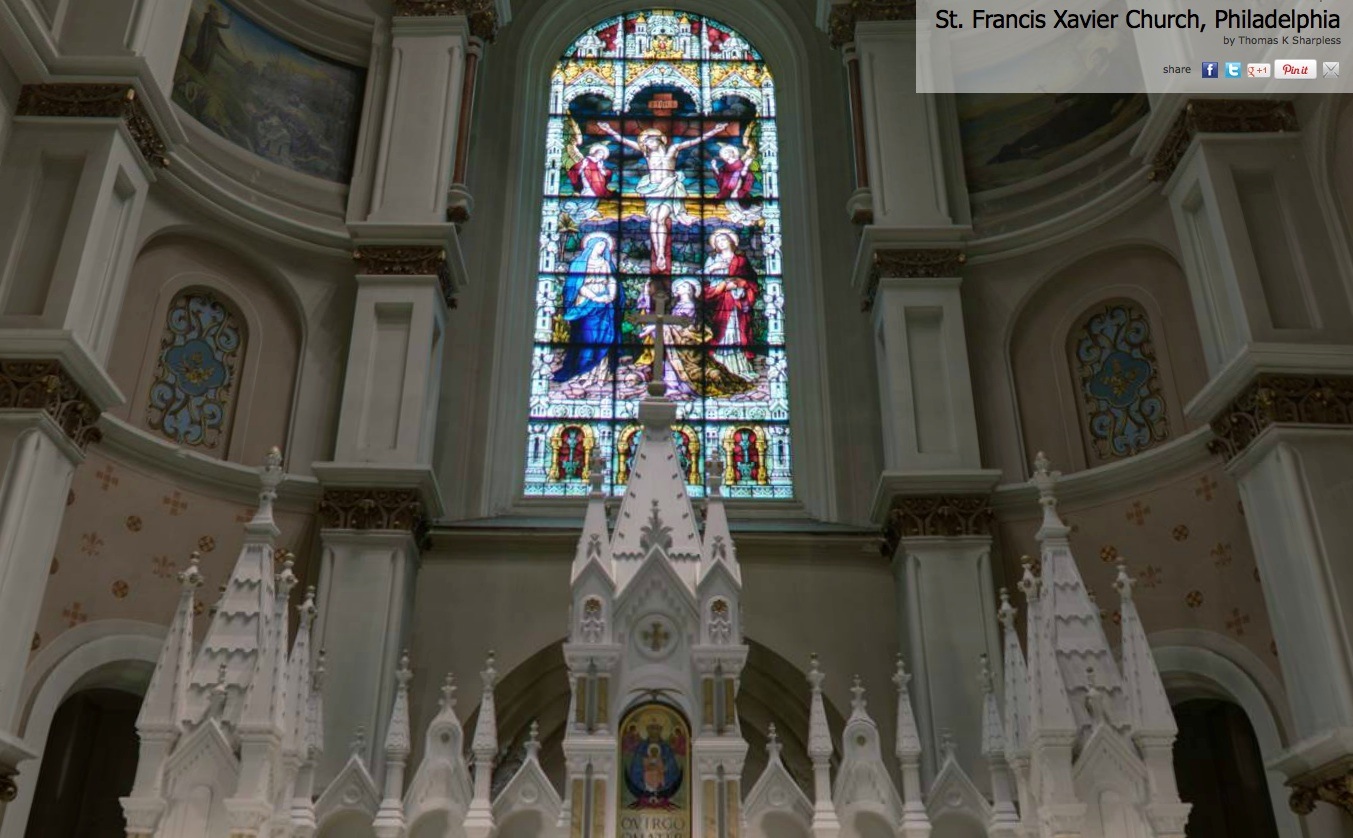
St. Francis Xavier Church

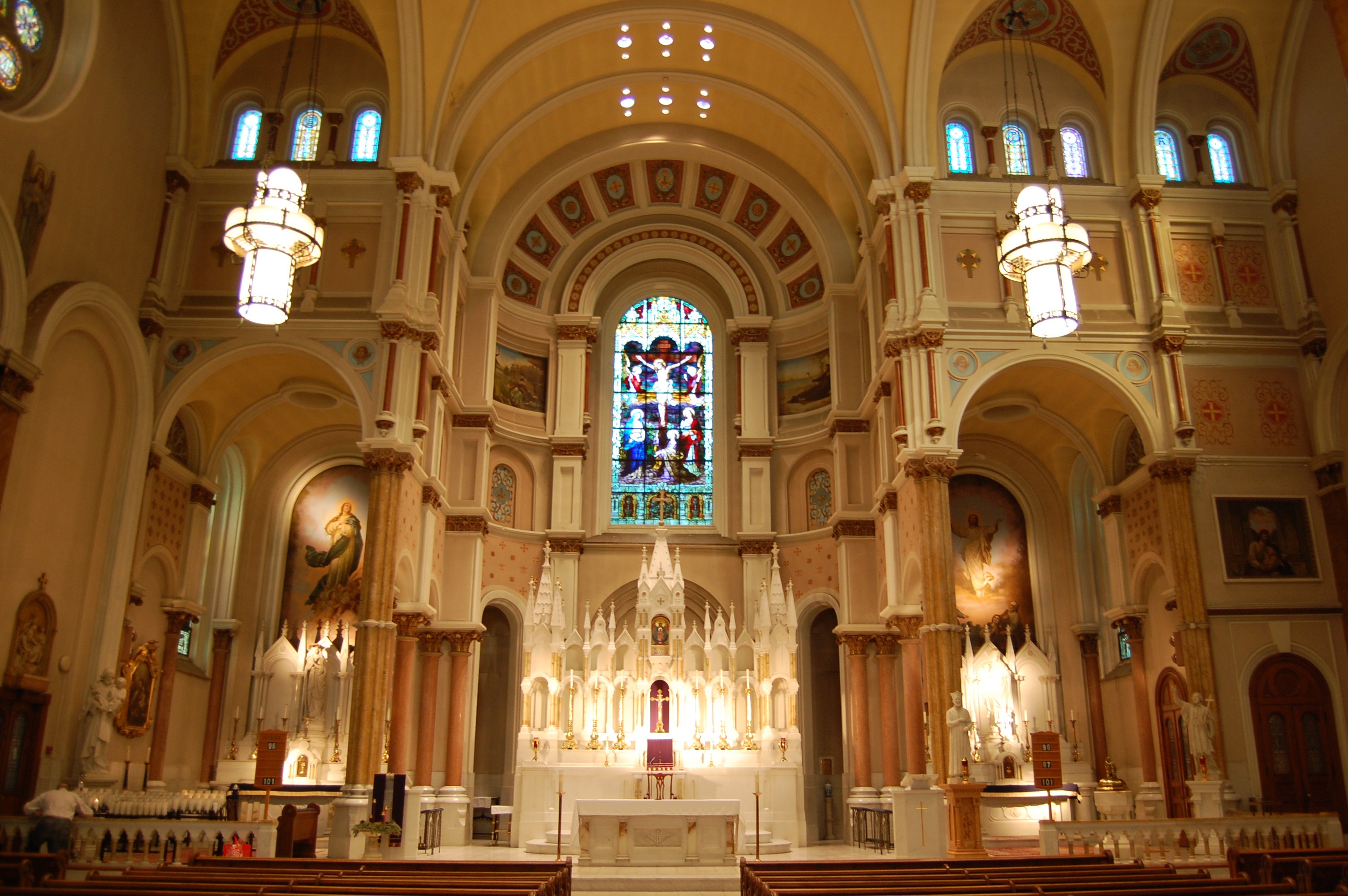
St. Francis Xavier Parish in the Fairmount section of Philadelphia, Pennsylvania was founded in 1839. The church originally built in 1893-1898 extended to its present size in 1906, and rebuilt in 1908 after being damaged by a fire that started in a nearby hat factory.  St. Francis Xavier Church was only the seventh Catholic Church to exist within the city. The church did not modify its old High Altar following the liturgical reforms of Vatican II in 1962.

St. Philip Neri

St. Francis Xavier Parish was entrusted in 1990 to the pastoral care of the Oratorian Fathers. The Secular Oratory is a community of Catholic young adults inspired by the spirituality of Saint Philip Neri. The Oratory is a community of secular priests and brothers who live a common life, observe a daily rule of prayer and practice the gift of stability, i.e., they hope to remain in one place for life. The Congregation of the Oratory was founded by Saint Philip Neri (1515-1590) in Rome and it was officially established in 1575.

francis xavier church3

“For if you seek God in truth, and enter vigorously the path which leads to Him, you will certainly find so much delight proceed from His service, as will easily mitigate and soften whatever sharpness or bitterness there is in conquering yourself.” St. Francis Xavier

francis final

“It is not the actual physical exertion that counts toward a man’s progress, nor the nature of the task, but the spirit of faith with which it is undertaken.” St. Francis Xavier
panoramic photo st francis xavier 4

Side by side, St. Philip and St. Francis say goodbye.
neri and francis 2

Immaculate Conception and St. Catherine Laboure at Miraculous Medal Shrine

28 Monday Nov 2022

Posted by Brian in Miraculous Medal

≈ Leave a comment

Tags

Immaculate Conception, Miraculous Medal Shrine, St. Vincent de Paul

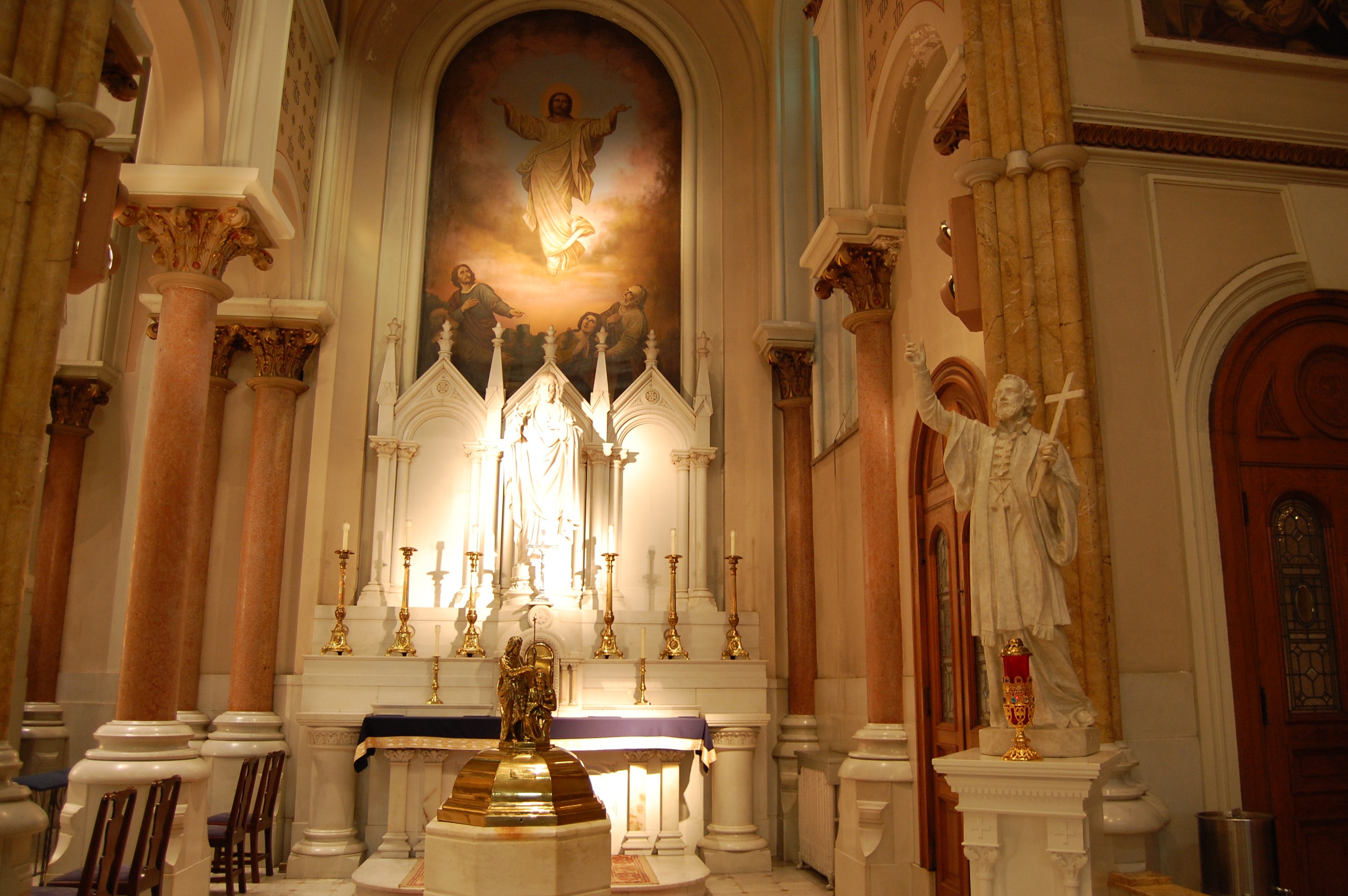
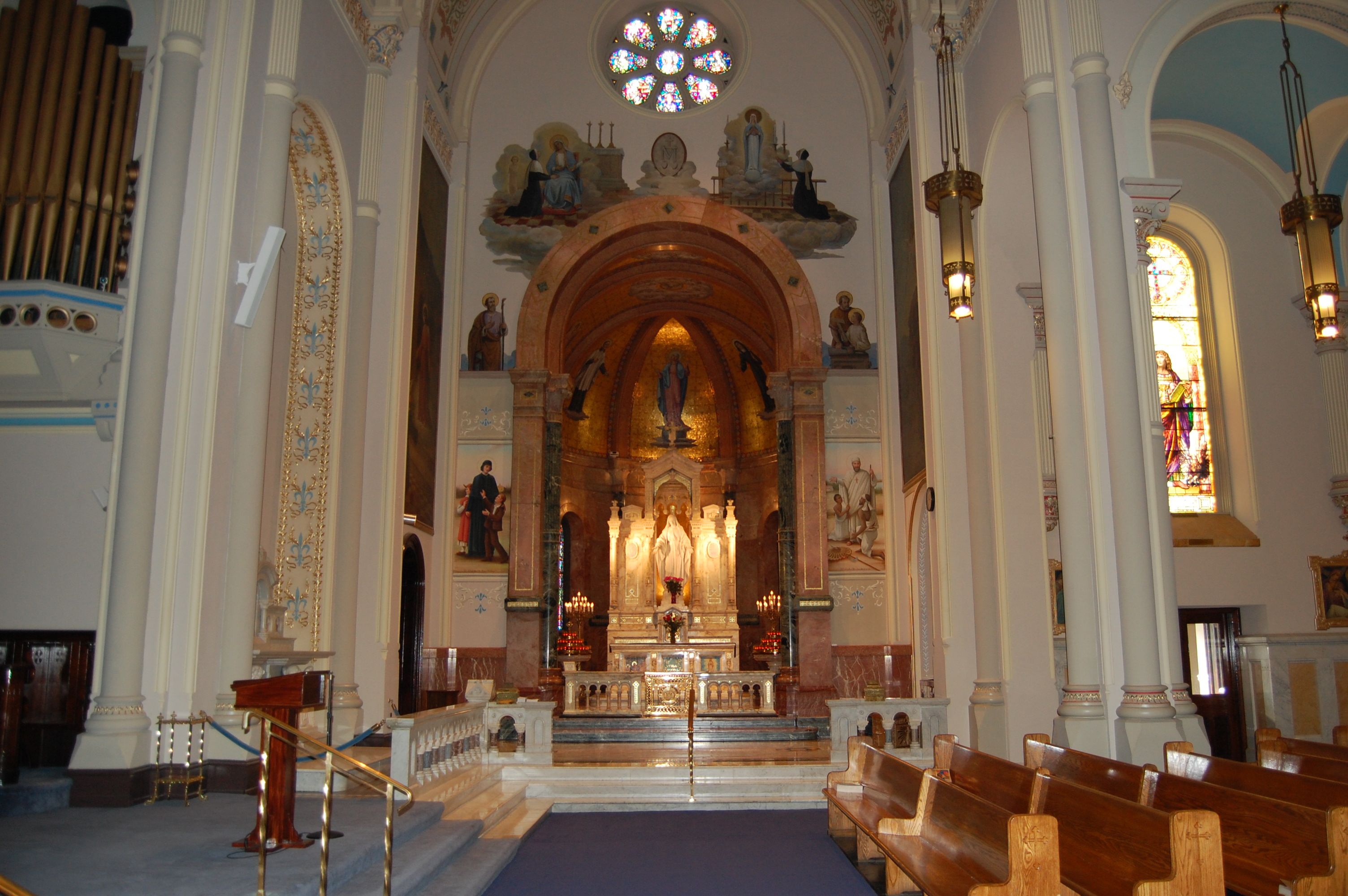
mary side shrine 2Immaculate Conception, or the birth of Mary. Her parents were Saint Joachim and Saint Anne. She was born free of original sin as proclaimed in 1854, Pope Pius IX’s solemn declaration, Ineffabilis Deus. As a result she shares in the benefits of salvation in Christ from the very moment of her conception.

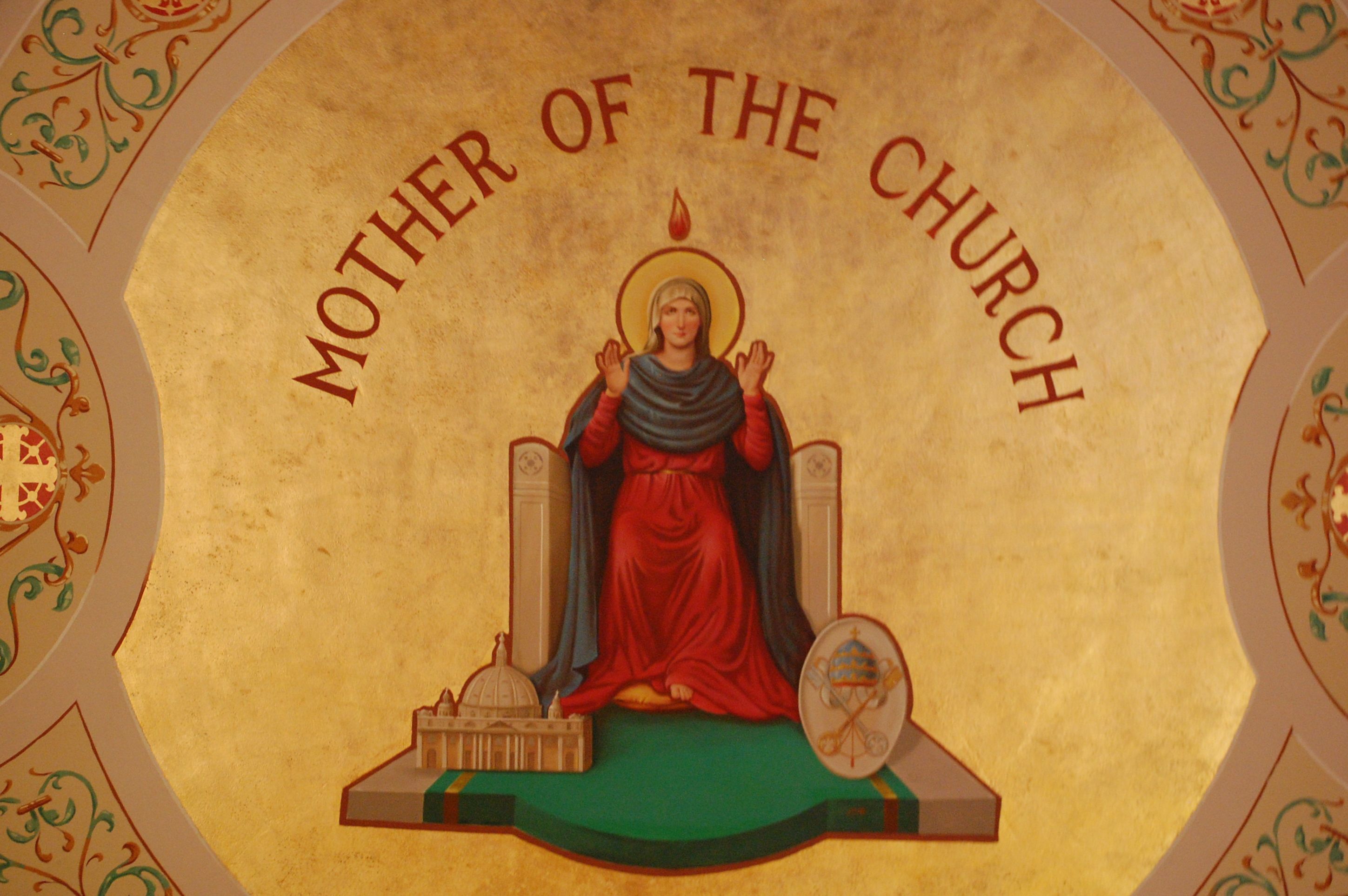
mother of the church

The Miraculous Medal was originally known as the Medal of the Immaculate Conception. Oh Mary conceived without sin, pray for us who has recourse to thee.

main altar miraculous medal shrine

In 1830, the Blessed Mother appeared to St. Catherine Laboure in 1830 three times. The first time, to tell her of troubling times to come and job she had for Catherine.
ist apparation without frame
1st apparation

The second time, appearing as the Mother of the World, holding a globe with a cross on top.
2nd apparation

The third time, depicted in what we now call the Miraculous Medal, hands outstretched, standing on the globe, crushing the snake, with rays of graces shining down on the world.

3rd apparation

The Blessed Mother said that people who wore the medal around their necks and prayed would be blessed with special graces.

Mary told St. Catherine to “Come to the altar and pray and great graces will be shed upon you.”

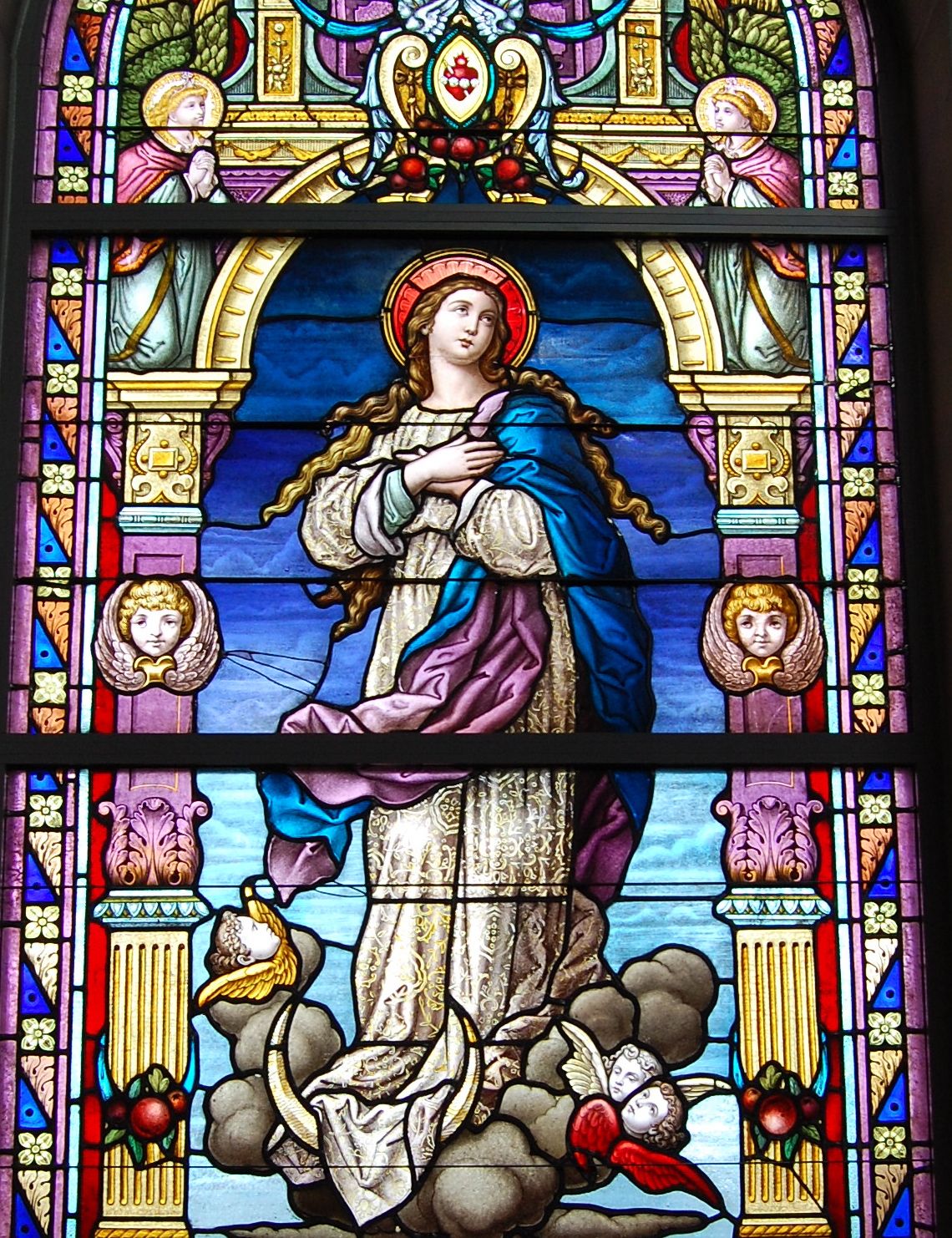
The famous Spanish painter Bartolome Esteban Murillo had a devotion to Mary, and created several paintings of the Immaculate Conception in the mid to late 1660s.

409px-Murillo_immaculate_conception

Murillo was the inspiration for the the stained glass window at St. Basil’s Church in eastern Pennsylvania. The Immaculate Conception was created in late 1890’s of German design.

immaculate conception Murillo st.basil

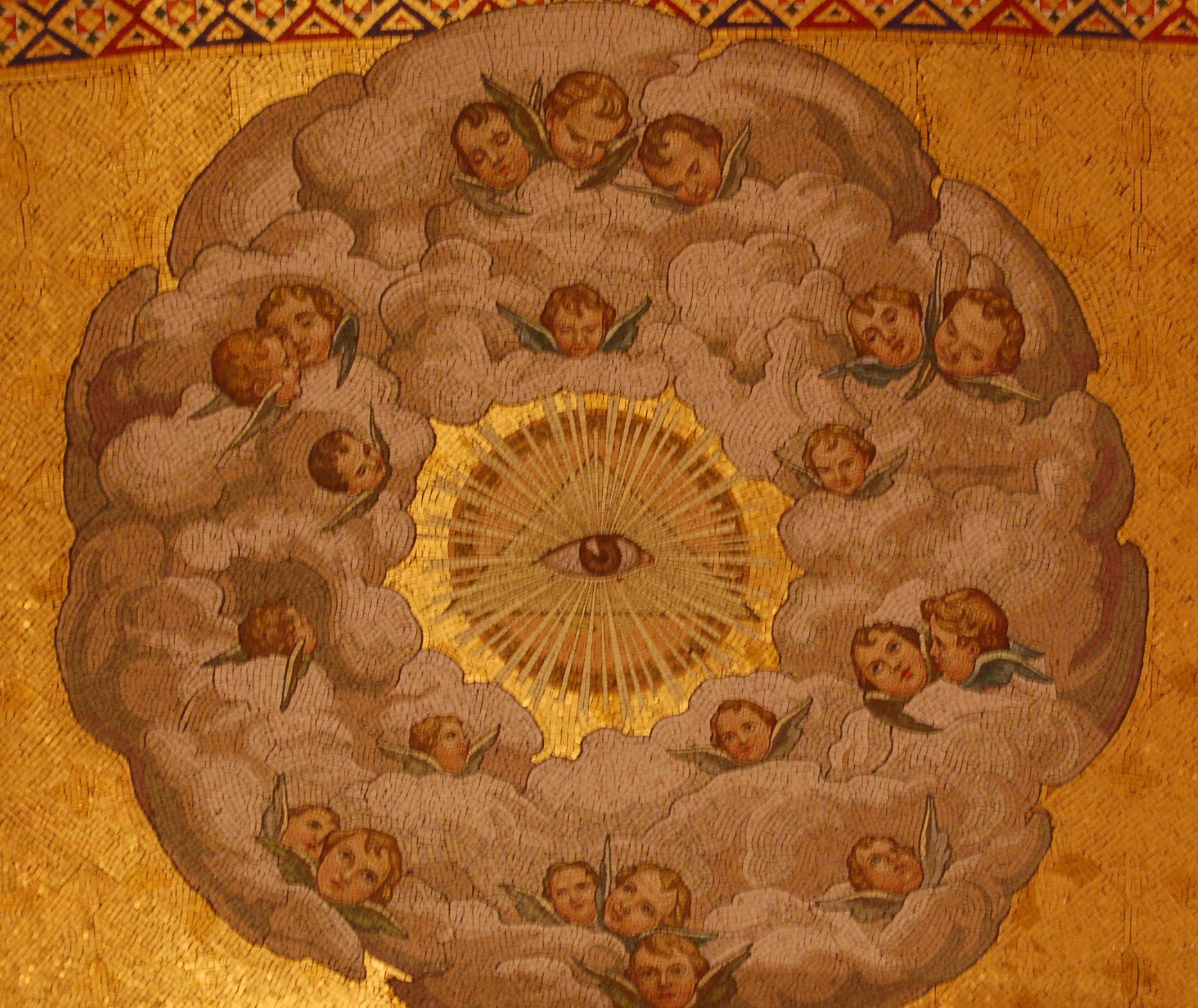
Appropriately, high in the ceiling is The Eye symbolizing the Holy Spirit and the important role in the Immaculate Conception.

st.francis de paul

The Vincentians, Congregation of the Mission are the shrine gaurdians of the Miraculous Medal Shrine. St. Vincent dePaul stands at the entrance to the Seminary, and at Mother Mary’s side.

eye holy spirit

St. Charles Borromeo – Bishop

04 Friday Nov 2022

Posted by Brian in Saints, Uncategorized

≈ Leave a comment

Tags

Charles Borromeo, saints, St. Charles Borromeo Seminary

Charles Borromeo was born in 1538, his mother was the sister of G. de’Medici who became Pope Pius IV in 1559. He became Archbishop of Milan and was responsible for implementing Catholic Reform by reorganizing the Church under his domain.

His life became austere, eating only once per day and devoting himself to the care of souls and made it his goal to increase adoration of Christ in the Eucharist. He promoted the procession of the Holy Nail and Forty Hours. He is patron of seminarians, teachers and catechists. His feast day is November 4.

St. Charles Borromeo

St. Charles Meditates on the Passion by Daniele Crespi (1598-1630), Milan, From Saints and Their Symbols: Recognizing Saints in Art and in Popular Images by Fernando Lanzi

St. Charles Borromeo Seminary, Wynnewood, Pennsylvania.

← Older posts
Follow @shrinetower

Enter your email address to follow this blog and receive notifications of new posts by email.

Most Recent Posts

  • St. Basil the Great, the Jesus Prayer, and the Wisdom of the Three Holy Hierarchs
  • From Elijah to Today: The Legacy of Mount Carmel
  • Celebrating St. Basil: Paths to Divine Union and the Essence of Eastern Christianity
  • J.S. Bach – Christmas Oratorio BWV 248
  • Merry Christmas to all!
  • Feast of The Exaltation of the Holy Cross

Previous Posts

Tags

Eastern Christianity Gregory of Nyssa music Pope Francis Saint saints Shrine St. Basil St. Ignatius of Loyola St. Vincent de Paul

The Cover Art

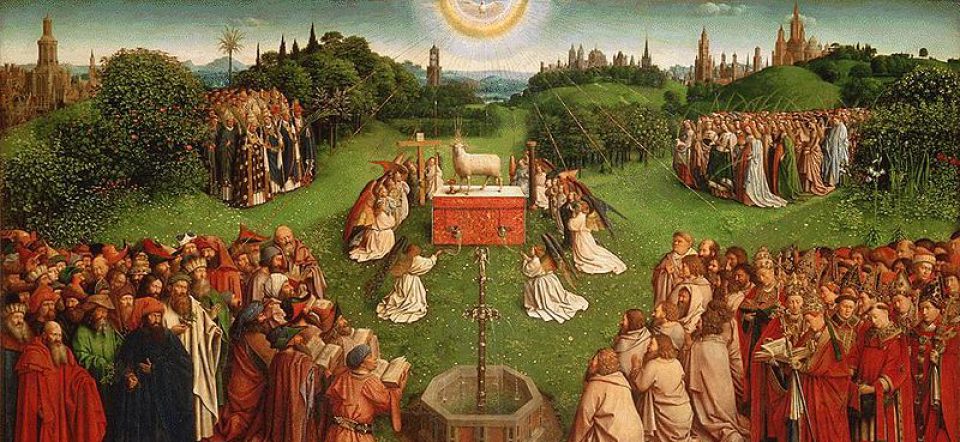
Jan Van Eyck, “The Adoration of the Lamb” 1432 from the Ghent Alterpiece. Detail: The red altar where the lamb stands reads, “Behold the Lamb of God, which taketh away the sins of the world” and “Jesus the way, the truth, and the life”, both quotes from Gospel of John. In this image and in the book of Revelation the Lamb is Jesus. Directly around the Lamb on the altar are angels who are carrying the instruments in the Passion scenes, like the cross and crown of thorns.

gichontree

Unknown's avatarThere's beauty in sacred spaces; from the stories they tell in architecture, stained glass windows and icons; to the rituals and liturgy that arises our soul. Inside a shrine, the angels and saints praise God with us. I hope to relay the message for the kingdom, power and glory of God, now and forever.

Blog at WordPress.com.

Privacy & Cookies: This site uses cookies. By continuing to use this website, you agree to their use.
To find out more, including how to control cookies, see here: Cookie Policy
  • Subscribe Subscribed
    • Shrine Tower
    • Join 76 other subscribers
    • Already have a WordPress.com account? Log in now.
    • Shrine Tower
    • Subscribe Subscribed
    • Sign up
    • Log in
    • Report this content
    • View site in Reader
    • Manage subscriptions
    • Collapse this bar
 

Loading Comments...