• Shrines of Philadelphia
    • St. Katharine Drexel
    • Miraculous Medal
    • St. John Neumann
    • St. Rita of Cascia
    • Our Lady of Czestochowa
    • St. Gianna Molla
  • Sacred Places
  • Art, Film, Poetry
  • Saints
  • Music
  • Services

ShrineTower

~ Saints, Shrines and Sacred Places

ShrineTower

Category Archives: National Shrine of the Immaculate Conception

Prayer After the Rosary

01 Thursday Oct 2026

Posted by Brian in National Shrine of the Immaculate Conception

≈ Leave a comment

Tags

Holy Rosary, Marian Art, Mother Mary, Our Lady of Sorrows, Sacred Art, Shrine

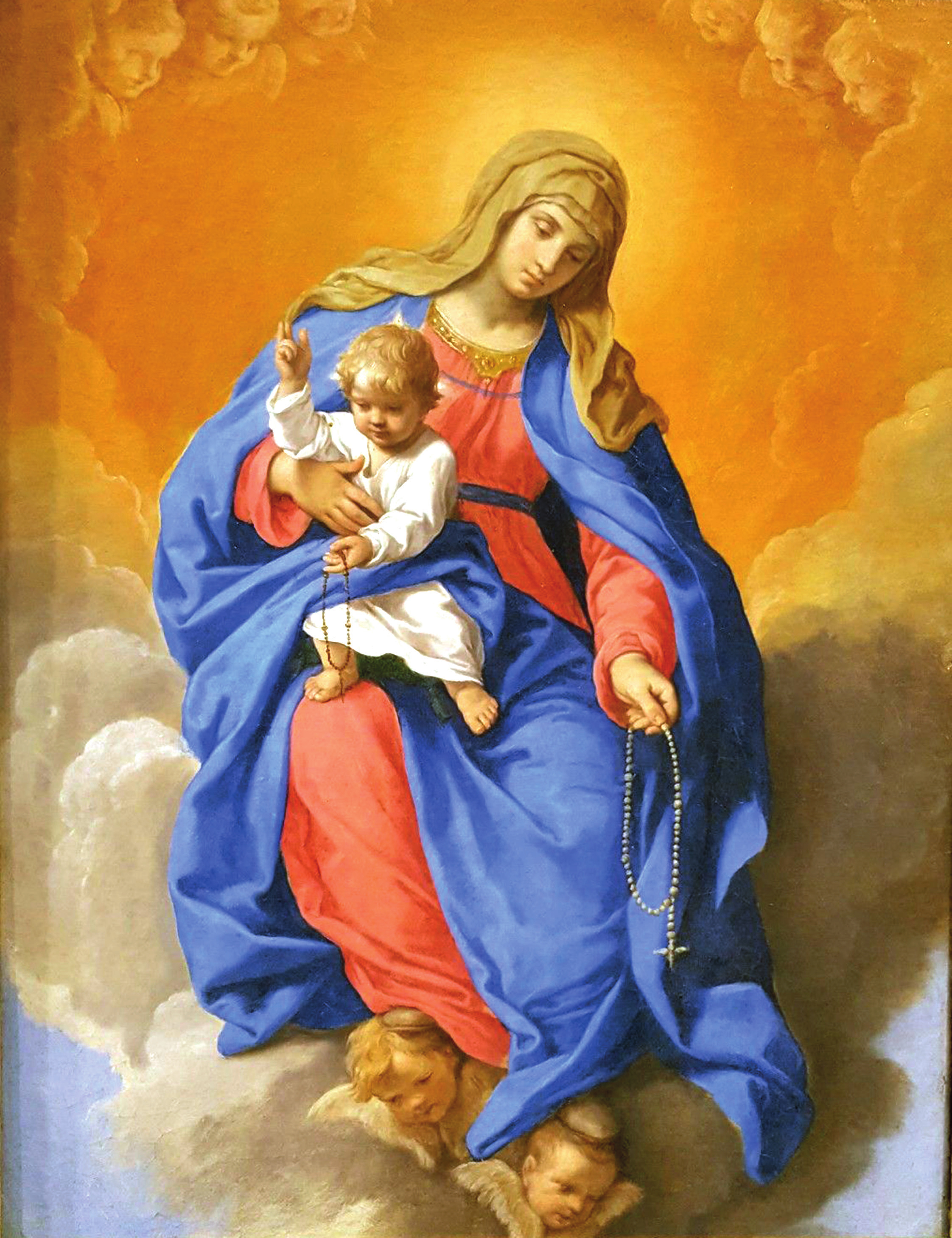
Madonna of the Rosary, Simone Cantarini (1612–1648), c. 1640, oil on canvas. Pinacoteca Tosio Martinengo, Brescia, Italy.

This is the second in a 12-month ShrineTower series contemplating Mary through prayer and sacred art. Each monthly reflection explores a Marian prayer, its meaning and origin and the artwork accompanying it.

The prayer featured this month is traditionally said at the conclusion of the Rosary, gathering together the mysteries just contemplated and directing our prayer toward Christ.

The Prayer

O God, whose only begotten Son,
By His life, death, and resurrection,
Has purchased for us the rewards of eternal life,
Grant, we beseech thee, that by meditating upon
These mysteries of the Most Holy Rosary of
The Blessed Virgin Mary, we may imitate what
They contain and obtain what they promise,
Through the same Christ our Lord.
Amen.

The Vatican’s Compendium of the Catechism of the Catholic Church includes substantially this text as the “Prayer concluding the Rosary.”

Cantarini’s Madonna of the Rosary

Cantarini’s Madonna of the Rosary was a small painting, apparently intended not for a church but for private devotion in the home. Mary holds the rosary in one hand and the Christ Child in the other. Christ himself also holds the rosary while raising His hand in blessing. The Rosary rests in the hands of both Mother and Child, visually joining Marian devotion with the mystery of Christ.

The Meaning of the Prayer

The prayer begins with Christ: “whose only begotten Son, by His life, death and resurrection, has purchased for us the rewards of eternal life.”

Those words remind us of something essential about the Rosary. We pray it with Mary as its mysteries lead us continually toward her Son. We contemplate Christ’s life in the company of the mother who knew Him, loved Him, followed Him and stood beside Him at the Cross.

The heart of the prayer lies in one petition:

“that we may imitate what they contain and obtain what they promise.”

As we meditate upon the mysteries, we ask that what we contemplate might enter into our own lives; that Christ’s humility, sacrifice, mercy and hope might become more fully our own.

Ultimately, the prayer points toward the promise already proclaimed in its opening words. The mysteries upon which we have meditated culminate in the Resurrection and our hope of sharing in Christ’s victory over death.

The Prayer’s Origin

The prayer has roots in the Church’s liturgy. It appears in the Roman Missal for the Feast of Our Lady of the Rosary and became familiar as a concluding prayer to the Rosary, traditionally following the Hail, Holy Queen.

Pope St. John Paul II referred to it in his 2002 apostolic letter Rosarium Virginis Mariae, quoting its petition that through meditation on the mysteries we may “imitate what they contain and obtain what they promise.” The Vatican’s Compendium of the Catechism of the Catholic Church also includes the complete prayer under the heading “Prayer concluding the Rosary.” 

Our Lady of the Rosary — October 7

The Church celebrates the Memorial of Our Lady of the Rosary on October 7 and October itself has traditionally become known as the month of the Rosary.

The devotion developed over centuries, joining familiar prayers; the Our Father, the Hail Mary and the Glory Be; with meditation upon the mysteries of Christ. Its rhythm can become almost instinctive, allowing the mind to rest upon scenes from the Gospel and contemplate the life of Christ in the company of Mary.

October offers two other connections with the Rosary. On October 13, 1917, the final apparition at Fatima took place, when Mary identified herself as Our Lady of the Rosary. And on October 22, the Church celebrates St. John Paul II, whose deep devotion to the Rosary led him to introduce the Luminous Mysteries in 2002.

The words remain familiar while the mysteries can meet us differently at different moments of our lives.

In Loving Memory of Ma Wilde

Under the guidance of Mary, Mother of God, I offer this series in my mother’s loving memory and as a continuing prayer for the repose of her soul.

Personal Reflection

The image of Mary holding the rosary brings back memories of my own sojourn with the Legion of Mary, a worldwide lay Catholic association whose members join prayer and devotion to Mary with active service to the Church and those in need. For a time, I met and prayed with a small Legion group at my parish, St. Basil the Great. As part of our service, I joined them on visits to a local nursing home, where we prayed the Rosary with the residents.

Over time, I came to know several of the residents. Many were nearing the end of their lives and yet their faith remained evident. Praying the Rosary together in that setting took on a particular meaning. These were familiar words spoken by people for whom the mysteries of life, death and eternal life were becoming increasingly immediate.

At that time, my faith was woven deeply into my daily life. I served on parish council, attended daily Mass, sometimes served at the altar and participated in the Legion of Mary.

Over the years, that level of involvement gradually changed. I drifted away from some of the practices that had once been part of my everyday life, including the Legion of Mary and daily Mass. There were changes within the parish as well. More recently, our pastor was unexpectedly removed because of a serious matter, the circumstances of which I never fully knew. I don’t know that any one event explains the course my faith took. Looking back, much of it is simply a blur of years, changes and circumstances.

Now, following my mother’s passing, I find myself returning to some of these practices. Her death has also led me to think more deeply about eternal life and our communion with those who have gone before us.

That brings me back to the Rosary.

This is why the concluding prayer of the Rosary speaks to me differently today: “that we may imitate what they contain and obtain what they promise.” Years ago, I prayed those words alongside men and women approaching the end of their earthly lives. Today, after accompanying my own mother to that threshold, those words have a more immediate meaning.

It may be time for me to return to the Rosary — and to the Legion of Mary.

ShrineTower Connection

In October 2022, ShrineTower returned to the Carmelite Monastery in Philadelphia in Sacred Path to the Summit of Mt. Carmel with John of the Cross and Teresa of Jesus. St. Teresa of Jesus, whose feast is celebrated on October 15, was one of the great teachers of prayer and contemplation in the Church. 

The Carmelite connection also leads naturally to Mary. As I wrote in that ShrineTower exploration, “Discalced Carmelites are known for their deep devotion to Our Lady of Mount Carmel.” The opening prayer invokes Our Lady of Mount Carmel together with St. Teresa and St. John of the Cross, asking that “the spirit of prayer” flourish in the community. 

St. Teresa described prayer as the entrance into the spiritual life: “The door of entry to this castle is prayer and reflection.” That thought seems particularly appropriate alongside the Rosary. Its repeated prayers provide the rhythm, but its mysteries invite us into contemplation of the life, death and Resurrection of Christ.

Closing Prayer

Blessed Mother, as I contemplate the Rosary,
help me once again to follow the mysteries of your Son.
Strengthen my faith in His promise of eternal life
and keep close those who have gone before us.

I entrust my mother to your loving care,
and ask that you accompany me as I find my way
to the prayer that illuminates my heart.

Lead me always through the mysteries of the Rosary
to a deeper understanding of this life and the life to come.

Amen.

Sources

  • Vatican — Compendium of the Catechism of the Catholic Church — The appendix presents the featured prayer under the heading “Prayer concluding the Rosary” and gives substantially the same text used in the Marian calendar. 
  • Vatican — St. John Paul II, Rosarium Virginis Mariae — John Paul II discusses the Christ-centered and contemplative character of the Rosary, introduces the Mysteries of Light and specifically quotes the concluding prayer’s petition that we may “imitate what they contain and obtain what they promise.” 
  • Lombardia Beni Culturali — Simone Cantarini, Madonna del rosario con Bambino — Official catalogue record for Cantarini’s painting in the Pinacoteca Tosio Martinengo, Brescia. It identifies the work as oil on canvas and describes Mary and the Christ Child each holding a rosary, with Christ raising His hand in blessing. 
  • USCCB — Memorial of Our Lady of the Rosary — Liturgical reference for the October 7 Memorial of Our Lady of the Rosary in 2026. 
  • Shrine of Fatima — Route with Our Lady of the Rosary — Fatima Shrine material recounting that at the October 13, 1917 apparition Mary identified herself as the “Lady of the Rosary” and repeatedly asked that the Rosary be prayed. 
  • Legion of Mary — About the Legion of Mary — Official description of the Legion as a lay Catholic apostolic association combining prayer and Marian spirituality with active service, including visits to the sick and others in need. 
  • ShrineTower — Sacred Path to the Summit of Mt. Carmel with John of the Cross and Teresa of Jesus — October 2022 ShrineTower reflection on St. Teresa of Jesus, St. John of the Cross, Carmelite spirituality, prayer and devotion to Our Lady of Mount Carmel. 
Our Mother of Sorrows 

01 Tuesday Sep 2026

Posted by Brian in National Shrine of the Immaculate Conception, Saints

≈ Leave a comment

Tags

Marian Art, National Shrine of the Immaculate Conception, Onorio Marinari, Our Lady of Sorrows, Seven Sorrows of Mary

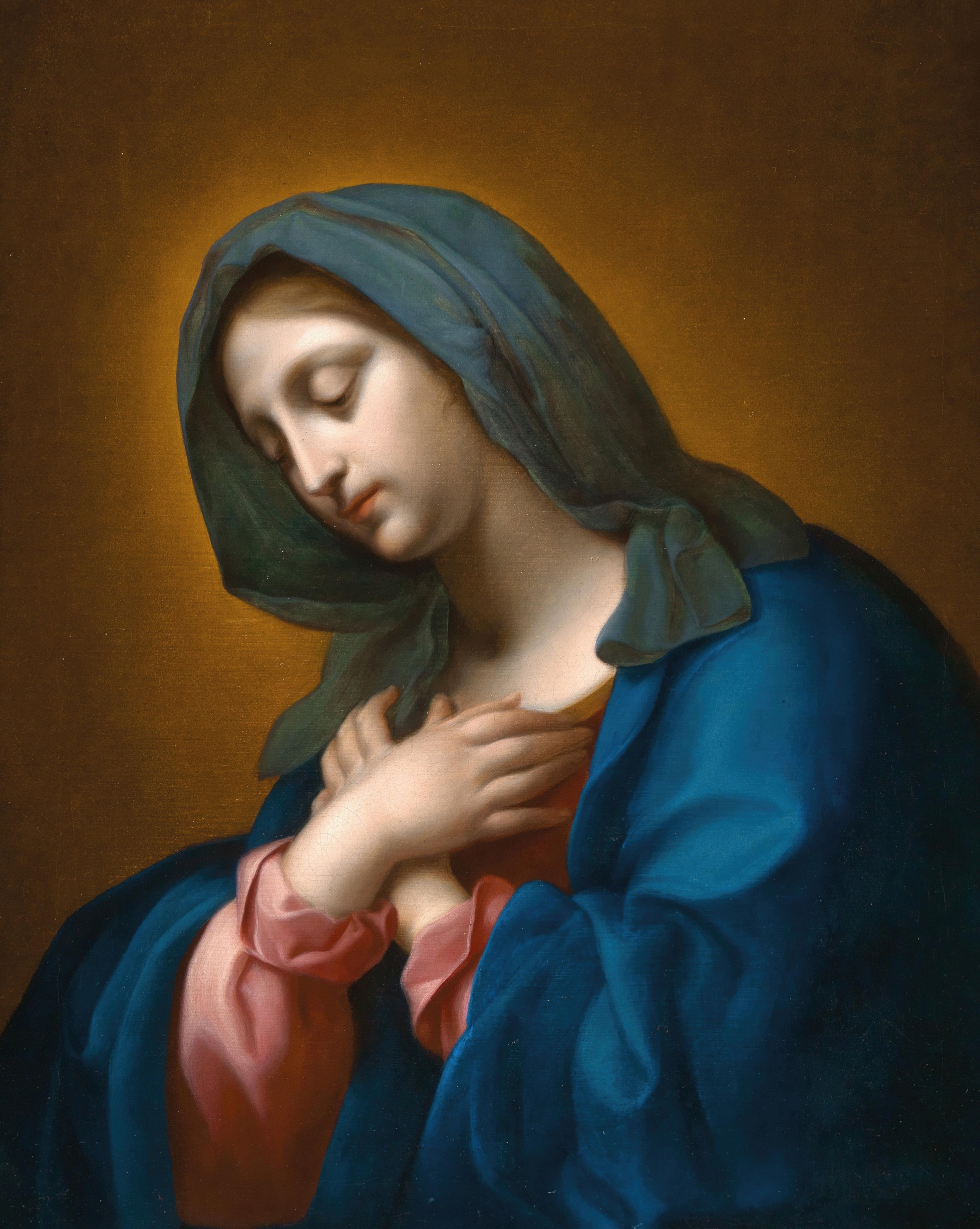
The Madonna, Onorio Marinari (1627–1715), oil on canvas.

This post begins a 12-month ShrineTower series contemplating Mary through prayer and sacred art. Beginning with September, each monthly reflection will explore a Marian prayer, its meaning and origin and the artwork accompanying it.

September is traditionally associated with Our Lady of Sorrows, whose memorial the Catholic Church observes on September 15. This devotion remembers the sufferings Mary endured in union with her Son, particularly as she stood beneath the Cross.

Prayer to Our Mother of Sorrows

Father, as your Son was raised on the cross,
His Mother Mary stood by Him,
Sharing His sufferings.
May she, who is also our spiritual Mother
And Patroness in Heaven,
Help us to find renewed strength
At the Cross of Christ
And so come to share
In His rising to new life,
Who lives and reigns forever and ever.
Amen.

The Madonna by Onorio Marinari

The accompanying painting is The Madonna, an oil painting by the Florentine Baroque artist Onorio Marinari (1627–1715). Its attribution to Marinari was confirmed by art historian Sandro Bellesi when the painting appeared in a 2020 Dorotheum auction.

The stillness of the image is part of its power. Mary’s sorrow appears restrained rather than dramatic, becoming a quiet, persevering prayer. She remains faithful beneath the weight of suffering and waits in faith for what she cannot yet see—the Resurrection.

Marinari studied with his father before working in the studio of his cousin Carlo Dolci, one of Florence’s leading painters of devotional subjects. Although Marinari remained strongly influenced by Dolci, the Dorotheum catalogue describes this painting as possessing an individual quality of intense devotion and beauty.

Meaning of the Prayer

The prayer begins with one of the most sorrowful moments in Scripture:

“Standing by the cross of Jesus were his mother…”
—John 19:25

Mary could not remove her Son’s suffering, but she refused to abandon Him. She remained with Jesus when many of His followers had fled. Her presence beneath the Cross reveals a love that remains faithful even when it cannot change what is happening.

The title Our Lady of Sorrows also recalls Simeon’s prophecy when the infant Jesus was presented in the Temple:

“And you yourself a sword will pierce.”
—Luke 2:35

That prophecy reaches its fulfillment on Calvary. As St. John Paul II explained, Mary’s pilgrimage of faith, which began at the Annunciation, reached its culmination at the foot of the Cross. She continued to believe even as she witnessed the suffering and death of the Son promised to her. 

The prayer also calls Mary “our spiritual Mother.” This comes from Christ’s words spoken from the Cross:

“Woman, behold, your son.”
Then he said to the disciple, “Behold, your mother.”
—John 19:26–27

The beloved disciple, traditionally identified as John, represents not only himself but all disciples of Christ. In entrusting Mary to John, Christ also gives her as a spiritual mother to the Church.

The Prayer’s Origin

The opening words of this prayer closely follow the former English translation of the collect used at Mass for the Memorial of Our Lady of Sorrows. That liturgical prayer asked that the Church, united with Christ in His suffering and death, might also share in His rising to new life. The prayer presented here adapts that petition by turning our attention toward Mary as our spiritual Mother and patroness in Heaven.

A closely related form of this prayer is displayed on a kneeler in the Chapel of Our Mother of Sorrows at the Basilica of the National Shrine of the Immaculate Conception in Washington, D.C.

At the center of the chapel is a marble Pietà depicting Mary holding the body of Jesus after He was taken down from the Cross. Although Marinari’s The Madonna is not part of the chapel, both contemplate the same mystery: Mary’s faithful love amid the suffering and death of her Son.

Our Lady of Sorrows — September 15

The Church celebrates the Memorial of Our Lady of Sorrows on September 15, remembering the sufferings Mary endured in union with her Son, particularly as she stood beneath the Cross.

In Loving Memory of Ma Wilde

This series is dedicated to my mother, Donna Ann Wilde, who entered eternal life on July 3, 2026. I affectionately called her “Ma Wilde.”

As her son, I find a particular meaning in contemplating the bond between Jesus and His Mother—a bond of love that remained unbroken through suffering, death and Resurrection. Through the Communion of Saints, I remain united with my mother in Christ.

Under the guidance of Mary, Mother of God, I offer this series in my mother’s loving memory and as a continuing prayer for the repose of her soul.

Eternal rest grant unto her, O Lord, and let perpetual light shine upon her. May she rest in peace. Amen.

Personal Reflection

This first reflection has particular meaning for me. My mother’s death has led me to contemplate more deeply the bond between a mother and her son. I approach Mary at the Cross as a son grieving his mother, while Mary stands there as a mother grieving her Son.

Our experiences are not the same, but they meet within the mystery of faithful love. Mary teaches us that grief and faith can exist together. She remained beside Jesus when she could not remove His suffering and she continued to trust when she could not yet see the Resurrection.

Those who grieve are invited to stand with Mary at the Cross. There, sorrow is neither dismissed nor given the final word. Through Christ, the Cross opens toward Resurrection and eternal life.

ShrineTower Connection

Our Lady of Sorrows appeared on ShrineTower in June 2015 in my post Norbertines “Sound the Bell of Holy Freedom” for World Meeting of Families 2015. The hymn was written for the World Meeting of Families held in Philadelphia that September during the visit of Pope Francis. Its lyrics were written by Norbertine Fr. Andrew D. Ciferni, O.Praem., of Daylesford Abbey, with music by Normand Gouin. 

I knew Fr. Ciferni through Daylesford Abbey and attended a number of his popular lectures there. He died on August 21, 2025, at the age of 83.

In that 2015 ShrineTower post, I introduced the fifth verse as being about “Mary’s sorrow at the cross and all mothers sorrow shared.” Fr. Ciferni wrote:

At the cross a grieving mother, on the cross, her only son,
With all mothers and their children, Blessed Mary, you are one.
In our joys, and in our sorrows may we do as you have done.

Immediately beneath those words, I placed my photograph of an icon of Our Lady of Sorrows. The original ShrineTower post still preserves that pairing of Fr. Ciferni’s words and the image. 

Returning to that ShrineTower post more than a decade later has a different resonance. Fr. Ciferni has since passed from this life and so has Ma Wilde. His words about a grieving mother, her son and the sorrows shared by mothers and their children now speak to me in a way they could not have when I first posted them in 2015.

A Closing Prayer

Our Mother of Sorrows, remain beside us in our suffering. Lead us to the Cross of your Son and strengthen our hope in His Resurrection. Remember especially those we love who have passed from this life and lead us all into the eternal presence of Christ. Amen.

Sources

  • Basilica of the National Shrine of the Immaculate Conception — 2027 Our Lady in Art Calendar; the inspiration for this year-long ShrineTower exploration of Marian prayer and sacred art, with connections to liturgy, saints, sacred places and personal reflection.
  • Basilica of the National Shrine of the Immaculate Conception — Our Mother of Sorrows Chapel — the chapel, the Seven Sorrows of Mary and the Memorial of Our Lady of Sorrows on September 15.
  • St. John Paul II — Homily for the Memorial of Our Lady of Sorrows, September 15, 1987 — Mary’s pilgrimage of faith and her perseverance with Christ at the foot of the Cross.
  • St. Paul VI — Marialis Cultus — identifies September 15 as the commemoration of Our Lady of Sorrows and describes Mary as the suffering Mother united with her Son at the Cross.
  • ShrineTower — Norbertines “Sound the Bell of Holy Freedom” for World Meeting of Families 2015 — my June 10, 2015 ShrineTower post featuring Fr. Andrew D. Ciferni’s fifth verse on Mary’s sorrow at the Cross and my photograph of Our Lady of Sorrows.
  • Daylesford Abbey — Fr. Andrew Ciferni, O.Praem. — remembrance of Fr. Ciferni, a renowned teacher and lecturer at Daylesford Abbey, who died August 21, 2025.

Enter your email address to receive new ShrineTower posts by email.

Join 72 other subscribers
Follow @shrinetower

Most Recent Posts

  • Prayer After the Rosary
  • Our Mother of Sorrows 
  • Orthodox Easter — Same Resurrection, Different Rhythm
  • Theosis: Becoming Like God — “Be Attentive” to Divine Energy
  • St. Basil the Great, the Jesus Prayer, and the Wisdom of the Three Holy Hierarchs
  • From Elijah to Today: The Legacy of Mount Carmel

Previous Posts

Tags

Eastern Christianity Gregory of Nyssa music Pope Francis Saint saints Shrine St. Basil St. Ignatius of Loyola St. Vincent de Paul

The Cover Art

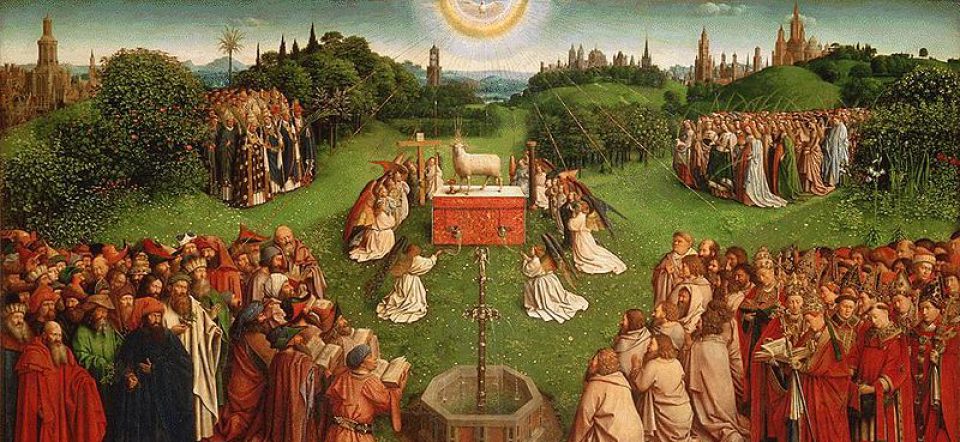
Jan Van Eyck, “The Adoration of the Lamb” 1432 from the Ghent Alterpiece. Detail: The red altar where the lamb stands reads, “Behold the Lamb of God, which taketh away the sins of the world” and “Jesus the way, the truth, and the life”, both quotes from Gospel of John. In this image and in the book of Revelation the Lamb is Jesus. Directly around the Lamb on the altar are angels who are carrying the instruments in the Passion scenes, like the cross and crown of thorns.

gichontree

Unknown's avatarThere's beauty in sacred spaces; from the stories they tell in architecture, stained glass windows and icons; to the rituals and liturgy that arises our soul. Inside a shrine, the angels and saints praise God with us. I hope to relay the message for the kingdom, power and glory of God, now and forever.

Blog at WordPress.com.

  • Subscribe Subscribed
    ShrineTower
    Join 72 other subscribers

    Have a WordPress.com account? Log in now.

  • ShrineTower
    View site in Reader
    Manage subscriptionsSign upLog in
    Report this content
    Collapse this bar
Loading Comments...